Feb 23, 2026
Voting as Right, Privilege and Responsibility
Síofra O'Leary
Feb 23, 2026
Voting as Right, Privilege and Responsibility
Síofra O'Leary
Feb 23, 2026
Voting as Right, Privilege and Responsibility
Síofra O'Leary
Feb 23, 2026
Voting as Right, Privilege and Responsibility
Síofra O'Leary
Feb 23, 2026
Voting as Right, Privilege and Responsibility
Síofra O'Leary
Feb 23, 2026
Voting as Right, Privilege and Responsibility
Síofra O'Leary
In a little-known German case, decided in 2022, the European Court of Human Rights had to decide whether the inclusion of a schoolteacher on a regional list of teachers deemed unsuitable for appointment to public schools due to doubts as to her loyalty to the Constitution constituted an unjustified restriction of her right to freedom of expression. The applicant had been affiliated to right-wing political parties and organizations with links to Neo-Nazi groups and had made public statements expressing their ideology. This type of case could of course be misrepresented as evidence to support the extraordinary charge in the recent National Security Strategy that the European Union (EU) is helping to suppress political opposition and free speech, to the detriment of “patriotic parties” which the report views sympathetically. I choose the case deliberately and for a very different purpose. Explaining why the applicant’s rights had not been violated, the Court emphasized:
“… the enormous importance, from a public-policy perspective, of teaching and educating children, in a credible manner, about freedom, democracy, human rights and the rule of law.”
It is an unusual obiter for the Strasbourg Court, but one which can be readily understood against the background of European experience of democratic erosion over the last two decades. That experience points to common factors at play across very different jurisdictions: the amendment or re-interpretation of the constitution by compliant judges with a view to altering basic governance structures; the elimination or disregard of checks and balances intended to protect, and operate between, the different branches of government; the centralization of power in the executive, combined with legislative collapse; systemic corruption and self-enrichment; the systematic shrinking of democratic spaces and the targeting or suppression of political opposition. Some or all of these factors characterize the trajectory in Russia, Turkey, Hungary, and Poland for some time and, more recently, in the Slovak Republic and Georgia. Rule by law replaced rule of law, with heavy-handed policing and prosecutions usually effective extras. Some or all of the factors listed should now be familiar to a US audience. It is sobering, but necessary, to state the company which this venerable democracy now keeps.
The rule of law is a concept essential to our democracies but one which lawyers and judges generally fail to successfully translate for the general public. Many voters lack a clear understanding of how their state functions, why a non-partisan and stable civil service is necessary, why certain government agencies need to be insulated from executive influence, how the electoral system should operate if democratic competition and fairness are to be preserved, why partisan gerrymandering is anathema to such fairness, the truly corrosive effects of political enrichment and selective pardons, what courts can and cannot do, why they are key to preservation of the separation of powers, why judges must be truly independent and subject to strictly enforceable rules on judicial ethics, or what the rule of law means concretely in terms of personal freedom, societal tolerance and pluralistic debate.
It became rapidly clear during and after the financial crisis in 2008 that most citizens, a significant percentage of law-makers and even some bankers were effectively illiterate when it came to the intricacies of the markets which determine pay, pensions and mortgages. It is worth asking, after two decades of democratic decline, whether we have also allowed representative democracy to fall victim to egregious levels of civic stupor and democratic illiteracy.
This series has explored myriad different ways in which effective representative democracy has been undermined, the failure of checks and balances intended to act as guardrails against such decline, some of the reasons for these developments and some of the changes required to reverse present trends. However, it is striking that only two or three of the almost one hundred contributions concentrate on the need for voters to be provided (and to provide themselves) with sufficient knowledge regarding what a functioning, representative democracy, underpinned by the rule of law, should look like and what are the signs of democratic decline in relation to which they should be ever vigilant.
Devising a pedagogically balanced civic education curriculum would be challenging, particularly in a context of societal polarization. But that is not a reason not to try. Indeed, the fact that the US was regarded in several democratic indices in 2025 as being en route from flawed democracy to autocracy suggests that less legal nuance and a look at lessons learned elsewhere might be the order of the day. As it doesn’t befit a visitor to suggest what the basic requirements of a modernized US programme should look like, let me turn back to the EU, where civic education is also in dire straits. European voters are represented directly in the European Parliament and indirectly via their national governments in the Council. They are governed by laws which, in some fields, are now more federalized than US equivalents. Yet the majority of Europeans do not engage in any depth, if at all, with how the EU’s governance structures operate, how the EU budget works, what the EU has contributed to economic and societal development in their Member States and how, if a Member State is not playing by the rules, it can be sanctioned. News and politics are framed nationally but in a polity which is supranational. The failure of national governments, education systems and the EU to provide the basic tools to allow people to engage critically with the supranational structures which regulate their lives has manifested itself in different ways in recent years, from the Brexit referendum in 2016 to low voter turnout. In the 2024 elections for the European Parliament only 36% of 15–24-year-olds (if eligible) and 46% of those aged 25-39 actually voted. In Lithuania - which is a fervent supporter of greater EU action in defense of Ukraine and which borders Russia’s most supportive neighbor, Belarus - the turnout of all eligible voters in that same election was a shocking 29%. This is an elected assembly which partly determines or will determine the EU’s position on energy, climate change, AI and defense spending, to name but a few.
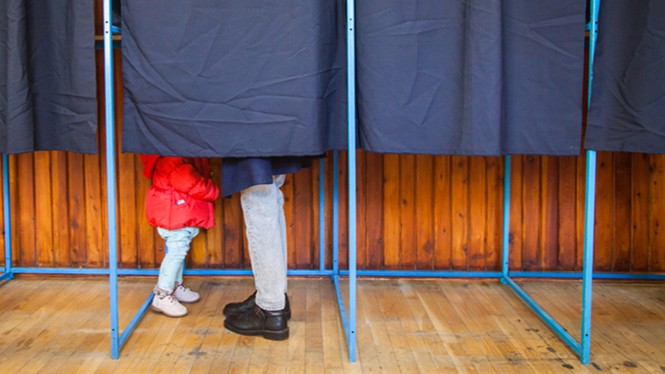
From having dealt for almost a decade with democratic decline, disrespect for the rule of law and individual and systemic violations of human rights across the 46 Council of Europe States, I return to the German case and to the need for greater civic engagement, from a young age, with democracy. Voting is a right, but it is also a privilege enjoyed by far too few and it is a responsibility which we bear individually and collectively to defend. The sooner we better prepare voters to stand up, the better we, the voters, will be able to step up in defense of democracy and the rule of law. No court, no congress will defend democracy more effectively than we the people.
In a little-known German case, decided in 2022, the European Court of Human Rights had to decide whether the inclusion of a schoolteacher on a regional list of teachers deemed unsuitable for appointment to public schools due to doubts as to her loyalty to the Constitution constituted an unjustified restriction of her right to freedom of expression. The applicant had been affiliated to right-wing political parties and organizations with links to Neo-Nazi groups and had made public statements expressing their ideology. This type of case could of course be misrepresented as evidence to support the extraordinary charge in the recent National Security Strategy that the European Union (EU) is helping to suppress political opposition and free speech, to the detriment of “patriotic parties” which the report views sympathetically. I choose the case deliberately and for a very different purpose. Explaining why the applicant’s rights had not been violated, the Court emphasized:
“… the enormous importance, from a public-policy perspective, of teaching and educating children, in a credible manner, about freedom, democracy, human rights and the rule of law.”
It is an unusual obiter for the Strasbourg Court, but one which can be readily understood against the background of European experience of democratic erosion over the last two decades. That experience points to common factors at play across very different jurisdictions: the amendment or re-interpretation of the constitution by compliant judges with a view to altering basic governance structures; the elimination or disregard of checks and balances intended to protect, and operate between, the different branches of government; the centralization of power in the executive, combined with legislative collapse; systemic corruption and self-enrichment; the systematic shrinking of democratic spaces and the targeting or suppression of political opposition. Some or all of these factors characterize the trajectory in Russia, Turkey, Hungary, and Poland for some time and, more recently, in the Slovak Republic and Georgia. Rule by law replaced rule of law, with heavy-handed policing and prosecutions usually effective extras. Some or all of the factors listed should now be familiar to a US audience. It is sobering, but necessary, to state the company which this venerable democracy now keeps.
The rule of law is a concept essential to our democracies but one which lawyers and judges generally fail to successfully translate for the general public. Many voters lack a clear understanding of how their state functions, why a non-partisan and stable civil service is necessary, why certain government agencies need to be insulated from executive influence, how the electoral system should operate if democratic competition and fairness are to be preserved, why partisan gerrymandering is anathema to such fairness, the truly corrosive effects of political enrichment and selective pardons, what courts can and cannot do, why they are key to preservation of the separation of powers, why judges must be truly independent and subject to strictly enforceable rules on judicial ethics, or what the rule of law means concretely in terms of personal freedom, societal tolerance and pluralistic debate.
It became rapidly clear during and after the financial crisis in 2008 that most citizens, a significant percentage of law-makers and even some bankers were effectively illiterate when it came to the intricacies of the markets which determine pay, pensions and mortgages. It is worth asking, after two decades of democratic decline, whether we have also allowed representative democracy to fall victim to egregious levels of civic stupor and democratic illiteracy.
This series has explored myriad different ways in which effective representative democracy has been undermined, the failure of checks and balances intended to act as guardrails against such decline, some of the reasons for these developments and some of the changes required to reverse present trends. However, it is striking that only two or three of the almost one hundred contributions concentrate on the need for voters to be provided (and to provide themselves) with sufficient knowledge regarding what a functioning, representative democracy, underpinned by the rule of law, should look like and what are the signs of democratic decline in relation to which they should be ever vigilant.
Devising a pedagogically balanced civic education curriculum would be challenging, particularly in a context of societal polarization. But that is not a reason not to try. Indeed, the fact that the US was regarded in several democratic indices in 2025 as being en route from flawed democracy to autocracy suggests that less legal nuance and a look at lessons learned elsewhere might be the order of the day. As it doesn’t befit a visitor to suggest what the basic requirements of a modernized US programme should look like, let me turn back to the EU, where civic education is also in dire straits. European voters are represented directly in the European Parliament and indirectly via their national governments in the Council. They are governed by laws which, in some fields, are now more federalized than US equivalents. Yet the majority of Europeans do not engage in any depth, if at all, with how the EU’s governance structures operate, how the EU budget works, what the EU has contributed to economic and societal development in their Member States and how, if a Member State is not playing by the rules, it can be sanctioned. News and politics are framed nationally but in a polity which is supranational. The failure of national governments, education systems and the EU to provide the basic tools to allow people to engage critically with the supranational structures which regulate their lives has manifested itself in different ways in recent years, from the Brexit referendum in 2016 to low voter turnout. In the 2024 elections for the European Parliament only 36% of 15–24-year-olds (if eligible) and 46% of those aged 25-39 actually voted. In Lithuania - which is a fervent supporter of greater EU action in defense of Ukraine and which borders Russia’s most supportive neighbor, Belarus - the turnout of all eligible voters in that same election was a shocking 29%. This is an elected assembly which partly determines or will determine the EU’s position on energy, climate change, AI and defense spending, to name but a few.
From having dealt for almost a decade with democratic decline, disrespect for the rule of law and individual and systemic violations of human rights across the 46 Council of Europe States, I return to the German case and to the need for greater civic engagement, from a young age, with democracy. Voting is a right, but it is also a privilege enjoyed by far too few and it is a responsibility which we bear individually and collectively to defend. The sooner we better prepare voters to stand up, the better we, the voters, will be able to step up in defense of democracy and the rule of law. No court, no congress will defend democracy more effectively than we the people.
In a little-known German case, decided in 2022, the European Court of Human Rights had to decide whether the inclusion of a schoolteacher on a regional list of teachers deemed unsuitable for appointment to public schools due to doubts as to her loyalty to the Constitution constituted an unjustified restriction of her right to freedom of expression. The applicant had been affiliated to right-wing political parties and organizations with links to Neo-Nazi groups and had made public statements expressing their ideology. This type of case could of course be misrepresented as evidence to support the extraordinary charge in the recent National Security Strategy that the European Union (EU) is helping to suppress political opposition and free speech, to the detriment of “patriotic parties” which the report views sympathetically. I choose the case deliberately and for a very different purpose. Explaining why the applicant’s rights had not been violated, the Court emphasized:
“… the enormous importance, from a public-policy perspective, of teaching and educating children, in a credible manner, about freedom, democracy, human rights and the rule of law.”
It is an unusual obiter for the Strasbourg Court, but one which can be readily understood against the background of European experience of democratic erosion over the last two decades. That experience points to common factors at play across very different jurisdictions: the amendment or re-interpretation of the constitution by compliant judges with a view to altering basic governance structures; the elimination or disregard of checks and balances intended to protect, and operate between, the different branches of government; the centralization of power in the executive, combined with legislative collapse; systemic corruption and self-enrichment; the systematic shrinking of democratic spaces and the targeting or suppression of political opposition. Some or all of these factors characterize the trajectory in Russia, Turkey, Hungary, and Poland for some time and, more recently, in the Slovak Republic and Georgia. Rule by law replaced rule of law, with heavy-handed policing and prosecutions usually effective extras. Some or all of the factors listed should now be familiar to a US audience. It is sobering, but necessary, to state the company which this venerable democracy now keeps.
The rule of law is a concept essential to our democracies but one which lawyers and judges generally fail to successfully translate for the general public. Many voters lack a clear understanding of how their state functions, why a non-partisan and stable civil service is necessary, why certain government agencies need to be insulated from executive influence, how the electoral system should operate if democratic competition and fairness are to be preserved, why partisan gerrymandering is anathema to such fairness, the truly corrosive effects of political enrichment and selective pardons, what courts can and cannot do, why they are key to preservation of the separation of powers, why judges must be truly independent and subject to strictly enforceable rules on judicial ethics, or what the rule of law means concretely in terms of personal freedom, societal tolerance and pluralistic debate.
It became rapidly clear during and after the financial crisis in 2008 that most citizens, a significant percentage of law-makers and even some bankers were effectively illiterate when it came to the intricacies of the markets which determine pay, pensions and mortgages. It is worth asking, after two decades of democratic decline, whether we have also allowed representative democracy to fall victim to egregious levels of civic stupor and democratic illiteracy.
This series has explored myriad different ways in which effective representative democracy has been undermined, the failure of checks and balances intended to act as guardrails against such decline, some of the reasons for these developments and some of the changes required to reverse present trends. However, it is striking that only two or three of the almost one hundred contributions concentrate on the need for voters to be provided (and to provide themselves) with sufficient knowledge regarding what a functioning, representative democracy, underpinned by the rule of law, should look like and what are the signs of democratic decline in relation to which they should be ever vigilant.
Devising a pedagogically balanced civic education curriculum would be challenging, particularly in a context of societal polarization. But that is not a reason not to try. Indeed, the fact that the US was regarded in several democratic indices in 2025 as being en route from flawed democracy to autocracy suggests that less legal nuance and a look at lessons learned elsewhere might be the order of the day. As it doesn’t befit a visitor to suggest what the basic requirements of a modernized US programme should look like, let me turn back to the EU, where civic education is also in dire straits. European voters are represented directly in the European Parliament and indirectly via their national governments in the Council. They are governed by laws which, in some fields, are now more federalized than US equivalents. Yet the majority of Europeans do not engage in any depth, if at all, with how the EU’s governance structures operate, how the EU budget works, what the EU has contributed to economic and societal development in their Member States and how, if a Member State is not playing by the rules, it can be sanctioned. News and politics are framed nationally but in a polity which is supranational. The failure of national governments, education systems and the EU to provide the basic tools to allow people to engage critically with the supranational structures which regulate their lives has manifested itself in different ways in recent years, from the Brexit referendum in 2016 to low voter turnout. In the 2024 elections for the European Parliament only 36% of 15–24-year-olds (if eligible) and 46% of those aged 25-39 actually voted. In Lithuania - which is a fervent supporter of greater EU action in defense of Ukraine and which borders Russia’s most supportive neighbor, Belarus - the turnout of all eligible voters in that same election was a shocking 29%. This is an elected assembly which partly determines or will determine the EU’s position on energy, climate change, AI and defense spending, to name but a few.
From having dealt for almost a decade with democratic decline, disrespect for the rule of law and individual and systemic violations of human rights across the 46 Council of Europe States, I return to the German case and to the need for greater civic engagement, from a young age, with democracy. Voting is a right, but it is also a privilege enjoyed by far too few and it is a responsibility which we bear individually and collectively to defend. The sooner we better prepare voters to stand up, the better we, the voters, will be able to step up in defense of democracy and the rule of law. No court, no congress will defend democracy more effectively than we the people.
In a little-known German case, decided in 2022, the European Court of Human Rights had to decide whether the inclusion of a schoolteacher on a regional list of teachers deemed unsuitable for appointment to public schools due to doubts as to her loyalty to the Constitution constituted an unjustified restriction of her right to freedom of expression. The applicant had been affiliated to right-wing political parties and organizations with links to Neo-Nazi groups and had made public statements expressing their ideology. This type of case could of course be misrepresented as evidence to support the extraordinary charge in the recent National Security Strategy that the European Union (EU) is helping to suppress political opposition and free speech, to the detriment of “patriotic parties” which the report views sympathetically. I choose the case deliberately and for a very different purpose. Explaining why the applicant’s rights had not been violated, the Court emphasized:
“… the enormous importance, from a public-policy perspective, of teaching and educating children, in a credible manner, about freedom, democracy, human rights and the rule of law.”
It is an unusual obiter for the Strasbourg Court, but one which can be readily understood against the background of European experience of democratic erosion over the last two decades. That experience points to common factors at play across very different jurisdictions: the amendment or re-interpretation of the constitution by compliant judges with a view to altering basic governance structures; the elimination or disregard of checks and balances intended to protect, and operate between, the different branches of government; the centralization of power in the executive, combined with legislative collapse; systemic corruption and self-enrichment; the systematic shrinking of democratic spaces and the targeting or suppression of political opposition. Some or all of these factors characterize the trajectory in Russia, Turkey, Hungary, and Poland for some time and, more recently, in the Slovak Republic and Georgia. Rule by law replaced rule of law, with heavy-handed policing and prosecutions usually effective extras. Some or all of the factors listed should now be familiar to a US audience. It is sobering, but necessary, to state the company which this venerable democracy now keeps.
The rule of law is a concept essential to our democracies but one which lawyers and judges generally fail to successfully translate for the general public. Many voters lack a clear understanding of how their state functions, why a non-partisan and stable civil service is necessary, why certain government agencies need to be insulated from executive influence, how the electoral system should operate if democratic competition and fairness are to be preserved, why partisan gerrymandering is anathema to such fairness, the truly corrosive effects of political enrichment and selective pardons, what courts can and cannot do, why they are key to preservation of the separation of powers, why judges must be truly independent and subject to strictly enforceable rules on judicial ethics, or what the rule of law means concretely in terms of personal freedom, societal tolerance and pluralistic debate.
It became rapidly clear during and after the financial crisis in 2008 that most citizens, a significant percentage of law-makers and even some bankers were effectively illiterate when it came to the intricacies of the markets which determine pay, pensions and mortgages. It is worth asking, after two decades of democratic decline, whether we have also allowed representative democracy to fall victim to egregious levels of civic stupor and democratic illiteracy.
This series has explored myriad different ways in which effective representative democracy has been undermined, the failure of checks and balances intended to act as guardrails against such decline, some of the reasons for these developments and some of the changes required to reverse present trends. However, it is striking that only two or three of the almost one hundred contributions concentrate on the need for voters to be provided (and to provide themselves) with sufficient knowledge regarding what a functioning, representative democracy, underpinned by the rule of law, should look like and what are the signs of democratic decline in relation to which they should be ever vigilant.
Devising a pedagogically balanced civic education curriculum would be challenging, particularly in a context of societal polarization. But that is not a reason not to try. Indeed, the fact that the US was regarded in several democratic indices in 2025 as being en route from flawed democracy to autocracy suggests that less legal nuance and a look at lessons learned elsewhere might be the order of the day. As it doesn’t befit a visitor to suggest what the basic requirements of a modernized US programme should look like, let me turn back to the EU, where civic education is also in dire straits. European voters are represented directly in the European Parliament and indirectly via their national governments in the Council. They are governed by laws which, in some fields, are now more federalized than US equivalents. Yet the majority of Europeans do not engage in any depth, if at all, with how the EU’s governance structures operate, how the EU budget works, what the EU has contributed to economic and societal development in their Member States and how, if a Member State is not playing by the rules, it can be sanctioned. News and politics are framed nationally but in a polity which is supranational. The failure of national governments, education systems and the EU to provide the basic tools to allow people to engage critically with the supranational structures which regulate their lives has manifested itself in different ways in recent years, from the Brexit referendum in 2016 to low voter turnout. In the 2024 elections for the European Parliament only 36% of 15–24-year-olds (if eligible) and 46% of those aged 25-39 actually voted. In Lithuania - which is a fervent supporter of greater EU action in defense of Ukraine and which borders Russia’s most supportive neighbor, Belarus - the turnout of all eligible voters in that same election was a shocking 29%. This is an elected assembly which partly determines or will determine the EU’s position on energy, climate change, AI and defense spending, to name but a few.
From having dealt for almost a decade with democratic decline, disrespect for the rule of law and individual and systemic violations of human rights across the 46 Council of Europe States, I return to the German case and to the need for greater civic engagement, from a young age, with democracy. Voting is a right, but it is also a privilege enjoyed by far too few and it is a responsibility which we bear individually and collectively to defend. The sooner we better prepare voters to stand up, the better we, the voters, will be able to step up in defense of democracy and the rule of law. No court, no congress will defend democracy more effectively than we the people.
In a little-known German case, decided in 2022, the European Court of Human Rights had to decide whether the inclusion of a schoolteacher on a regional list of teachers deemed unsuitable for appointment to public schools due to doubts as to her loyalty to the Constitution constituted an unjustified restriction of her right to freedom of expression. The applicant had been affiliated to right-wing political parties and organizations with links to Neo-Nazi groups and had made public statements expressing their ideology. This type of case could of course be misrepresented as evidence to support the extraordinary charge in the recent National Security Strategy that the European Union (EU) is helping to suppress political opposition and free speech, to the detriment of “patriotic parties” which the report views sympathetically. I choose the case deliberately and for a very different purpose. Explaining why the applicant’s rights had not been violated, the Court emphasized:
“… the enormous importance, from a public-policy perspective, of teaching and educating children, in a credible manner, about freedom, democracy, human rights and the rule of law.”
It is an unusual obiter for the Strasbourg Court, but one which can be readily understood against the background of European experience of democratic erosion over the last two decades. That experience points to common factors at play across very different jurisdictions: the amendment or re-interpretation of the constitution by compliant judges with a view to altering basic governance structures; the elimination or disregard of checks and balances intended to protect, and operate between, the different branches of government; the centralization of power in the executive, combined with legislative collapse; systemic corruption and self-enrichment; the systematic shrinking of democratic spaces and the targeting or suppression of political opposition. Some or all of these factors characterize the trajectory in Russia, Turkey, Hungary, and Poland for some time and, more recently, in the Slovak Republic and Georgia. Rule by law replaced rule of law, with heavy-handed policing and prosecutions usually effective extras. Some or all of the factors listed should now be familiar to a US audience. It is sobering, but necessary, to state the company which this venerable democracy now keeps.
The rule of law is a concept essential to our democracies but one which lawyers and judges generally fail to successfully translate for the general public. Many voters lack a clear understanding of how their state functions, why a non-partisan and stable civil service is necessary, why certain government agencies need to be insulated from executive influence, how the electoral system should operate if democratic competition and fairness are to be preserved, why partisan gerrymandering is anathema to such fairness, the truly corrosive effects of political enrichment and selective pardons, what courts can and cannot do, why they are key to preservation of the separation of powers, why judges must be truly independent and subject to strictly enforceable rules on judicial ethics, or what the rule of law means concretely in terms of personal freedom, societal tolerance and pluralistic debate.
It became rapidly clear during and after the financial crisis in 2008 that most citizens, a significant percentage of law-makers and even some bankers were effectively illiterate when it came to the intricacies of the markets which determine pay, pensions and mortgages. It is worth asking, after two decades of democratic decline, whether we have also allowed representative democracy to fall victim to egregious levels of civic stupor and democratic illiteracy.
This series has explored myriad different ways in which effective representative democracy has been undermined, the failure of checks and balances intended to act as guardrails against such decline, some of the reasons for these developments and some of the changes required to reverse present trends. However, it is striking that only two or three of the almost one hundred contributions concentrate on the need for voters to be provided (and to provide themselves) with sufficient knowledge regarding what a functioning, representative democracy, underpinned by the rule of law, should look like and what are the signs of democratic decline in relation to which they should be ever vigilant.
Devising a pedagogically balanced civic education curriculum would be challenging, particularly in a context of societal polarization. But that is not a reason not to try. Indeed, the fact that the US was regarded in several democratic indices in 2025 as being en route from flawed democracy to autocracy suggests that less legal nuance and a look at lessons learned elsewhere might be the order of the day. As it doesn’t befit a visitor to suggest what the basic requirements of a modernized US programme should look like, let me turn back to the EU, where civic education is also in dire straits. European voters are represented directly in the European Parliament and indirectly via their national governments in the Council. They are governed by laws which, in some fields, are now more federalized than US equivalents. Yet the majority of Europeans do not engage in any depth, if at all, with how the EU’s governance structures operate, how the EU budget works, what the EU has contributed to economic and societal development in their Member States and how, if a Member State is not playing by the rules, it can be sanctioned. News and politics are framed nationally but in a polity which is supranational. The failure of national governments, education systems and the EU to provide the basic tools to allow people to engage critically with the supranational structures which regulate their lives has manifested itself in different ways in recent years, from the Brexit referendum in 2016 to low voter turnout. In the 2024 elections for the European Parliament only 36% of 15–24-year-olds (if eligible) and 46% of those aged 25-39 actually voted. In Lithuania - which is a fervent supporter of greater EU action in defense of Ukraine and which borders Russia’s most supportive neighbor, Belarus - the turnout of all eligible voters in that same election was a shocking 29%. This is an elected assembly which partly determines or will determine the EU’s position on energy, climate change, AI and defense spending, to name but a few.
From having dealt for almost a decade with democratic decline, disrespect for the rule of law and individual and systemic violations of human rights across the 46 Council of Europe States, I return to the German case and to the need for greater civic engagement, from a young age, with democracy. Voting is a right, but it is also a privilege enjoyed by far too few and it is a responsibility which we bear individually and collectively to defend. The sooner we better prepare voters to stand up, the better we, the voters, will be able to step up in defense of democracy and the rule of law. No court, no congress will defend democracy more effectively than we the people.
In a little-known German case, decided in 2022, the European Court of Human Rights had to decide whether the inclusion of a schoolteacher on a regional list of teachers deemed unsuitable for appointment to public schools due to doubts as to her loyalty to the Constitution constituted an unjustified restriction of her right to freedom of expression. The applicant had been affiliated to right-wing political parties and organizations with links to Neo-Nazi groups and had made public statements expressing their ideology. This type of case could of course be misrepresented as evidence to support the extraordinary charge in the recent National Security Strategy that the European Union (EU) is helping to suppress political opposition and free speech, to the detriment of “patriotic parties” which the report views sympathetically. I choose the case deliberately and for a very different purpose. Explaining why the applicant’s rights had not been violated, the Court emphasized:
“… the enormous importance, from a public-policy perspective, of teaching and educating children, in a credible manner, about freedom, democracy, human rights and the rule of law.”
It is an unusual obiter for the Strasbourg Court, but one which can be readily understood against the background of European experience of democratic erosion over the last two decades. That experience points to common factors at play across very different jurisdictions: the amendment or re-interpretation of the constitution by compliant judges with a view to altering basic governance structures; the elimination or disregard of checks and balances intended to protect, and operate between, the different branches of government; the centralization of power in the executive, combined with legislative collapse; systemic corruption and self-enrichment; the systematic shrinking of democratic spaces and the targeting or suppression of political opposition. Some or all of these factors characterize the trajectory in Russia, Turkey, Hungary, and Poland for some time and, more recently, in the Slovak Republic and Georgia. Rule by law replaced rule of law, with heavy-handed policing and prosecutions usually effective extras. Some or all of the factors listed should now be familiar to a US audience. It is sobering, but necessary, to state the company which this venerable democracy now keeps.
The rule of law is a concept essential to our democracies but one which lawyers and judges generally fail to successfully translate for the general public. Many voters lack a clear understanding of how their state functions, why a non-partisan and stable civil service is necessary, why certain government agencies need to be insulated from executive influence, how the electoral system should operate if democratic competition and fairness are to be preserved, why partisan gerrymandering is anathema to such fairness, the truly corrosive effects of political enrichment and selective pardons, what courts can and cannot do, why they are key to preservation of the separation of powers, why judges must be truly independent and subject to strictly enforceable rules on judicial ethics, or what the rule of law means concretely in terms of personal freedom, societal tolerance and pluralistic debate.
It became rapidly clear during and after the financial crisis in 2008 that most citizens, a significant percentage of law-makers and even some bankers were effectively illiterate when it came to the intricacies of the markets which determine pay, pensions and mortgages. It is worth asking, after two decades of democratic decline, whether we have also allowed representative democracy to fall victim to egregious levels of civic stupor and democratic illiteracy.
This series has explored myriad different ways in which effective representative democracy has been undermined, the failure of checks and balances intended to act as guardrails against such decline, some of the reasons for these developments and some of the changes required to reverse present trends. However, it is striking that only two or three of the almost one hundred contributions concentrate on the need for voters to be provided (and to provide themselves) with sufficient knowledge regarding what a functioning, representative democracy, underpinned by the rule of law, should look like and what are the signs of democratic decline in relation to which they should be ever vigilant.
Devising a pedagogically balanced civic education curriculum would be challenging, particularly in a context of societal polarization. But that is not a reason not to try. Indeed, the fact that the US was regarded in several democratic indices in 2025 as being en route from flawed democracy to autocracy suggests that less legal nuance and a look at lessons learned elsewhere might be the order of the day. As it doesn’t befit a visitor to suggest what the basic requirements of a modernized US programme should look like, let me turn back to the EU, where civic education is also in dire straits. European voters are represented directly in the European Parliament and indirectly via their national governments in the Council. They are governed by laws which, in some fields, are now more federalized than US equivalents. Yet the majority of Europeans do not engage in any depth, if at all, with how the EU’s governance structures operate, how the EU budget works, what the EU has contributed to economic and societal development in their Member States and how, if a Member State is not playing by the rules, it can be sanctioned. News and politics are framed nationally but in a polity which is supranational. The failure of national governments, education systems and the EU to provide the basic tools to allow people to engage critically with the supranational structures which regulate their lives has manifested itself in different ways in recent years, from the Brexit referendum in 2016 to low voter turnout. In the 2024 elections for the European Parliament only 36% of 15–24-year-olds (if eligible) and 46% of those aged 25-39 actually voted. In Lithuania - which is a fervent supporter of greater EU action in defense of Ukraine and which borders Russia’s most supportive neighbor, Belarus - the turnout of all eligible voters in that same election was a shocking 29%. This is an elected assembly which partly determines or will determine the EU’s position on energy, climate change, AI and defense spending, to name but a few.
From having dealt for almost a decade with democratic decline, disrespect for the rule of law and individual and systemic violations of human rights across the 46 Council of Europe States, I return to the German case and to the need for greater civic engagement, from a young age, with democracy. Voting is a right, but it is also a privilege enjoyed by far too few and it is a responsibility which we bear individually and collectively to defend. The sooner we better prepare voters to stand up, the better we, the voters, will be able to step up in defense of democracy and the rule of law. No court, no congress will defend democracy more effectively than we the people.
About the Author
Síofra O'Leary
Síofra O'Leary is a former Judge and President of the European Court of Human Rights (2015 – 2024). Prior to joining the European Court of Human Rights, she worked for almost two decades at the Court of Justice of the European Union in both judicial and administrative capacities. O’Leary is currently a New York University Hauser/Remarque Global Fellow.
About the Author
Síofra O'Leary
Síofra O'Leary is a former Judge and President of the European Court of Human Rights (2015 – 2024). Prior to joining the European Court of Human Rights, she worked for almost two decades at the Court of Justice of the European Union in both judicial and administrative capacities. O’Leary is currently a New York University Hauser/Remarque Global Fellow.
About the Author
Síofra O'Leary
Síofra O'Leary is a former Judge and President of the European Court of Human Rights (2015 – 2024). Prior to joining the European Court of Human Rights, she worked for almost two decades at the Court of Justice of the European Union in both judicial and administrative capacities. O’Leary is currently a New York University Hauser/Remarque Global Fellow.
More viewpoints in
Society & Communications

Jun 17, 2026
The Next Frontier of Political Manipulation?
Anita Dunn
Society & Communications
Jun 17, 2026
The Next Frontier of Political Manipulation?
Anita Dunn
Society & Communications
Jun 17, 2026
The Next Frontier of Political Manipulation?
Anita Dunn
Society & Communications
Jun 4, 2026
Restoration Dreams or Realistic Utopia
András Sajó
Society & Communications
Jun 4, 2026
Restoration Dreams or Realistic Utopia
András Sajó
Society & Communications
Jun 4, 2026
Restoration Dreams or Realistic Utopia
András Sajó
Society & Communications

May 28, 2026
An Open Society Needs an Open Education System
Jorge Elorza
Society & Communications
May 28, 2026
An Open Society Needs an Open Education System
Jorge Elorza
Society & Communications
May 28, 2026
An Open Society Needs an Open Education System
Jorge Elorza
Society & Communications