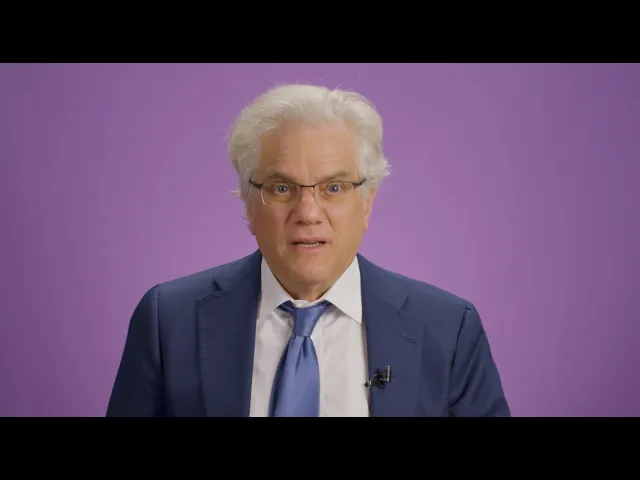
May 14, 2026
PODCAST: “In Covid’s Wake” - A Conversation Between Frances Lee and Rick Pildes
A conversation between Professor Frances Lee of the Princeton School of Public and International Affairs and Professor Rick Pildes of NYU School of Law on a recent book written by Lee and Stephen Macedo titled "In Covid's Wake: How Our Politics Failed Us"
Richard Pildes
May 14, 2026
PODCAST: “In Covid’s Wake” - A Conversation Between Frances Lee and Rick Pildes
A conversation between Professor Frances Lee of the Princeton School of Public and International Affairs and Professor Rick Pildes of NYU School of Law on a recent book written by Lee and Stephen Macedo titled "In Covid's Wake: How Our Politics Failed Us"
Richard Pildes
May 14, 2026
PODCAST: “In Covid’s Wake” - A Conversation Between Frances Lee and Rick Pildes
A conversation between Professor Frances Lee of the Princeton School of Public and International Affairs and Professor Rick Pildes of NYU School of Law on a recent book written by Lee and Stephen Macedo titled "In Covid's Wake: How Our Politics Failed Us"
Richard Pildes
May 14, 2026
PODCAST: “In Covid’s Wake” - A Conversation Between Frances Lee and Rick Pildes
A conversation between Professor Frances Lee of the Princeton School of Public and International Affairs and Professor Rick Pildes of NYU School of Law on a recent book written by Lee and Stephen Macedo titled "In Covid's Wake: How Our Politics Failed Us"
Richard Pildes
May 14, 2026
PODCAST: “In Covid’s Wake” - A Conversation Between Frances Lee and Rick Pildes
A conversation between Professor Frances Lee of the Princeton School of Public and International Affairs and Professor Rick Pildes of NYU School of Law on a recent book written by Lee and Stephen Macedo titled "In Covid's Wake: How Our Politics Failed Us"
Richard Pildes
May 14, 2026
PODCAST: “In Covid’s Wake” - A Conversation Between Frances Lee and Rick Pildes
A conversation between Professor Frances Lee of the Princeton School of Public and International Affairs and Professor Rick Pildes of NYU School of Law on a recent book written by Lee and Stephen Macedo titled "In Covid's Wake: How Our Politics Failed Us"
Richard Pildes
Editor's Note: This is an edited transcript of the Democracy Project Podcast.
Rick: Welcome. We're here today to discuss Frances Lee and Stephen Macedo's important book, "In Covid's Wake," which looks back at how the US addressed the COVID pandemic. The book has important implications, in my view, for some of the central institutions of liberal democracy — how they performed or didn't perform during what was really one of the most significant crises we've faced domestically in many, many decades.
I think the book also helps explain a lot about our politics today. And frankly, the conclusions of the book are disturbing, which is why I thought it was important to do this podcast, to expose more people to the arguments and the findings of the book.
You don't have to take my word on the importance of this book. When it came out last year in 2025, The Economist, The New Yorker, The Wall Street Journal — very diverse publications — all ranked it as one of the top books of 2025. It's just come out in paperback now, which is why we're doing this podcast. The book is co-authored by Stephen Macedo, who's a Professor of Politics at Princeton, and Frances Lee, who's also at Princeton in the School of Public and International Affairs. And we're very fortunate to have Frances Lee here to discuss the book with us today. So welcome to you, Frances, and thanks for doing this.
Frances: Thank you very much, Rick.
Rick: I wanted to now start delving into the book a bit. One of the things that you do in the book that I think is so effective, is you begin by looking at what the serious studies about how to handle a pandemic had concluded before COVID actually hit. So it's not that people hadn't been thinking about the risk of pandemics or hadn't been thinking about the range of possible public policy responses. And one of the very powerful things about looking back at these pre-COVID studies, is that you avoid a hindsight bias in looking at how we handled COVID. So what did you discover that the pre-COVID pandemic studies had suggested about the kinds of responses that did or didn't make sense in the face of a pandemic?
Frances: That's right. That's really where I got started with thinking about what was being done during the pandemic. I had never even heard of the idea that the whole of society might be shut down, where governors would issue orders to stay at home. I was surprised by the scale of the interventions, and so began to look back at what had been proposed.
And as soon as you begin to turn back to the pre-COVID pandemic planning work, you realize that this was a pretty contentious area. The science was not settled; it was far from settled. In fact, the systematic reviews of scholarship in this area concluded that the evidence in favor of non-pharmaceutical interventions was weak or very weak.
Rick: Can you stop and tell people what non-pharmaceutical interventions means or includes?
Frances: Non-pharmaceutical interventions are all the measures that were taken to keep people apart, to slow transmission of, in this case, a respiratory disease, and, you know, what society had available to do in the absence of pharmaceutical measures. So everything — masks, or six-foot distancing, or closure of businesses, closures of schools, limits on gathering — all of those falls under the heading of non-pharmaceutical interventions. That was the terminology used in that literature.
Rick: That's one of the things that I found really striking in reading through what you report about these pre-COVID pandemic studies from these very reputable scientific medical organizations and the like – that they were always analyzing these measures in terms of what are the potential benefits and what are the costs. They were very attentive in these pre-pandemic studies to costs of various measures like school closings — you call it the ethical issues or the social costs.
And then when the pandemic comes, it seems as if policymakers walked away from the conclusions in these pre-pandemic studies. I don't know if that's a fair description. And I suppose one question is why, and I don't think your book kind of probes deeply into exactly why. But it's really dramatic to see the contrast between what the pre-pandemic empirical literature suggested and what policymakers actually moved to so quickly.
Frances: That's right. In the book we characterize it as kind of a "turn on a dime." That we know that we went from doubts and skepticism in the pre-COVID literature in this space, to certainty. "We know what works against COVID" became a public health talking point in early 2020, when there was no solid basis for making a claim like that. And in fact, for two years, we operated under the assumption that COVID was transmitted primarily through droplets. Two years later, it was only widely acknowledged by governments that COVID was airborne. So we didn't even know for sure how COVID was transmitted.
Rick: Okay, so that's where we were before COVID came. Let’s talk more about the uncertainty and how to manage that sort of uncertainty. In the book, you do a lot of work then going through the specific measures – the main measures - that were adopted and reaching some fairly negative conclusions about their effectiveness, let alone their costs. And I want to talk about a number of these specific measures we adopted. But as general oversight before we get into specific issues like masks or distancing and the like: what were some of the fundamental problems in your view that you identified with the various policies that were adopted? The way we thought about them? The way the issues were addressed?
Frances: It was an excess of certainty. You don't even find on opinion pages, or discussion about these measures, doubts being raised about whether they would work. It was just assumed that they would work, where there was not a foundation for that. And that question of the efficacy is very much front and center in that pre-COVID pandemic planning literature. And so then to have that fall away during the response, I think that to me is what's most striking in retrospect.
Rick: But given that there was so much uncertainty, how should policymakers have gone about addressing these issues? So you don't know for sure if transmission is through the air or through droplets. You're acknowledging a number of times here the scale of uncertainty. Doesn't that make it hard to criticize some of the measures that were adopted?
Frances: Well, the way I would think about it is you have to weigh both the costs and the benefits, and in that case, the expected costs and the expected benefits. The expected benefits were profoundly uncertain. But the expected costs were known. I mean, it's quite obvious that if you close schools, that's going to have a tremendous effect on students, their families, people's lives, livelihood. Closing businesses — I mean, the economic effects were vast. In a matter of weeks after the lockdowns, the CARES Act passed, which was $2.2 trillion — the largest crisis response legislation ever passed by Congress.
The costs were very evident, so we knew we would be paying high costs. But whether there would be benefits was not known. And so, I think you have to weigh not just what you hope for on either side, but also what you can reasonably have a confidence will happen. And the way uncertainty played into that cost-benefit calculation was not confronted in a forthright way.
Now, of course, yes, elected officials have to make hard calls. Our criticism in the book really falls more on what we refer to as the truth-seeking institutions. So journalism and science advising to policymakers. That's where the frankness about the uncertain evidence base should have been confronted. Just like that Johns Hopkins report from 2019 recommended.
That's where things fell down. You don't have news analysis pieces looking into these questions in an honest way that presents the multiple sides of the evidence. You get lionizing of the advisors who had pushed for non-pharmaceutical interventions, treated as though they were the seers, the people who think outside the box, unlike the traditional public health folks. You know, this is more or less the premise of Michael Lewis' book, "The Premonition," which portrays the advocates for non-pharmaceutical interventions as heroes who pushed against that staid, old-fashioned public health that didn't see the merits. That was also how The New York Times framed these questions. That's how many news articles were written — as though it was totally clear what to do under these circumstances and that the science was settled. And that it was just incumbent on policymakers to follow the science.
That's what I think was so misleading about the discourse during COVID. I mean, yes, elected officials have to make difficult calls, but they shouldn't have been able to say that they had no choice at all, which is basically what they did — they sort of hid behind the science advising, the voices of public health. They said, “Oh, you know, we're doing what the scientists recommend.” They sort of delegated their decision-making to them. But there wasn't a firm scientific basis for doing that.
Rick: Well, I thought that in addition to your argument that the benefits from these various measures were uncertain or debated, or maybe some of them had actually been rejected by the pre-COVID expert kind of literature, I thought an important part of the book was your point that at least the public health officials — and I'm not sure how broadly you mean this - didn't really weigh the cost side hardly at all.
And you have this amazing quote from Francis Collins, who was the director at the time of the National Institutes of Health, who said that — this is in 2023, so he's looking back at himself and others in his role — and he says, "The public health mindset," which he embraced, he acknowledges, "you attach infinite value to stopping the disease and saving a life. You attach zero value to whether this totally disrupts people's lives, ruins the economy, and has many kids kept out of school that they never quite recover from."
So that's actually from inside the realm of public health or science, their own kind of self-criticism that I think you see as kind of a pervasive feature of how pandemic policy was made. There was very little cost-benefit assessment actually, I think, is a major part of your conclusion, right?
Frances: That's absolutely right. Yes. I mean, the public health officials who were asked to provide advice during the crisis did not see it as their job to consider the broader societal effects of the measures — the potential costs. They only looked at the measures — only evaluated them — in terms of what they hoped they could achieve in terms of reductions in disease transmission. There was no attention to these broader considerations.
I mean, also, you know, you quoted from the very frank comments that Francis Collins offered at a Braver Angels panel looking back at the pandemic. There was also a lengthy interview in The New York Times between David Wallace-Wells and Tony Fauci, where Fauci said, you know, he's not an economist. The CDC is not an economic organization. That in other words, it was somebody else's job to consider the cost.
Rick: So to put the pieces together from what you said so far — this is part of this very unhealthy dynamic you unveil here, which is: the public health people are saying, "Look, all we can focus on is the public health side. It's for the political actors or others to focus on the overall kind of cost-benefit assessment." And then you have the political figures saying, "Well, we're deferring to the science." So no one's taking responsibility.
Frances: Yes, it's very hard to locate accountability in this decision-making during this time. That's right.
Rick: Do you think the public health officials should themselves have tried to take into account the issues about the cost of school closures and business closures? Or were they right to stay in that lane and say, "Well, our expertise is only this one dimension"? I'm thinking about going forward, how we do better.
Frances: If you look back at the pre-COVID pandemic planning, they absolutely did. They looked at costs as well as potential benefits. I mean, public health broadly conceived has to think about the health of the whole society. It's not just aimed at preventing deaths from one pathogen. And so, that tunnel vision that took hold during COVID was not characteristic of the way these issues were considered in calmer times. So I think it's kind of a dodge for public health to say, "Well, that was someone else's job," because historically, public health looked broadly at what makes people healthy, not just at avoiding one disease.
Rick: Okay, so tell us about what your empirical studies — your "after action" empirical studies — showed about the extent to which various policies did or didn't make a difference in reducing mortality from COVID and the like. I don't know if you want to go one by one, but we can talk about masking, social distancing, business closures, school closures. What did you find when you actually go back and now try to make sense of the empirical literature after the fact?
Frances: One of the challenges with evaluating these measures one by one is, of course, they were deployed in combination, in ways that makes it difficult to differentiate individual effects. But with that said, Steve and I did original analysis of the measures taken at the state level — the governor's decision, how quickly to impose stay-at-home orders. Most governors did - 43 governors did. Even the governors who didn't still imposed broad business closures, even if they didn't order people to stay home. But the speed with which stay-at-home orders were announced, the length they were kept in place, how long schools were closed - we rely on these data collected by the University of Oxford, which monitored the stringency of COVID restrictions across a standardized index both across the US as well as around the world, as another measure, and we could compare states in terms of the stringency of their response.
What you see when you do that analysis is that the states sort by party. The more Democratic the state leans, and the more strongly Democratic the state is, the more stringent the COVID restrictions were. The more quickly they were imposed, the longer they were kept in place, the longer schools were kept closed. That is the most stunning feature of the COVID response in the United States: the extent to which it was structured by partisanship — at the state level, the city level, at the school district level, even down to individuals when you're examining individual people's response to the pandemic. Did they stay home? Did they wear masks? Partisanship structured all of that.
So what you can see when you track cumulative COVID mortality over the course of the pandemic across the states sorted by partisanship, is that at the time the vaccine was rolled out — all the way until the period when the vaccine was made available to all adults at the end of April, so by that point, everyone could have access and there was no more gating of the process, so if we look at basically at the end of that first year of the pandemic - there's not a difference in per capita COVID mortality between red states and blue states. They are more or less the same.
After the vaccine rollout took place, vaccine uptake was much stronger in Democratic leaning states than in Republican leaning states. Such that by the end of the time series that we analyze in the book, which was January 2023, Republican states had 30% higher COVID mortality than Democratic states. All that difference between red and blue states in terms of COVID outcomes, emerges in the post-vaccine period, not in the pre-vaccine period when COVID restrictions, when non-pharmaceutical interventions, were such a divisive societal issue.
Rick: That's really interesting. So before vaccines, you see no significant difference in outcomes, at least, in terms of mortality from COVID between red and blue states, regardless of how stringent or more flexible their policies were. Some red states didn't close schools, or closed them for a very short period of time, and didn't close businesses or close them for a very short period of time. Other states — I don't remember the longest schools were kept closed — but was it a year and a half in some places?
Frances: Yes. I can give you the details on that. All public schools were closed by March 25th, 2020. Only a handful of schools nationwide reopened during that academic year. Then you have the summer. And at the end of the summer, you have schools across much of the South, and a lot of the Mountain West, reopening August, September of 2020.
But by March of 2021, still half of public schools were closed nationwide. Now, private schools are reopening, at least in places where it was not made illegal for private schools to reopen. In some cases, governors ordered private schools to stay closed as well. But you had a lot of variation across the country.
It surprised me that there wasn't a lot of focus on the schools that reopened. It was not many, but there was a handful of schools that reopened in the spring of 2020. European schools reopened in the spring of 2020, in Denmark and across much of Europe. Denmark was very much on the leading edge of getting their schools reopened. And Denmark was very celebrated for its COVID response in the US. But there was not attention to the speed with which schools got reopened. That didn't seem to make much of an impression in the US.
Then you had schools operating through the fall of 2020 and not a lot of focus on what was happening there, which was not a disaster. And in fact, as we look back, it's widely acknowledged now that there's not evidence that school closures made a difference for the spread of COVID. We can't see it. This is covered in David Zweig's book on school closures during the pandemic titled, "An Abundance of Caution" — that education ministers in Europe announced in the summer of 2020, that as schools had reopened, they were not detecting any increased spread of COVID. But that seemed to make no impression here in the US.
It's as though the narrative around the pandemic got cemented in place in April, and there was just no learning, no openness to new information coming in. So it's not just a matter of the difficulty that policymakers were faced with the immediate crisis of spring 2020. Talking about a crisis that lasted a year, year-and-a-half, and yet there was that failure to learn subsequently. And I think that's the bigger failure of the COVID response than the initial reactions in the spring of 2020.
Rick: So you mentioned earlier the book focuses on what you call the truth-seeking or knowledge production institution: science, the universities, journalism. Let's talk about each of those a bit. So if you're right, that these policies were adopted when it was unclear how beneficial they would be, and there was much less attention to the cost side of the equation than there should have been, how did our institutions fail? If your criticism is right that there was serious failure here. Let's start with, let's say, the media coverage of these issues, the journalism side.
Frances: Yes. On the journalism side, there simply was just a dearth of questioning articles. Skepticism; it seemed like no editorial line seemed to permit it. And so, you didn't get a critical look at all these policies working. You could have easily written those.
It was evident by the middle of the summer of 2020 that the speed with which states had locked down hadn't made any evident difference. You could see that in the data then. By the end of the summer, states had reopened with the exception of New Mexico and California. And you could look then at how long those orders had been in place and what difference that made. Those would've been null finds. You wouldn't have seen a difference, in other words.
It wouldn't have been all that challenging. You remember all the COVID dashboards, all the data was there, and yet you just didn't see that effort to scrutinize policies for whether they were succeeding. It seemed to be not permitted even to treat them as policies. You might remember this way of describing the pandemic was that "COVID shutdown X or Y." It was the virus that was often seen as the decision-making actor rather than the decisions that policymakers made in response to the virus. There was a hiding of accountability in that way, you know, pretending that there was no agency involved in these decisions.
Rick: And do you have any sense of exactly why journalists weren't looking into those issues? Or maybe you just have to speculate.
Frances: I see this as a big weakness of the book. I mean, the book is an effort, it's a sort of a first cut of this important era, this history. But I see it as barely scratching the surface of the questions that we should grapple with.
So one is that question of those public health experts who become so certain, so dogmatically certain about these policies for which there was so little evidence. There's that question. And then you have to ask about journalism. Why did the narrative take hold with such firmness?
Now, pandemic response was highly moralized - we're saving lives here. And if you are not on board with these restrictions, you are selfish. That seemed to be in the background of a lot of the reporting here, or that politicians might care about the economy more than they care about lives. So that kind of deep narrative, I think structured lots of the news coverage through the pandemic.
Rick: And what about academia? One of the things that was really stunning in the book is you have these accounts of academics who had taken certain positions on these issues a few months earlier and then all of a sudden flip 180 degrees with great certainty in the other direction. But what about the academy, how would you describe the failures, if that's correct, of the academy in this era?
Frances: Academic institutions were so on board with these restrictions. And they were some of the most stringent institutions in terms of the impositions they imposed on their members, on students, on faculty. Campuses were emptied and kept empty for a long time, even after the rest of society reopened by fall of 2020, but universities were not anywhere close to being back to normal operations in the fall of 2020. In many cases, they were still struggling to get back to normal in the fall of 2021.
So the embrace of these measures among academics and academic institutions was fulsome. I think this is one of the reasons why there's been so little academic scrutiny of that period. They were very much on a side; academia as a sector was on a side. And so I think it's difficult.
Rick: Do you feel like there was suppression - I don't mean like state suppression - but was there suppression of dissenting views within the academy or within the public health or science community? Was it difficult to challenge any of these policies, in your view, inappropriately difficult?
Frances: I think there was more self-censorship than there was censorship imposed from the outside. But those few academics who did speak out were subjected to demonization, to censure, to opprobrium from their colleagues, so that self-censorship may have had a good basis. And as you look at the few who did break ranks, they did pay a price. So it was not a tolerant atmosphere for raising questions.
Rick: You know, the book is so disturbing, as I said at the outset. I think particularly for those of us who believe in the important role of science and expertise in government, who believe in the importance of diverse and pluralistic media to generate information for people and for policymakers. I think we have to confront it, that's why we wanted to do the podcast with you.
But it's a really disturbing indictment, if you will, of a lot of these institutions that we're very dependent on, and that liberal democracy really depends on. And I think the book helps me understand better the post-COVID anger and resentment, especially among younger kids who were kept out of school during COVID. There's some data to suggest that those kids whose schooling was interrupted significantly by COVID, had become particularly anti-elite, anti-expert, hostile to government, looking for more extreme political alternatives. You know, I think we really underestimate the profound political ramifications of COVID and COVID policy, and in a sense, your book kind of endorses that.
Frances: And I think even separate from the question of the political effects, I think just to do what it is we purport to do — to be truth-seeking institutions — we ought to be capable of this kind of self-scrutiny around some of the most important far-reaching policies adopted in our lifetimes. We ought to be able to do it.
And so, even if there wasn't populist blowback as a result of these decisions, but simply as a matter of doing what we do, the reluctance to do that in the wake of the pandemic is very striking. There are just very few retrospectives on a subject matter that affected not just policy or politics — the realm of political departments — but there's enormously interesting questions from a legal perspective, from a sociological perspective, not to mention, of course, from public health perspectives. And there just isn't scrutiny and reexamination commensurate with the importance of the topic, in my view.
Rick: Now, I've talked about all the praise the book has received. But there's also been some criticism from various quarters. I wanted to hear your responses to at least a few of the criticisms. There was an article in The Atlantic magazine for a popular audience, with some strong criticism of the book. So one of the critiques is your argument about masks and social distancing not being all that effective is really based on mortality rates from COVID. But in fact, these policies did reduce the transmission of the virus, even if they didn't end up saving more lives, if that's the correct empirical finding. What's your reaction to that? I don't know if you agree that that evidence shows they did reduce transmission, or if you disagree with that critique for some other reason.
Frances: We discussed this in the book, that there is considerably more evidence for an effect on transmission in the literature on the effectiveness of these measures than there is on mortality. So we acknowledge and discuss that, that there are more positive findings on transmission, but it doesn't seem to cash out in terms of having made a difference for lives saved.
And of course, these measures were justified in terms of their ability to save lives. That's what we thought we were doing with those measures. And that's where we come up short in finding evidence, both across the US as well as around the world. So that's where the negative findings are in this literature.
Rick: So are there findings about serious disease short of mortality, or is that much harder?
Frances: There's not a consensus there. In fact, that's much harder to study. You know, deaths are easier — something definitive about those. And especially then if you do excess mortality, then that allows you to say, "Are deaths higher than usual for this jurisdiction based on whatever baseline you do — 10 years prior or whatever?” And so that can give you a certain degree of confidence. This is an unusual era or not: are deaths elevated or not? And then you can compare jurisdictions as to whether they have higher or lower than usual mortality. So mortality has a firmness there.
So we have case counts. And of course, the problem with case counts is that they were, you probably recall this from the politics of the era, dependent on testing. And remember, you might recall President Trump saying that we would have fewer cases if we did fewer tests. (chuckles) He wasn't wrong about that. And of course, places that tested less do have fewer cases.
Rick: Fewer known cases, yeah.
Frances: Fewer known cases, that's right. And their testing regimes were never capable of capturing more than a fraction of the COVID infections that occurred. So I personally don't find the case analysis terribly persuasive, simply knowing how testing was administered — that's voluntary, it was not randomized. It is not a good indicator of what was happening at the societal level. But with that said, nevertheless, there's more positive findings on the effectiveness of these measures on cases.
Rick: Okay, and then what do you think some of these more extreme measures were justified in that early period when we were very worried about hospitals being sort of flooded with cases, which, in fact, did happen here in New York City? I remember that all too vividly. So I remember the language of the point is to try to “flatten the curve.” Do you think these more aggressive policies were justified in that initial period for that reason? Or do you still criticize them even for that purpose?
Frances: It was not known whether they worked for that purpose. If you take a look at the curve, the epidemiological curve of New York City, and compare it to Stockholm, where there was not a lockdown, they don't look different. The statistical work on the timing of European lockdowns — this is contested — but suggests that the peak of the curve had already been reached before lockdown measures were imposed.
We don't know when COVID arrived — you know, how it spread around the world when it arrived in various places. There's evidence in blood banks that it was in the US in December of 2019. So we're locking down months after the introduction of the virus. I think one of the problems with the lockdown measures is that, of course, there was huge public support for doing them, especially in places like New York City where the hospitals were being hit so hard.
But at that time, of course, many places in the US had no severe problem with COVID putting pressure on the hospitals, and they shut down just the same. The shutdowns went all across the US over a three-week period, from the first state to the last, after March the 16th in 2020. And so, you've got places locking down before they have seen any COVID.
And all the costs being imposed and of course, there's a lot of harm being done to the healthcare sector with those shutdowns. Because when you close down all sorts of non-essential services, many people were laid off from the hospital systems because they primarily worked on non-COVID, non-emergency services. And so then you have backlogs being created. I mean, people suffered a lot of pain and need to have that knee replaced or that back surgery, or the cancer treatments, and all of that stuff was impaired during COVID.
So, I mean, I have my doubts. I think in some ways, we might look back at that and say, “That was institutionalized panic.” To impose lockdowns all across the US even in places where there was no pressure on the hospital systems. So, I mean, we don't know whether those measures worked — even those extreme measures in the early going of the crisis — we don't know.
Rick: All right, let's close with this. So what do our institutions, our truth-seeking institutions or our political institutions, need to do better in these kinds of crises? Or what's the direction to go from here if we accept the critique of the book for these institutions?
Frances: Yeah, I think we have to look at each of them sort of individually because the incentives work somewhat differently across each of them. I think in the case of public health — so policy advising — I think it's worthwhile to always think in terms of having devil's advocate or red teams who are there to raise questions about basic assumptions. That needs to be an institutionalized part of policy advising.
In the case of journalism, I think there needs to be more alertness to these moralized narratives — very narrative-driven reporting during COVID, where they thought they knew the story. You know, "it's the scientists versus the politicians," "the people who care about human lives versus those who cared about the economy." There's this moral frame that was imposed on the world. I think there needs to be an alertness to how those can take hold and how there can be blinders. You can't see a lot of what's happening because it's filtered through this moral narrative. That is how I would characterize what happened in reporting during COVID.
With universities, as I mentioned, I feel like there was a lot of self-censorship there. So this is more challenging to get at. It is true that those who departed from the party line as it were, were punished. But nevertheless, I think that the failure to engage these questions in academia stemmed more from self-censorship than from active forms of censorship.
I mean, after all, faculty members, at least at elite institutions, most of them, in fact, even many institutions that are not elite — enjoy tenure protections. It is hard to know how you could improve incentives in that regard. They should have felt free to raise questions and yet they didn't. So I think it's a puzzle there, and something we really need. I think there's some soul-searching warranted there.
Rick: Well, I want to thank you for spending the time to talk about the book. I want to thank you and Stephen Macedo, your co-author, for writing the book. As I say, I think it's a very important book for people who are interested in government and policy, in politics, in academia, and science, journalism, to come to grips with, even if it's, you know, disturbing. Thanks very much for the time and the conversation. Appreciate it.
Frances: Thank you so much, Rick.
Editor's Note: This is an edited transcript of the Democracy Project Podcast.
Rick: Welcome. We're here today to discuss Frances Lee and Stephen Macedo's important book, "In Covid's Wake," which looks back at how the US addressed the COVID pandemic. The book has important implications, in my view, for some of the central institutions of liberal democracy — how they performed or didn't perform during what was really one of the most significant crises we've faced domestically in many, many decades.
I think the book also helps explain a lot about our politics today. And frankly, the conclusions of the book are disturbing, which is why I thought it was important to do this podcast, to expose more people to the arguments and the findings of the book.
You don't have to take my word on the importance of this book. When it came out last year in 2025, The Economist, The New Yorker, The Wall Street Journal — very diverse publications — all ranked it as one of the top books of 2025. It's just come out in paperback now, which is why we're doing this podcast. The book is co-authored by Stephen Macedo, who's a Professor of Politics at Princeton, and Frances Lee, who's also at Princeton in the School of Public and International Affairs. And we're very fortunate to have Frances Lee here to discuss the book with us today. So welcome to you, Frances, and thanks for doing this.
Frances: Thank you very much, Rick.
Rick: I wanted to now start delving into the book a bit. One of the things that you do in the book that I think is so effective, is you begin by looking at what the serious studies about how to handle a pandemic had concluded before COVID actually hit. So it's not that people hadn't been thinking about the risk of pandemics or hadn't been thinking about the range of possible public policy responses. And one of the very powerful things about looking back at these pre-COVID studies, is that you avoid a hindsight bias in looking at how we handled COVID. So what did you discover that the pre-COVID pandemic studies had suggested about the kinds of responses that did or didn't make sense in the face of a pandemic?
Frances: That's right. That's really where I got started with thinking about what was being done during the pandemic. I had never even heard of the idea that the whole of society might be shut down, where governors would issue orders to stay at home. I was surprised by the scale of the interventions, and so began to look back at what had been proposed.
And as soon as you begin to turn back to the pre-COVID pandemic planning work, you realize that this was a pretty contentious area. The science was not settled; it was far from settled. In fact, the systematic reviews of scholarship in this area concluded that the evidence in favor of non-pharmaceutical interventions was weak or very weak.
Rick: Can you stop and tell people what non-pharmaceutical interventions means or includes?
Frances: Non-pharmaceutical interventions are all the measures that were taken to keep people apart, to slow transmission of, in this case, a respiratory disease, and, you know, what society had available to do in the absence of pharmaceutical measures. So everything — masks, or six-foot distancing, or closure of businesses, closures of schools, limits on gathering — all of those falls under the heading of non-pharmaceutical interventions. That was the terminology used in that literature.
Rick: That's one of the things that I found really striking in reading through what you report about these pre-COVID pandemic studies from these very reputable scientific medical organizations and the like – that they were always analyzing these measures in terms of what are the potential benefits and what are the costs. They were very attentive in these pre-pandemic studies to costs of various measures like school closings — you call it the ethical issues or the social costs.
And then when the pandemic comes, it seems as if policymakers walked away from the conclusions in these pre-pandemic studies. I don't know if that's a fair description. And I suppose one question is why, and I don't think your book kind of probes deeply into exactly why. But it's really dramatic to see the contrast between what the pre-pandemic empirical literature suggested and what policymakers actually moved to so quickly.
Frances: That's right. In the book we characterize it as kind of a "turn on a dime." That we know that we went from doubts and skepticism in the pre-COVID literature in this space, to certainty. "We know what works against COVID" became a public health talking point in early 2020, when there was no solid basis for making a claim like that. And in fact, for two years, we operated under the assumption that COVID was transmitted primarily through droplets. Two years later, it was only widely acknowledged by governments that COVID was airborne. So we didn't even know for sure how COVID was transmitted.
Rick: Okay, so that's where we were before COVID came. Let’s talk more about the uncertainty and how to manage that sort of uncertainty. In the book, you do a lot of work then going through the specific measures – the main measures - that were adopted and reaching some fairly negative conclusions about their effectiveness, let alone their costs. And I want to talk about a number of these specific measures we adopted. But as general oversight before we get into specific issues like masks or distancing and the like: what were some of the fundamental problems in your view that you identified with the various policies that were adopted? The way we thought about them? The way the issues were addressed?
Frances: It was an excess of certainty. You don't even find on opinion pages, or discussion about these measures, doubts being raised about whether they would work. It was just assumed that they would work, where there was not a foundation for that. And that question of the efficacy is very much front and center in that pre-COVID pandemic planning literature. And so then to have that fall away during the response, I think that to me is what's most striking in retrospect.
Rick: But given that there was so much uncertainty, how should policymakers have gone about addressing these issues? So you don't know for sure if transmission is through the air or through droplets. You're acknowledging a number of times here the scale of uncertainty. Doesn't that make it hard to criticize some of the measures that were adopted?
Frances: Well, the way I would think about it is you have to weigh both the costs and the benefits, and in that case, the expected costs and the expected benefits. The expected benefits were profoundly uncertain. But the expected costs were known. I mean, it's quite obvious that if you close schools, that's going to have a tremendous effect on students, their families, people's lives, livelihood. Closing businesses — I mean, the economic effects were vast. In a matter of weeks after the lockdowns, the CARES Act passed, which was $2.2 trillion — the largest crisis response legislation ever passed by Congress.
The costs were very evident, so we knew we would be paying high costs. But whether there would be benefits was not known. And so, I think you have to weigh not just what you hope for on either side, but also what you can reasonably have a confidence will happen. And the way uncertainty played into that cost-benefit calculation was not confronted in a forthright way.
Now, of course, yes, elected officials have to make hard calls. Our criticism in the book really falls more on what we refer to as the truth-seeking institutions. So journalism and science advising to policymakers. That's where the frankness about the uncertain evidence base should have been confronted. Just like that Johns Hopkins report from 2019 recommended.
That's where things fell down. You don't have news analysis pieces looking into these questions in an honest way that presents the multiple sides of the evidence. You get lionizing of the advisors who had pushed for non-pharmaceutical interventions, treated as though they were the seers, the people who think outside the box, unlike the traditional public health folks. You know, this is more or less the premise of Michael Lewis' book, "The Premonition," which portrays the advocates for non-pharmaceutical interventions as heroes who pushed against that staid, old-fashioned public health that didn't see the merits. That was also how The New York Times framed these questions. That's how many news articles were written — as though it was totally clear what to do under these circumstances and that the science was settled. And that it was just incumbent on policymakers to follow the science.
That's what I think was so misleading about the discourse during COVID. I mean, yes, elected officials have to make difficult calls, but they shouldn't have been able to say that they had no choice at all, which is basically what they did — they sort of hid behind the science advising, the voices of public health. They said, “Oh, you know, we're doing what the scientists recommend.” They sort of delegated their decision-making to them. But there wasn't a firm scientific basis for doing that.
Rick: Well, I thought that in addition to your argument that the benefits from these various measures were uncertain or debated, or maybe some of them had actually been rejected by the pre-COVID expert kind of literature, I thought an important part of the book was your point that at least the public health officials — and I'm not sure how broadly you mean this - didn't really weigh the cost side hardly at all.
And you have this amazing quote from Francis Collins, who was the director at the time of the National Institutes of Health, who said that — this is in 2023, so he's looking back at himself and others in his role — and he says, "The public health mindset," which he embraced, he acknowledges, "you attach infinite value to stopping the disease and saving a life. You attach zero value to whether this totally disrupts people's lives, ruins the economy, and has many kids kept out of school that they never quite recover from."
So that's actually from inside the realm of public health or science, their own kind of self-criticism that I think you see as kind of a pervasive feature of how pandemic policy was made. There was very little cost-benefit assessment actually, I think, is a major part of your conclusion, right?
Frances: That's absolutely right. Yes. I mean, the public health officials who were asked to provide advice during the crisis did not see it as their job to consider the broader societal effects of the measures — the potential costs. They only looked at the measures — only evaluated them — in terms of what they hoped they could achieve in terms of reductions in disease transmission. There was no attention to these broader considerations.
I mean, also, you know, you quoted from the very frank comments that Francis Collins offered at a Braver Angels panel looking back at the pandemic. There was also a lengthy interview in The New York Times between David Wallace-Wells and Tony Fauci, where Fauci said, you know, he's not an economist. The CDC is not an economic organization. That in other words, it was somebody else's job to consider the cost.
Rick: So to put the pieces together from what you said so far — this is part of this very unhealthy dynamic you unveil here, which is: the public health people are saying, "Look, all we can focus on is the public health side. It's for the political actors or others to focus on the overall kind of cost-benefit assessment." And then you have the political figures saying, "Well, we're deferring to the science." So no one's taking responsibility.
Frances: Yes, it's very hard to locate accountability in this decision-making during this time. That's right.
Rick: Do you think the public health officials should themselves have tried to take into account the issues about the cost of school closures and business closures? Or were they right to stay in that lane and say, "Well, our expertise is only this one dimension"? I'm thinking about going forward, how we do better.
Frances: If you look back at the pre-COVID pandemic planning, they absolutely did. They looked at costs as well as potential benefits. I mean, public health broadly conceived has to think about the health of the whole society. It's not just aimed at preventing deaths from one pathogen. And so, that tunnel vision that took hold during COVID was not characteristic of the way these issues were considered in calmer times. So I think it's kind of a dodge for public health to say, "Well, that was someone else's job," because historically, public health looked broadly at what makes people healthy, not just at avoiding one disease.
Rick: Okay, so tell us about what your empirical studies — your "after action" empirical studies — showed about the extent to which various policies did or didn't make a difference in reducing mortality from COVID and the like. I don't know if you want to go one by one, but we can talk about masking, social distancing, business closures, school closures. What did you find when you actually go back and now try to make sense of the empirical literature after the fact?
Frances: One of the challenges with evaluating these measures one by one is, of course, they were deployed in combination, in ways that makes it difficult to differentiate individual effects. But with that said, Steve and I did original analysis of the measures taken at the state level — the governor's decision, how quickly to impose stay-at-home orders. Most governors did - 43 governors did. Even the governors who didn't still imposed broad business closures, even if they didn't order people to stay home. But the speed with which stay-at-home orders were announced, the length they were kept in place, how long schools were closed - we rely on these data collected by the University of Oxford, which monitored the stringency of COVID restrictions across a standardized index both across the US as well as around the world, as another measure, and we could compare states in terms of the stringency of their response.
What you see when you do that analysis is that the states sort by party. The more Democratic the state leans, and the more strongly Democratic the state is, the more stringent the COVID restrictions were. The more quickly they were imposed, the longer they were kept in place, the longer schools were kept closed. That is the most stunning feature of the COVID response in the United States: the extent to which it was structured by partisanship — at the state level, the city level, at the school district level, even down to individuals when you're examining individual people's response to the pandemic. Did they stay home? Did they wear masks? Partisanship structured all of that.
So what you can see when you track cumulative COVID mortality over the course of the pandemic across the states sorted by partisanship, is that at the time the vaccine was rolled out — all the way until the period when the vaccine was made available to all adults at the end of April, so by that point, everyone could have access and there was no more gating of the process, so if we look at basically at the end of that first year of the pandemic - there's not a difference in per capita COVID mortality between red states and blue states. They are more or less the same.
After the vaccine rollout took place, vaccine uptake was much stronger in Democratic leaning states than in Republican leaning states. Such that by the end of the time series that we analyze in the book, which was January 2023, Republican states had 30% higher COVID mortality than Democratic states. All that difference between red and blue states in terms of COVID outcomes, emerges in the post-vaccine period, not in the pre-vaccine period when COVID restrictions, when non-pharmaceutical interventions, were such a divisive societal issue.
Rick: That's really interesting. So before vaccines, you see no significant difference in outcomes, at least, in terms of mortality from COVID between red and blue states, regardless of how stringent or more flexible their policies were. Some red states didn't close schools, or closed them for a very short period of time, and didn't close businesses or close them for a very short period of time. Other states — I don't remember the longest schools were kept closed — but was it a year and a half in some places?
Frances: Yes. I can give you the details on that. All public schools were closed by March 25th, 2020. Only a handful of schools nationwide reopened during that academic year. Then you have the summer. And at the end of the summer, you have schools across much of the South, and a lot of the Mountain West, reopening August, September of 2020.
But by March of 2021, still half of public schools were closed nationwide. Now, private schools are reopening, at least in places where it was not made illegal for private schools to reopen. In some cases, governors ordered private schools to stay closed as well. But you had a lot of variation across the country.
It surprised me that there wasn't a lot of focus on the schools that reopened. It was not many, but there was a handful of schools that reopened in the spring of 2020. European schools reopened in the spring of 2020, in Denmark and across much of Europe. Denmark was very much on the leading edge of getting their schools reopened. And Denmark was very celebrated for its COVID response in the US. But there was not attention to the speed with which schools got reopened. That didn't seem to make much of an impression in the US.
Then you had schools operating through the fall of 2020 and not a lot of focus on what was happening there, which was not a disaster. And in fact, as we look back, it's widely acknowledged now that there's not evidence that school closures made a difference for the spread of COVID. We can't see it. This is covered in David Zweig's book on school closures during the pandemic titled, "An Abundance of Caution" — that education ministers in Europe announced in the summer of 2020, that as schools had reopened, they were not detecting any increased spread of COVID. But that seemed to make no impression here in the US.
It's as though the narrative around the pandemic got cemented in place in April, and there was just no learning, no openness to new information coming in. So it's not just a matter of the difficulty that policymakers were faced with the immediate crisis of spring 2020. Talking about a crisis that lasted a year, year-and-a-half, and yet there was that failure to learn subsequently. And I think that's the bigger failure of the COVID response than the initial reactions in the spring of 2020.
Rick: So you mentioned earlier the book focuses on what you call the truth-seeking or knowledge production institution: science, the universities, journalism. Let's talk about each of those a bit. So if you're right, that these policies were adopted when it was unclear how beneficial they would be, and there was much less attention to the cost side of the equation than there should have been, how did our institutions fail? If your criticism is right that there was serious failure here. Let's start with, let's say, the media coverage of these issues, the journalism side.
Frances: Yes. On the journalism side, there simply was just a dearth of questioning articles. Skepticism; it seemed like no editorial line seemed to permit it. And so, you didn't get a critical look at all these policies working. You could have easily written those.
It was evident by the middle of the summer of 2020 that the speed with which states had locked down hadn't made any evident difference. You could see that in the data then. By the end of the summer, states had reopened with the exception of New Mexico and California. And you could look then at how long those orders had been in place and what difference that made. Those would've been null finds. You wouldn't have seen a difference, in other words.
It wouldn't have been all that challenging. You remember all the COVID dashboards, all the data was there, and yet you just didn't see that effort to scrutinize policies for whether they were succeeding. It seemed to be not permitted even to treat them as policies. You might remember this way of describing the pandemic was that "COVID shutdown X or Y." It was the virus that was often seen as the decision-making actor rather than the decisions that policymakers made in response to the virus. There was a hiding of accountability in that way, you know, pretending that there was no agency involved in these decisions.
Rick: And do you have any sense of exactly why journalists weren't looking into those issues? Or maybe you just have to speculate.
Frances: I see this as a big weakness of the book. I mean, the book is an effort, it's a sort of a first cut of this important era, this history. But I see it as barely scratching the surface of the questions that we should grapple with.
So one is that question of those public health experts who become so certain, so dogmatically certain about these policies for which there was so little evidence. There's that question. And then you have to ask about journalism. Why did the narrative take hold with such firmness?
Now, pandemic response was highly moralized - we're saving lives here. And if you are not on board with these restrictions, you are selfish. That seemed to be in the background of a lot of the reporting here, or that politicians might care about the economy more than they care about lives. So that kind of deep narrative, I think structured lots of the news coverage through the pandemic.
Rick: And what about academia? One of the things that was really stunning in the book is you have these accounts of academics who had taken certain positions on these issues a few months earlier and then all of a sudden flip 180 degrees with great certainty in the other direction. But what about the academy, how would you describe the failures, if that's correct, of the academy in this era?
Frances: Academic institutions were so on board with these restrictions. And they were some of the most stringent institutions in terms of the impositions they imposed on their members, on students, on faculty. Campuses were emptied and kept empty for a long time, even after the rest of society reopened by fall of 2020, but universities were not anywhere close to being back to normal operations in the fall of 2020. In many cases, they were still struggling to get back to normal in the fall of 2021.
So the embrace of these measures among academics and academic institutions was fulsome. I think this is one of the reasons why there's been so little academic scrutiny of that period. They were very much on a side; academia as a sector was on a side. And so I think it's difficult.
Rick: Do you feel like there was suppression - I don't mean like state suppression - but was there suppression of dissenting views within the academy or within the public health or science community? Was it difficult to challenge any of these policies, in your view, inappropriately difficult?
Frances: I think there was more self-censorship than there was censorship imposed from the outside. But those few academics who did speak out were subjected to demonization, to censure, to opprobrium from their colleagues, so that self-censorship may have had a good basis. And as you look at the few who did break ranks, they did pay a price. So it was not a tolerant atmosphere for raising questions.
Rick: You know, the book is so disturbing, as I said at the outset. I think particularly for those of us who believe in the important role of science and expertise in government, who believe in the importance of diverse and pluralistic media to generate information for people and for policymakers. I think we have to confront it, that's why we wanted to do the podcast with you.
But it's a really disturbing indictment, if you will, of a lot of these institutions that we're very dependent on, and that liberal democracy really depends on. And I think the book helps me understand better the post-COVID anger and resentment, especially among younger kids who were kept out of school during COVID. There's some data to suggest that those kids whose schooling was interrupted significantly by COVID, had become particularly anti-elite, anti-expert, hostile to government, looking for more extreme political alternatives. You know, I think we really underestimate the profound political ramifications of COVID and COVID policy, and in a sense, your book kind of endorses that.
Frances: And I think even separate from the question of the political effects, I think just to do what it is we purport to do — to be truth-seeking institutions — we ought to be capable of this kind of self-scrutiny around some of the most important far-reaching policies adopted in our lifetimes. We ought to be able to do it.
And so, even if there wasn't populist blowback as a result of these decisions, but simply as a matter of doing what we do, the reluctance to do that in the wake of the pandemic is very striking. There are just very few retrospectives on a subject matter that affected not just policy or politics — the realm of political departments — but there's enormously interesting questions from a legal perspective, from a sociological perspective, not to mention, of course, from public health perspectives. And there just isn't scrutiny and reexamination commensurate with the importance of the topic, in my view.
Rick: Now, I've talked about all the praise the book has received. But there's also been some criticism from various quarters. I wanted to hear your responses to at least a few of the criticisms. There was an article in The Atlantic magazine for a popular audience, with some strong criticism of the book. So one of the critiques is your argument about masks and social distancing not being all that effective is really based on mortality rates from COVID. But in fact, these policies did reduce the transmission of the virus, even if they didn't end up saving more lives, if that's the correct empirical finding. What's your reaction to that? I don't know if you agree that that evidence shows they did reduce transmission, or if you disagree with that critique for some other reason.
Frances: We discussed this in the book, that there is considerably more evidence for an effect on transmission in the literature on the effectiveness of these measures than there is on mortality. So we acknowledge and discuss that, that there are more positive findings on transmission, but it doesn't seem to cash out in terms of having made a difference for lives saved.
And of course, these measures were justified in terms of their ability to save lives. That's what we thought we were doing with those measures. And that's where we come up short in finding evidence, both across the US as well as around the world. So that's where the negative findings are in this literature.
Rick: So are there findings about serious disease short of mortality, or is that much harder?
Frances: There's not a consensus there. In fact, that's much harder to study. You know, deaths are easier — something definitive about those. And especially then if you do excess mortality, then that allows you to say, "Are deaths higher than usual for this jurisdiction based on whatever baseline you do — 10 years prior or whatever?” And so that can give you a certain degree of confidence. This is an unusual era or not: are deaths elevated or not? And then you can compare jurisdictions as to whether they have higher or lower than usual mortality. So mortality has a firmness there.
So we have case counts. And of course, the problem with case counts is that they were, you probably recall this from the politics of the era, dependent on testing. And remember, you might recall President Trump saying that we would have fewer cases if we did fewer tests. (chuckles) He wasn't wrong about that. And of course, places that tested less do have fewer cases.
Rick: Fewer known cases, yeah.
Frances: Fewer known cases, that's right. And their testing regimes were never capable of capturing more than a fraction of the COVID infections that occurred. So I personally don't find the case analysis terribly persuasive, simply knowing how testing was administered — that's voluntary, it was not randomized. It is not a good indicator of what was happening at the societal level. But with that said, nevertheless, there's more positive findings on the effectiveness of these measures on cases.
Rick: Okay, and then what do you think some of these more extreme measures were justified in that early period when we were very worried about hospitals being sort of flooded with cases, which, in fact, did happen here in New York City? I remember that all too vividly. So I remember the language of the point is to try to “flatten the curve.” Do you think these more aggressive policies were justified in that initial period for that reason? Or do you still criticize them even for that purpose?
Frances: It was not known whether they worked for that purpose. If you take a look at the curve, the epidemiological curve of New York City, and compare it to Stockholm, where there was not a lockdown, they don't look different. The statistical work on the timing of European lockdowns — this is contested — but suggests that the peak of the curve had already been reached before lockdown measures were imposed.
We don't know when COVID arrived — you know, how it spread around the world when it arrived in various places. There's evidence in blood banks that it was in the US in December of 2019. So we're locking down months after the introduction of the virus. I think one of the problems with the lockdown measures is that, of course, there was huge public support for doing them, especially in places like New York City where the hospitals were being hit so hard.
But at that time, of course, many places in the US had no severe problem with COVID putting pressure on the hospitals, and they shut down just the same. The shutdowns went all across the US over a three-week period, from the first state to the last, after March the 16th in 2020. And so, you've got places locking down before they have seen any COVID.
And all the costs being imposed and of course, there's a lot of harm being done to the healthcare sector with those shutdowns. Because when you close down all sorts of non-essential services, many people were laid off from the hospital systems because they primarily worked on non-COVID, non-emergency services. And so then you have backlogs being created. I mean, people suffered a lot of pain and need to have that knee replaced or that back surgery, or the cancer treatments, and all of that stuff was impaired during COVID.
So, I mean, I have my doubts. I think in some ways, we might look back at that and say, “That was institutionalized panic.” To impose lockdowns all across the US even in places where there was no pressure on the hospital systems. So, I mean, we don't know whether those measures worked — even those extreme measures in the early going of the crisis — we don't know.
Rick: All right, let's close with this. So what do our institutions, our truth-seeking institutions or our political institutions, need to do better in these kinds of crises? Or what's the direction to go from here if we accept the critique of the book for these institutions?
Frances: Yeah, I think we have to look at each of them sort of individually because the incentives work somewhat differently across each of them. I think in the case of public health — so policy advising — I think it's worthwhile to always think in terms of having devil's advocate or red teams who are there to raise questions about basic assumptions. That needs to be an institutionalized part of policy advising.
In the case of journalism, I think there needs to be more alertness to these moralized narratives — very narrative-driven reporting during COVID, where they thought they knew the story. You know, "it's the scientists versus the politicians," "the people who care about human lives versus those who cared about the economy." There's this moral frame that was imposed on the world. I think there needs to be an alertness to how those can take hold and how there can be blinders. You can't see a lot of what's happening because it's filtered through this moral narrative. That is how I would characterize what happened in reporting during COVID.
With universities, as I mentioned, I feel like there was a lot of self-censorship there. So this is more challenging to get at. It is true that those who departed from the party line as it were, were punished. But nevertheless, I think that the failure to engage these questions in academia stemmed more from self-censorship than from active forms of censorship.
I mean, after all, faculty members, at least at elite institutions, most of them, in fact, even many institutions that are not elite — enjoy tenure protections. It is hard to know how you could improve incentives in that regard. They should have felt free to raise questions and yet they didn't. So I think it's a puzzle there, and something we really need. I think there's some soul-searching warranted there.
Rick: Well, I want to thank you for spending the time to talk about the book. I want to thank you and Stephen Macedo, your co-author, for writing the book. As I say, I think it's a very important book for people who are interested in government and policy, in politics, in academia, and science, journalism, to come to grips with, even if it's, you know, disturbing. Thanks very much for the time and the conversation. Appreciate it.
Frances: Thank you so much, Rick.
Editor's Note: This is an edited transcript of the Democracy Project Podcast.
Rick: Welcome. We're here today to discuss Frances Lee and Stephen Macedo's important book, "In Covid's Wake," which looks back at how the US addressed the COVID pandemic. The book has important implications, in my view, for some of the central institutions of liberal democracy — how they performed or didn't perform during what was really one of the most significant crises we've faced domestically in many, many decades.
I think the book also helps explain a lot about our politics today. And frankly, the conclusions of the book are disturbing, which is why I thought it was important to do this podcast, to expose more people to the arguments and the findings of the book.
You don't have to take my word on the importance of this book. When it came out last year in 2025, The Economist, The New Yorker, The Wall Street Journal — very diverse publications — all ranked it as one of the top books of 2025. It's just come out in paperback now, which is why we're doing this podcast. The book is co-authored by Stephen Macedo, who's a Professor of Politics at Princeton, and Frances Lee, who's also at Princeton in the School of Public and International Affairs. And we're very fortunate to have Frances Lee here to discuss the book with us today. So welcome to you, Frances, and thanks for doing this.
Frances: Thank you very much, Rick.
Rick: I wanted to now start delving into the book a bit. One of the things that you do in the book that I think is so effective, is you begin by looking at what the serious studies about how to handle a pandemic had concluded before COVID actually hit. So it's not that people hadn't been thinking about the risk of pandemics or hadn't been thinking about the range of possible public policy responses. And one of the very powerful things about looking back at these pre-COVID studies, is that you avoid a hindsight bias in looking at how we handled COVID. So what did you discover that the pre-COVID pandemic studies had suggested about the kinds of responses that did or didn't make sense in the face of a pandemic?
Frances: That's right. That's really where I got started with thinking about what was being done during the pandemic. I had never even heard of the idea that the whole of society might be shut down, where governors would issue orders to stay at home. I was surprised by the scale of the interventions, and so began to look back at what had been proposed.
And as soon as you begin to turn back to the pre-COVID pandemic planning work, you realize that this was a pretty contentious area. The science was not settled; it was far from settled. In fact, the systematic reviews of scholarship in this area concluded that the evidence in favor of non-pharmaceutical interventions was weak or very weak.
Rick: Can you stop and tell people what non-pharmaceutical interventions means or includes?
Frances: Non-pharmaceutical interventions are all the measures that were taken to keep people apart, to slow transmission of, in this case, a respiratory disease, and, you know, what society had available to do in the absence of pharmaceutical measures. So everything — masks, or six-foot distancing, or closure of businesses, closures of schools, limits on gathering — all of those falls under the heading of non-pharmaceutical interventions. That was the terminology used in that literature.
Rick: That's one of the things that I found really striking in reading through what you report about these pre-COVID pandemic studies from these very reputable scientific medical organizations and the like – that they were always analyzing these measures in terms of what are the potential benefits and what are the costs. They were very attentive in these pre-pandemic studies to costs of various measures like school closings — you call it the ethical issues or the social costs.
And then when the pandemic comes, it seems as if policymakers walked away from the conclusions in these pre-pandemic studies. I don't know if that's a fair description. And I suppose one question is why, and I don't think your book kind of probes deeply into exactly why. But it's really dramatic to see the contrast between what the pre-pandemic empirical literature suggested and what policymakers actually moved to so quickly.
Frances: That's right. In the book we characterize it as kind of a "turn on a dime." That we know that we went from doubts and skepticism in the pre-COVID literature in this space, to certainty. "We know what works against COVID" became a public health talking point in early 2020, when there was no solid basis for making a claim like that. And in fact, for two years, we operated under the assumption that COVID was transmitted primarily through droplets. Two years later, it was only widely acknowledged by governments that COVID was airborne. So we didn't even know for sure how COVID was transmitted.
Rick: Okay, so that's where we were before COVID came. Let’s talk more about the uncertainty and how to manage that sort of uncertainty. In the book, you do a lot of work then going through the specific measures – the main measures - that were adopted and reaching some fairly negative conclusions about their effectiveness, let alone their costs. And I want to talk about a number of these specific measures we adopted. But as general oversight before we get into specific issues like masks or distancing and the like: what were some of the fundamental problems in your view that you identified with the various policies that were adopted? The way we thought about them? The way the issues were addressed?
Frances: It was an excess of certainty. You don't even find on opinion pages, or discussion about these measures, doubts being raised about whether they would work. It was just assumed that they would work, where there was not a foundation for that. And that question of the efficacy is very much front and center in that pre-COVID pandemic planning literature. And so then to have that fall away during the response, I think that to me is what's most striking in retrospect.
Rick: But given that there was so much uncertainty, how should policymakers have gone about addressing these issues? So you don't know for sure if transmission is through the air or through droplets. You're acknowledging a number of times here the scale of uncertainty. Doesn't that make it hard to criticize some of the measures that were adopted?
Frances: Well, the way I would think about it is you have to weigh both the costs and the benefits, and in that case, the expected costs and the expected benefits. The expected benefits were profoundly uncertain. But the expected costs were known. I mean, it's quite obvious that if you close schools, that's going to have a tremendous effect on students, their families, people's lives, livelihood. Closing businesses — I mean, the economic effects were vast. In a matter of weeks after the lockdowns, the CARES Act passed, which was $2.2 trillion — the largest crisis response legislation ever passed by Congress.
The costs were very evident, so we knew we would be paying high costs. But whether there would be benefits was not known. And so, I think you have to weigh not just what you hope for on either side, but also what you can reasonably have a confidence will happen. And the way uncertainty played into that cost-benefit calculation was not confronted in a forthright way.
Now, of course, yes, elected officials have to make hard calls. Our criticism in the book really falls more on what we refer to as the truth-seeking institutions. So journalism and science advising to policymakers. That's where the frankness about the uncertain evidence base should have been confronted. Just like that Johns Hopkins report from 2019 recommended.
That's where things fell down. You don't have news analysis pieces looking into these questions in an honest way that presents the multiple sides of the evidence. You get lionizing of the advisors who had pushed for non-pharmaceutical interventions, treated as though they were the seers, the people who think outside the box, unlike the traditional public health folks. You know, this is more or less the premise of Michael Lewis' book, "The Premonition," which portrays the advocates for non-pharmaceutical interventions as heroes who pushed against that staid, old-fashioned public health that didn't see the merits. That was also how The New York Times framed these questions. That's how many news articles were written — as though it was totally clear what to do under these circumstances and that the science was settled. And that it was just incumbent on policymakers to follow the science.
That's what I think was so misleading about the discourse during COVID. I mean, yes, elected officials have to make difficult calls, but they shouldn't have been able to say that they had no choice at all, which is basically what they did — they sort of hid behind the science advising, the voices of public health. They said, “Oh, you know, we're doing what the scientists recommend.” They sort of delegated their decision-making to them. But there wasn't a firm scientific basis for doing that.
Rick: Well, I thought that in addition to your argument that the benefits from these various measures were uncertain or debated, or maybe some of them had actually been rejected by the pre-COVID expert kind of literature, I thought an important part of the book was your point that at least the public health officials — and I'm not sure how broadly you mean this - didn't really weigh the cost side hardly at all.
And you have this amazing quote from Francis Collins, who was the director at the time of the National Institutes of Health, who said that — this is in 2023, so he's looking back at himself and others in his role — and he says, "The public health mindset," which he embraced, he acknowledges, "you attach infinite value to stopping the disease and saving a life. You attach zero value to whether this totally disrupts people's lives, ruins the economy, and has many kids kept out of school that they never quite recover from."
So that's actually from inside the realm of public health or science, their own kind of self-criticism that I think you see as kind of a pervasive feature of how pandemic policy was made. There was very little cost-benefit assessment actually, I think, is a major part of your conclusion, right?
Frances: That's absolutely right. Yes. I mean, the public health officials who were asked to provide advice during the crisis did not see it as their job to consider the broader societal effects of the measures — the potential costs. They only looked at the measures — only evaluated them — in terms of what they hoped they could achieve in terms of reductions in disease transmission. There was no attention to these broader considerations.
I mean, also, you know, you quoted from the very frank comments that Francis Collins offered at a Braver Angels panel looking back at the pandemic. There was also a lengthy interview in The New York Times between David Wallace-Wells and Tony Fauci, where Fauci said, you know, he's not an economist. The CDC is not an economic organization. That in other words, it was somebody else's job to consider the cost.
Rick: So to put the pieces together from what you said so far — this is part of this very unhealthy dynamic you unveil here, which is: the public health people are saying, "Look, all we can focus on is the public health side. It's for the political actors or others to focus on the overall kind of cost-benefit assessment." And then you have the political figures saying, "Well, we're deferring to the science." So no one's taking responsibility.
Frances: Yes, it's very hard to locate accountability in this decision-making during this time. That's right.
Rick: Do you think the public health officials should themselves have tried to take into account the issues about the cost of school closures and business closures? Or were they right to stay in that lane and say, "Well, our expertise is only this one dimension"? I'm thinking about going forward, how we do better.
Frances: If you look back at the pre-COVID pandemic planning, they absolutely did. They looked at costs as well as potential benefits. I mean, public health broadly conceived has to think about the health of the whole society. It's not just aimed at preventing deaths from one pathogen. And so, that tunnel vision that took hold during COVID was not characteristic of the way these issues were considered in calmer times. So I think it's kind of a dodge for public health to say, "Well, that was someone else's job," because historically, public health looked broadly at what makes people healthy, not just at avoiding one disease.
Rick: Okay, so tell us about what your empirical studies — your "after action" empirical studies — showed about the extent to which various policies did or didn't make a difference in reducing mortality from COVID and the like. I don't know if you want to go one by one, but we can talk about masking, social distancing, business closures, school closures. What did you find when you actually go back and now try to make sense of the empirical literature after the fact?
Frances: One of the challenges with evaluating these measures one by one is, of course, they were deployed in combination, in ways that makes it difficult to differentiate individual effects. But with that said, Steve and I did original analysis of the measures taken at the state level — the governor's decision, how quickly to impose stay-at-home orders. Most governors did - 43 governors did. Even the governors who didn't still imposed broad business closures, even if they didn't order people to stay home. But the speed with which stay-at-home orders were announced, the length they were kept in place, how long schools were closed - we rely on these data collected by the University of Oxford, which monitored the stringency of COVID restrictions across a standardized index both across the US as well as around the world, as another measure, and we could compare states in terms of the stringency of their response.
What you see when you do that analysis is that the states sort by party. The more Democratic the state leans, and the more strongly Democratic the state is, the more stringent the COVID restrictions were. The more quickly they were imposed, the longer they were kept in place, the longer schools were kept closed. That is the most stunning feature of the COVID response in the United States: the extent to which it was structured by partisanship — at the state level, the city level, at the school district level, even down to individuals when you're examining individual people's response to the pandemic. Did they stay home? Did they wear masks? Partisanship structured all of that.
So what you can see when you track cumulative COVID mortality over the course of the pandemic across the states sorted by partisanship, is that at the time the vaccine was rolled out — all the way until the period when the vaccine was made available to all adults at the end of April, so by that point, everyone could have access and there was no more gating of the process, so if we look at basically at the end of that first year of the pandemic - there's not a difference in per capita COVID mortality between red states and blue states. They are more or less the same.
After the vaccine rollout took place, vaccine uptake was much stronger in Democratic leaning states than in Republican leaning states. Such that by the end of the time series that we analyze in the book, which was January 2023, Republican states had 30% higher COVID mortality than Democratic states. All that difference between red and blue states in terms of COVID outcomes, emerges in the post-vaccine period, not in the pre-vaccine period when COVID restrictions, when non-pharmaceutical interventions, were such a divisive societal issue.
Rick: That's really interesting. So before vaccines, you see no significant difference in outcomes, at least, in terms of mortality from COVID between red and blue states, regardless of how stringent or more flexible their policies were. Some red states didn't close schools, or closed them for a very short period of time, and didn't close businesses or close them for a very short period of time. Other states — I don't remember the longest schools were kept closed — but was it a year and a half in some places?
Frances: Yes. I can give you the details on that. All public schools were closed by March 25th, 2020. Only a handful of schools nationwide reopened during that academic year. Then you have the summer. And at the end of the summer, you have schools across much of the South, and a lot of the Mountain West, reopening August, September of 2020.
But by March of 2021, still half of public schools were closed nationwide. Now, private schools are reopening, at least in places where it was not made illegal for private schools to reopen. In some cases, governors ordered private schools to stay closed as well. But you had a lot of variation across the country.
It surprised me that there wasn't a lot of focus on the schools that reopened. It was not many, but there was a handful of schools that reopened in the spring of 2020. European schools reopened in the spring of 2020, in Denmark and across much of Europe. Denmark was very much on the leading edge of getting their schools reopened. And Denmark was very celebrated for its COVID response in the US. But there was not attention to the speed with which schools got reopened. That didn't seem to make much of an impression in the US.
Then you had schools operating through the fall of 2020 and not a lot of focus on what was happening there, which was not a disaster. And in fact, as we look back, it's widely acknowledged now that there's not evidence that school closures made a difference for the spread of COVID. We can't see it. This is covered in David Zweig's book on school closures during the pandemic titled, "An Abundance of Caution" — that education ministers in Europe announced in the summer of 2020, that as schools had reopened, they were not detecting any increased spread of COVID. But that seemed to make no impression here in the US.
It's as though the narrative around the pandemic got cemented in place in April, and there was just no learning, no openness to new information coming in. So it's not just a matter of the difficulty that policymakers were faced with the immediate crisis of spring 2020. Talking about a crisis that lasted a year, year-and-a-half, and yet there was that failure to learn subsequently. And I think that's the bigger failure of the COVID response than the initial reactions in the spring of 2020.
Rick: So you mentioned earlier the book focuses on what you call the truth-seeking or knowledge production institution: science, the universities, journalism. Let's talk about each of those a bit. So if you're right, that these policies were adopted when it was unclear how beneficial they would be, and there was much less attention to the cost side of the equation than there should have been, how did our institutions fail? If your criticism is right that there was serious failure here. Let's start with, let's say, the media coverage of these issues, the journalism side.
Frances: Yes. On the journalism side, there simply was just a dearth of questioning articles. Skepticism; it seemed like no editorial line seemed to permit it. And so, you didn't get a critical look at all these policies working. You could have easily written those.
It was evident by the middle of the summer of 2020 that the speed with which states had locked down hadn't made any evident difference. You could see that in the data then. By the end of the summer, states had reopened with the exception of New Mexico and California. And you could look then at how long those orders had been in place and what difference that made. Those would've been null finds. You wouldn't have seen a difference, in other words.
It wouldn't have been all that challenging. You remember all the COVID dashboards, all the data was there, and yet you just didn't see that effort to scrutinize policies for whether they were succeeding. It seemed to be not permitted even to treat them as policies. You might remember this way of describing the pandemic was that "COVID shutdown X or Y." It was the virus that was often seen as the decision-making actor rather than the decisions that policymakers made in response to the virus. There was a hiding of accountability in that way, you know, pretending that there was no agency involved in these decisions.
Rick: And do you have any sense of exactly why journalists weren't looking into those issues? Or maybe you just have to speculate.
Frances: I see this as a big weakness of the book. I mean, the book is an effort, it's a sort of a first cut of this important era, this history. But I see it as barely scratching the surface of the questions that we should grapple with.
So one is that question of those public health experts who become so certain, so dogmatically certain about these policies for which there was so little evidence. There's that question. And then you have to ask about journalism. Why did the narrative take hold with such firmness?
Now, pandemic response was highly moralized - we're saving lives here. And if you are not on board with these restrictions, you are selfish. That seemed to be in the background of a lot of the reporting here, or that politicians might care about the economy more than they care about lives. So that kind of deep narrative, I think structured lots of the news coverage through the pandemic.
Rick: And what about academia? One of the things that was really stunning in the book is you have these accounts of academics who had taken certain positions on these issues a few months earlier and then all of a sudden flip 180 degrees with great certainty in the other direction. But what about the academy, how would you describe the failures, if that's correct, of the academy in this era?
Frances: Academic institutions were so on board with these restrictions. And they were some of the most stringent institutions in terms of the impositions they imposed on their members, on students, on faculty. Campuses were emptied and kept empty for a long time, even after the rest of society reopened by fall of 2020, but universities were not anywhere close to being back to normal operations in the fall of 2020. In many cases, they were still struggling to get back to normal in the fall of 2021.
So the embrace of these measures among academics and academic institutions was fulsome. I think this is one of the reasons why there's been so little academic scrutiny of that period. They were very much on a side; academia as a sector was on a side. And so I think it's difficult.
Rick: Do you feel like there was suppression - I don't mean like state suppression - but was there suppression of dissenting views within the academy or within the public health or science community? Was it difficult to challenge any of these policies, in your view, inappropriately difficult?
Frances: I think there was more self-censorship than there was censorship imposed from the outside. But those few academics who did speak out were subjected to demonization, to censure, to opprobrium from their colleagues, so that self-censorship may have had a good basis. And as you look at the few who did break ranks, they did pay a price. So it was not a tolerant atmosphere for raising questions.
Rick: You know, the book is so disturbing, as I said at the outset. I think particularly for those of us who believe in the important role of science and expertise in government, who believe in the importance of diverse and pluralistic media to generate information for people and for policymakers. I think we have to confront it, that's why we wanted to do the podcast with you.
But it's a really disturbing indictment, if you will, of a lot of these institutions that we're very dependent on, and that liberal democracy really depends on. And I think the book helps me understand better the post-COVID anger and resentment, especially among younger kids who were kept out of school during COVID. There's some data to suggest that those kids whose schooling was interrupted significantly by COVID, had become particularly anti-elite, anti-expert, hostile to government, looking for more extreme political alternatives. You know, I think we really underestimate the profound political ramifications of COVID and COVID policy, and in a sense, your book kind of endorses that.
Frances: And I think even separate from the question of the political effects, I think just to do what it is we purport to do — to be truth-seeking institutions — we ought to be capable of this kind of self-scrutiny around some of the most important far-reaching policies adopted in our lifetimes. We ought to be able to do it.
And so, even if there wasn't populist blowback as a result of these decisions, but simply as a matter of doing what we do, the reluctance to do that in the wake of the pandemic is very striking. There are just very few retrospectives on a subject matter that affected not just policy or politics — the realm of political departments — but there's enormously interesting questions from a legal perspective, from a sociological perspective, not to mention, of course, from public health perspectives. And there just isn't scrutiny and reexamination commensurate with the importance of the topic, in my view.
Rick: Now, I've talked about all the praise the book has received. But there's also been some criticism from various quarters. I wanted to hear your responses to at least a few of the criticisms. There was an article in The Atlantic magazine for a popular audience, with some strong criticism of the book. So one of the critiques is your argument about masks and social distancing not being all that effective is really based on mortality rates from COVID. But in fact, these policies did reduce the transmission of the virus, even if they didn't end up saving more lives, if that's the correct empirical finding. What's your reaction to that? I don't know if you agree that that evidence shows they did reduce transmission, or if you disagree with that critique for some other reason.
Frances: We discussed this in the book, that there is considerably more evidence for an effect on transmission in the literature on the effectiveness of these measures than there is on mortality. So we acknowledge and discuss that, that there are more positive findings on transmission, but it doesn't seem to cash out in terms of having made a difference for lives saved.
And of course, these measures were justified in terms of their ability to save lives. That's what we thought we were doing with those measures. And that's where we come up short in finding evidence, both across the US as well as around the world. So that's where the negative findings are in this literature.
Rick: So are there findings about serious disease short of mortality, or is that much harder?
Frances: There's not a consensus there. In fact, that's much harder to study. You know, deaths are easier — something definitive about those. And especially then if you do excess mortality, then that allows you to say, "Are deaths higher than usual for this jurisdiction based on whatever baseline you do — 10 years prior or whatever?” And so that can give you a certain degree of confidence. This is an unusual era or not: are deaths elevated or not? And then you can compare jurisdictions as to whether they have higher or lower than usual mortality. So mortality has a firmness there.
So we have case counts. And of course, the problem with case counts is that they were, you probably recall this from the politics of the era, dependent on testing. And remember, you might recall President Trump saying that we would have fewer cases if we did fewer tests. (chuckles) He wasn't wrong about that. And of course, places that tested less do have fewer cases.
Rick: Fewer known cases, yeah.
Frances: Fewer known cases, that's right. And their testing regimes were never capable of capturing more than a fraction of the COVID infections that occurred. So I personally don't find the case analysis terribly persuasive, simply knowing how testing was administered — that's voluntary, it was not randomized. It is not a good indicator of what was happening at the societal level. But with that said, nevertheless, there's more positive findings on the effectiveness of these measures on cases.
Rick: Okay, and then what do you think some of these more extreme measures were justified in that early period when we were very worried about hospitals being sort of flooded with cases, which, in fact, did happen here in New York City? I remember that all too vividly. So I remember the language of the point is to try to “flatten the curve.” Do you think these more aggressive policies were justified in that initial period for that reason? Or do you still criticize them even for that purpose?
Frances: It was not known whether they worked for that purpose. If you take a look at the curve, the epidemiological curve of New York City, and compare it to Stockholm, where there was not a lockdown, they don't look different. The statistical work on the timing of European lockdowns — this is contested — but suggests that the peak of the curve had already been reached before lockdown measures were imposed.
We don't know when COVID arrived — you know, how it spread around the world when it arrived in various places. There's evidence in blood banks that it was in the US in December of 2019. So we're locking down months after the introduction of the virus. I think one of the problems with the lockdown measures is that, of course, there was huge public support for doing them, especially in places like New York City where the hospitals were being hit so hard.
But at that time, of course, many places in the US had no severe problem with COVID putting pressure on the hospitals, and they shut down just the same. The shutdowns went all across the US over a three-week period, from the first state to the last, after March the 16th in 2020. And so, you've got places locking down before they have seen any COVID.
And all the costs being imposed and of course, there's a lot of harm being done to the healthcare sector with those shutdowns. Because when you close down all sorts of non-essential services, many people were laid off from the hospital systems because they primarily worked on non-COVID, non-emergency services. And so then you have backlogs being created. I mean, people suffered a lot of pain and need to have that knee replaced or that back surgery, or the cancer treatments, and all of that stuff was impaired during COVID.
So, I mean, I have my doubts. I think in some ways, we might look back at that and say, “That was institutionalized panic.” To impose lockdowns all across the US even in places where there was no pressure on the hospital systems. So, I mean, we don't know whether those measures worked — even those extreme measures in the early going of the crisis — we don't know.
Rick: All right, let's close with this. So what do our institutions, our truth-seeking institutions or our political institutions, need to do better in these kinds of crises? Or what's the direction to go from here if we accept the critique of the book for these institutions?
Frances: Yeah, I think we have to look at each of them sort of individually because the incentives work somewhat differently across each of them. I think in the case of public health — so policy advising — I think it's worthwhile to always think in terms of having devil's advocate or red teams who are there to raise questions about basic assumptions. That needs to be an institutionalized part of policy advising.
In the case of journalism, I think there needs to be more alertness to these moralized narratives — very narrative-driven reporting during COVID, where they thought they knew the story. You know, "it's the scientists versus the politicians," "the people who care about human lives versus those who cared about the economy." There's this moral frame that was imposed on the world. I think there needs to be an alertness to how those can take hold and how there can be blinders. You can't see a lot of what's happening because it's filtered through this moral narrative. That is how I would characterize what happened in reporting during COVID.
With universities, as I mentioned, I feel like there was a lot of self-censorship there. So this is more challenging to get at. It is true that those who departed from the party line as it were, were punished. But nevertheless, I think that the failure to engage these questions in academia stemmed more from self-censorship than from active forms of censorship.
I mean, after all, faculty members, at least at elite institutions, most of them, in fact, even many institutions that are not elite — enjoy tenure protections. It is hard to know how you could improve incentives in that regard. They should have felt free to raise questions and yet they didn't. So I think it's a puzzle there, and something we really need. I think there's some soul-searching warranted there.
Rick: Well, I want to thank you for spending the time to talk about the book. I want to thank you and Stephen Macedo, your co-author, for writing the book. As I say, I think it's a very important book for people who are interested in government and policy, in politics, in academia, and science, journalism, to come to grips with, even if it's, you know, disturbing. Thanks very much for the time and the conversation. Appreciate it.
Frances: Thank you so much, Rick.
Editor's Note: This is an edited transcript of the Democracy Project Podcast.
Rick: Welcome. We're here today to discuss Frances Lee and Stephen Macedo's important book, "In Covid's Wake," which looks back at how the US addressed the COVID pandemic. The book has important implications, in my view, for some of the central institutions of liberal democracy — how they performed or didn't perform during what was really one of the most significant crises we've faced domestically in many, many decades.
I think the book also helps explain a lot about our politics today. And frankly, the conclusions of the book are disturbing, which is why I thought it was important to do this podcast, to expose more people to the arguments and the findings of the book.
You don't have to take my word on the importance of this book. When it came out last year in 2025, The Economist, The New Yorker, The Wall Street Journal — very diverse publications — all ranked it as one of the top books of 2025. It's just come out in paperback now, which is why we're doing this podcast. The book is co-authored by Stephen Macedo, who's a Professor of Politics at Princeton, and Frances Lee, who's also at Princeton in the School of Public and International Affairs. And we're very fortunate to have Frances Lee here to discuss the book with us today. So welcome to you, Frances, and thanks for doing this.
Frances: Thank you very much, Rick.
Rick: I wanted to now start delving into the book a bit. One of the things that you do in the book that I think is so effective, is you begin by looking at what the serious studies about how to handle a pandemic had concluded before COVID actually hit. So it's not that people hadn't been thinking about the risk of pandemics or hadn't been thinking about the range of possible public policy responses. And one of the very powerful things about looking back at these pre-COVID studies, is that you avoid a hindsight bias in looking at how we handled COVID. So what did you discover that the pre-COVID pandemic studies had suggested about the kinds of responses that did or didn't make sense in the face of a pandemic?
Frances: That's right. That's really where I got started with thinking about what was being done during the pandemic. I had never even heard of the idea that the whole of society might be shut down, where governors would issue orders to stay at home. I was surprised by the scale of the interventions, and so began to look back at what had been proposed.
And as soon as you begin to turn back to the pre-COVID pandemic planning work, you realize that this was a pretty contentious area. The science was not settled; it was far from settled. In fact, the systematic reviews of scholarship in this area concluded that the evidence in favor of non-pharmaceutical interventions was weak or very weak.
Rick: Can you stop and tell people what non-pharmaceutical interventions means or includes?
Frances: Non-pharmaceutical interventions are all the measures that were taken to keep people apart, to slow transmission of, in this case, a respiratory disease, and, you know, what society had available to do in the absence of pharmaceutical measures. So everything — masks, or six-foot distancing, or closure of businesses, closures of schools, limits on gathering — all of those falls under the heading of non-pharmaceutical interventions. That was the terminology used in that literature.
Rick: That's one of the things that I found really striking in reading through what you report about these pre-COVID pandemic studies from these very reputable scientific medical organizations and the like – that they were always analyzing these measures in terms of what are the potential benefits and what are the costs. They were very attentive in these pre-pandemic studies to costs of various measures like school closings — you call it the ethical issues or the social costs.
And then when the pandemic comes, it seems as if policymakers walked away from the conclusions in these pre-pandemic studies. I don't know if that's a fair description. And I suppose one question is why, and I don't think your book kind of probes deeply into exactly why. But it's really dramatic to see the contrast between what the pre-pandemic empirical literature suggested and what policymakers actually moved to so quickly.
Frances: That's right. In the book we characterize it as kind of a "turn on a dime." That we know that we went from doubts and skepticism in the pre-COVID literature in this space, to certainty. "We know what works against COVID" became a public health talking point in early 2020, when there was no solid basis for making a claim like that. And in fact, for two years, we operated under the assumption that COVID was transmitted primarily through droplets. Two years later, it was only widely acknowledged by governments that COVID was airborne. So we didn't even know for sure how COVID was transmitted.
Rick: Okay, so that's where we were before COVID came. Let’s talk more about the uncertainty and how to manage that sort of uncertainty. In the book, you do a lot of work then going through the specific measures – the main measures - that were adopted and reaching some fairly negative conclusions about their effectiveness, let alone their costs. And I want to talk about a number of these specific measures we adopted. But as general oversight before we get into specific issues like masks or distancing and the like: what were some of the fundamental problems in your view that you identified with the various policies that were adopted? The way we thought about them? The way the issues were addressed?
Frances: It was an excess of certainty. You don't even find on opinion pages, or discussion about these measures, doubts being raised about whether they would work. It was just assumed that they would work, where there was not a foundation for that. And that question of the efficacy is very much front and center in that pre-COVID pandemic planning literature. And so then to have that fall away during the response, I think that to me is what's most striking in retrospect.
Rick: But given that there was so much uncertainty, how should policymakers have gone about addressing these issues? So you don't know for sure if transmission is through the air or through droplets. You're acknowledging a number of times here the scale of uncertainty. Doesn't that make it hard to criticize some of the measures that were adopted?
Frances: Well, the way I would think about it is you have to weigh both the costs and the benefits, and in that case, the expected costs and the expected benefits. The expected benefits were profoundly uncertain. But the expected costs were known. I mean, it's quite obvious that if you close schools, that's going to have a tremendous effect on students, their families, people's lives, livelihood. Closing businesses — I mean, the economic effects were vast. In a matter of weeks after the lockdowns, the CARES Act passed, which was $2.2 trillion — the largest crisis response legislation ever passed by Congress.
The costs were very evident, so we knew we would be paying high costs. But whether there would be benefits was not known. And so, I think you have to weigh not just what you hope for on either side, but also what you can reasonably have a confidence will happen. And the way uncertainty played into that cost-benefit calculation was not confronted in a forthright way.
Now, of course, yes, elected officials have to make hard calls. Our criticism in the book really falls more on what we refer to as the truth-seeking institutions. So journalism and science advising to policymakers. That's where the frankness about the uncertain evidence base should have been confronted. Just like that Johns Hopkins report from 2019 recommended.
That's where things fell down. You don't have news analysis pieces looking into these questions in an honest way that presents the multiple sides of the evidence. You get lionizing of the advisors who had pushed for non-pharmaceutical interventions, treated as though they were the seers, the people who think outside the box, unlike the traditional public health folks. You know, this is more or less the premise of Michael Lewis' book, "The Premonition," which portrays the advocates for non-pharmaceutical interventions as heroes who pushed against that staid, old-fashioned public health that didn't see the merits. That was also how The New York Times framed these questions. That's how many news articles were written — as though it was totally clear what to do under these circumstances and that the science was settled. And that it was just incumbent on policymakers to follow the science.
That's what I think was so misleading about the discourse during COVID. I mean, yes, elected officials have to make difficult calls, but they shouldn't have been able to say that they had no choice at all, which is basically what they did — they sort of hid behind the science advising, the voices of public health. They said, “Oh, you know, we're doing what the scientists recommend.” They sort of delegated their decision-making to them. But there wasn't a firm scientific basis for doing that.
Rick: Well, I thought that in addition to your argument that the benefits from these various measures were uncertain or debated, or maybe some of them had actually been rejected by the pre-COVID expert kind of literature, I thought an important part of the book was your point that at least the public health officials — and I'm not sure how broadly you mean this - didn't really weigh the cost side hardly at all.
And you have this amazing quote from Francis Collins, who was the director at the time of the National Institutes of Health, who said that — this is in 2023, so he's looking back at himself and others in his role — and he says, "The public health mindset," which he embraced, he acknowledges, "you attach infinite value to stopping the disease and saving a life. You attach zero value to whether this totally disrupts people's lives, ruins the economy, and has many kids kept out of school that they never quite recover from."
So that's actually from inside the realm of public health or science, their own kind of self-criticism that I think you see as kind of a pervasive feature of how pandemic policy was made. There was very little cost-benefit assessment actually, I think, is a major part of your conclusion, right?
Frances: That's absolutely right. Yes. I mean, the public health officials who were asked to provide advice during the crisis did not see it as their job to consider the broader societal effects of the measures — the potential costs. They only looked at the measures — only evaluated them — in terms of what they hoped they could achieve in terms of reductions in disease transmission. There was no attention to these broader considerations.
I mean, also, you know, you quoted from the very frank comments that Francis Collins offered at a Braver Angels panel looking back at the pandemic. There was also a lengthy interview in The New York Times between David Wallace-Wells and Tony Fauci, where Fauci said, you know, he's not an economist. The CDC is not an economic organization. That in other words, it was somebody else's job to consider the cost.
Rick: So to put the pieces together from what you said so far — this is part of this very unhealthy dynamic you unveil here, which is: the public health people are saying, "Look, all we can focus on is the public health side. It's for the political actors or others to focus on the overall kind of cost-benefit assessment." And then you have the political figures saying, "Well, we're deferring to the science." So no one's taking responsibility.
Frances: Yes, it's very hard to locate accountability in this decision-making during this time. That's right.
Rick: Do you think the public health officials should themselves have tried to take into account the issues about the cost of school closures and business closures? Or were they right to stay in that lane and say, "Well, our expertise is only this one dimension"? I'm thinking about going forward, how we do better.
Frances: If you look back at the pre-COVID pandemic planning, they absolutely did. They looked at costs as well as potential benefits. I mean, public health broadly conceived has to think about the health of the whole society. It's not just aimed at preventing deaths from one pathogen. And so, that tunnel vision that took hold during COVID was not characteristic of the way these issues were considered in calmer times. So I think it's kind of a dodge for public health to say, "Well, that was someone else's job," because historically, public health looked broadly at what makes people healthy, not just at avoiding one disease.
Rick: Okay, so tell us about what your empirical studies — your "after action" empirical studies — showed about the extent to which various policies did or didn't make a difference in reducing mortality from COVID and the like. I don't know if you want to go one by one, but we can talk about masking, social distancing, business closures, school closures. What did you find when you actually go back and now try to make sense of the empirical literature after the fact?
Frances: One of the challenges with evaluating these measures one by one is, of course, they were deployed in combination, in ways that makes it difficult to differentiate individual effects. But with that said, Steve and I did original analysis of the measures taken at the state level — the governor's decision, how quickly to impose stay-at-home orders. Most governors did - 43 governors did. Even the governors who didn't still imposed broad business closures, even if they didn't order people to stay home. But the speed with which stay-at-home orders were announced, the length they were kept in place, how long schools were closed - we rely on these data collected by the University of Oxford, which monitored the stringency of COVID restrictions across a standardized index both across the US as well as around the world, as another measure, and we could compare states in terms of the stringency of their response.
What you see when you do that analysis is that the states sort by party. The more Democratic the state leans, and the more strongly Democratic the state is, the more stringent the COVID restrictions were. The more quickly they were imposed, the longer they were kept in place, the longer schools were kept closed. That is the most stunning feature of the COVID response in the United States: the extent to which it was structured by partisanship — at the state level, the city level, at the school district level, even down to individuals when you're examining individual people's response to the pandemic. Did they stay home? Did they wear masks? Partisanship structured all of that.
So what you can see when you track cumulative COVID mortality over the course of the pandemic across the states sorted by partisanship, is that at the time the vaccine was rolled out — all the way until the period when the vaccine was made available to all adults at the end of April, so by that point, everyone could have access and there was no more gating of the process, so if we look at basically at the end of that first year of the pandemic - there's not a difference in per capita COVID mortality between red states and blue states. They are more or less the same.
After the vaccine rollout took place, vaccine uptake was much stronger in Democratic leaning states than in Republican leaning states. Such that by the end of the time series that we analyze in the book, which was January 2023, Republican states had 30% higher COVID mortality than Democratic states. All that difference between red and blue states in terms of COVID outcomes, emerges in the post-vaccine period, not in the pre-vaccine period when COVID restrictions, when non-pharmaceutical interventions, were such a divisive societal issue.
Rick: That's really interesting. So before vaccines, you see no significant difference in outcomes, at least, in terms of mortality from COVID between red and blue states, regardless of how stringent or more flexible their policies were. Some red states didn't close schools, or closed them for a very short period of time, and didn't close businesses or close them for a very short period of time. Other states — I don't remember the longest schools were kept closed — but was it a year and a half in some places?
Frances: Yes. I can give you the details on that. All public schools were closed by March 25th, 2020. Only a handful of schools nationwide reopened during that academic year. Then you have the summer. And at the end of the summer, you have schools across much of the South, and a lot of the Mountain West, reopening August, September of 2020.
But by March of 2021, still half of public schools were closed nationwide. Now, private schools are reopening, at least in places where it was not made illegal for private schools to reopen. In some cases, governors ordered private schools to stay closed as well. But you had a lot of variation across the country.
It surprised me that there wasn't a lot of focus on the schools that reopened. It was not many, but there was a handful of schools that reopened in the spring of 2020. European schools reopened in the spring of 2020, in Denmark and across much of Europe. Denmark was very much on the leading edge of getting their schools reopened. And Denmark was very celebrated for its COVID response in the US. But there was not attention to the speed with which schools got reopened. That didn't seem to make much of an impression in the US.
Then you had schools operating through the fall of 2020 and not a lot of focus on what was happening there, which was not a disaster. And in fact, as we look back, it's widely acknowledged now that there's not evidence that school closures made a difference for the spread of COVID. We can't see it. This is covered in David Zweig's book on school closures during the pandemic titled, "An Abundance of Caution" — that education ministers in Europe announced in the summer of 2020, that as schools had reopened, they were not detecting any increased spread of COVID. But that seemed to make no impression here in the US.
It's as though the narrative around the pandemic got cemented in place in April, and there was just no learning, no openness to new information coming in. So it's not just a matter of the difficulty that policymakers were faced with the immediate crisis of spring 2020. Talking about a crisis that lasted a year, year-and-a-half, and yet there was that failure to learn subsequently. And I think that's the bigger failure of the COVID response than the initial reactions in the spring of 2020.
Rick: So you mentioned earlier the book focuses on what you call the truth-seeking or knowledge production institution: science, the universities, journalism. Let's talk about each of those a bit. So if you're right, that these policies were adopted when it was unclear how beneficial they would be, and there was much less attention to the cost side of the equation than there should have been, how did our institutions fail? If your criticism is right that there was serious failure here. Let's start with, let's say, the media coverage of these issues, the journalism side.
Frances: Yes. On the journalism side, there simply was just a dearth of questioning articles. Skepticism; it seemed like no editorial line seemed to permit it. And so, you didn't get a critical look at all these policies working. You could have easily written those.
It was evident by the middle of the summer of 2020 that the speed with which states had locked down hadn't made any evident difference. You could see that in the data then. By the end of the summer, states had reopened with the exception of New Mexico and California. And you could look then at how long those orders had been in place and what difference that made. Those would've been null finds. You wouldn't have seen a difference, in other words.
It wouldn't have been all that challenging. You remember all the COVID dashboards, all the data was there, and yet you just didn't see that effort to scrutinize policies for whether they were succeeding. It seemed to be not permitted even to treat them as policies. You might remember this way of describing the pandemic was that "COVID shutdown X or Y." It was the virus that was often seen as the decision-making actor rather than the decisions that policymakers made in response to the virus. There was a hiding of accountability in that way, you know, pretending that there was no agency involved in these decisions.
Rick: And do you have any sense of exactly why journalists weren't looking into those issues? Or maybe you just have to speculate.
Frances: I see this as a big weakness of the book. I mean, the book is an effort, it's a sort of a first cut of this important era, this history. But I see it as barely scratching the surface of the questions that we should grapple with.
So one is that question of those public health experts who become so certain, so dogmatically certain about these policies for which there was so little evidence. There's that question. And then you have to ask about journalism. Why did the narrative take hold with such firmness?
Now, pandemic response was highly moralized - we're saving lives here. And if you are not on board with these restrictions, you are selfish. That seemed to be in the background of a lot of the reporting here, or that politicians might care about the economy more than they care about lives. So that kind of deep narrative, I think structured lots of the news coverage through the pandemic.
Rick: And what about academia? One of the things that was really stunning in the book is you have these accounts of academics who had taken certain positions on these issues a few months earlier and then all of a sudden flip 180 degrees with great certainty in the other direction. But what about the academy, how would you describe the failures, if that's correct, of the academy in this era?
Frances: Academic institutions were so on board with these restrictions. And they were some of the most stringent institutions in terms of the impositions they imposed on their members, on students, on faculty. Campuses were emptied and kept empty for a long time, even after the rest of society reopened by fall of 2020, but universities were not anywhere close to being back to normal operations in the fall of 2020. In many cases, they were still struggling to get back to normal in the fall of 2021.
So the embrace of these measures among academics and academic institutions was fulsome. I think this is one of the reasons why there's been so little academic scrutiny of that period. They were very much on a side; academia as a sector was on a side. And so I think it's difficult.
Rick: Do you feel like there was suppression - I don't mean like state suppression - but was there suppression of dissenting views within the academy or within the public health or science community? Was it difficult to challenge any of these policies, in your view, inappropriately difficult?
Frances: I think there was more self-censorship than there was censorship imposed from the outside. But those few academics who did speak out were subjected to demonization, to censure, to opprobrium from their colleagues, so that self-censorship may have had a good basis. And as you look at the few who did break ranks, they did pay a price. So it was not a tolerant atmosphere for raising questions.
Rick: You know, the book is so disturbing, as I said at the outset. I think particularly for those of us who believe in the important role of science and expertise in government, who believe in the importance of diverse and pluralistic media to generate information for people and for policymakers. I think we have to confront it, that's why we wanted to do the podcast with you.
But it's a really disturbing indictment, if you will, of a lot of these institutions that we're very dependent on, and that liberal democracy really depends on. And I think the book helps me understand better the post-COVID anger and resentment, especially among younger kids who were kept out of school during COVID. There's some data to suggest that those kids whose schooling was interrupted significantly by COVID, had become particularly anti-elite, anti-expert, hostile to government, looking for more extreme political alternatives. You know, I think we really underestimate the profound political ramifications of COVID and COVID policy, and in a sense, your book kind of endorses that.
Frances: And I think even separate from the question of the political effects, I think just to do what it is we purport to do — to be truth-seeking institutions — we ought to be capable of this kind of self-scrutiny around some of the most important far-reaching policies adopted in our lifetimes. We ought to be able to do it.
And so, even if there wasn't populist blowback as a result of these decisions, but simply as a matter of doing what we do, the reluctance to do that in the wake of the pandemic is very striking. There are just very few retrospectives on a subject matter that affected not just policy or politics — the realm of political departments — but there's enormously interesting questions from a legal perspective, from a sociological perspective, not to mention, of course, from public health perspectives. And there just isn't scrutiny and reexamination commensurate with the importance of the topic, in my view.
Rick: Now, I've talked about all the praise the book has received. But there's also been some criticism from various quarters. I wanted to hear your responses to at least a few of the criticisms. There was an article in The Atlantic magazine for a popular audience, with some strong criticism of the book. So one of the critiques is your argument about masks and social distancing not being all that effective is really based on mortality rates from COVID. But in fact, these policies did reduce the transmission of the virus, even if they didn't end up saving more lives, if that's the correct empirical finding. What's your reaction to that? I don't know if you agree that that evidence shows they did reduce transmission, or if you disagree with that critique for some other reason.
Frances: We discussed this in the book, that there is considerably more evidence for an effect on transmission in the literature on the effectiveness of these measures than there is on mortality. So we acknowledge and discuss that, that there are more positive findings on transmission, but it doesn't seem to cash out in terms of having made a difference for lives saved.
And of course, these measures were justified in terms of their ability to save lives. That's what we thought we were doing with those measures. And that's where we come up short in finding evidence, both across the US as well as around the world. So that's where the negative findings are in this literature.
Rick: So are there findings about serious disease short of mortality, or is that much harder?
Frances: There's not a consensus there. In fact, that's much harder to study. You know, deaths are easier — something definitive about those. And especially then if you do excess mortality, then that allows you to say, "Are deaths higher than usual for this jurisdiction based on whatever baseline you do — 10 years prior or whatever?” And so that can give you a certain degree of confidence. This is an unusual era or not: are deaths elevated or not? And then you can compare jurisdictions as to whether they have higher or lower than usual mortality. So mortality has a firmness there.
So we have case counts. And of course, the problem with case counts is that they were, you probably recall this from the politics of the era, dependent on testing. And remember, you might recall President Trump saying that we would have fewer cases if we did fewer tests. (chuckles) He wasn't wrong about that. And of course, places that tested less do have fewer cases.
Rick: Fewer known cases, yeah.
Frances: Fewer known cases, that's right. And their testing regimes were never capable of capturing more than a fraction of the COVID infections that occurred. So I personally don't find the case analysis terribly persuasive, simply knowing how testing was administered — that's voluntary, it was not randomized. It is not a good indicator of what was happening at the societal level. But with that said, nevertheless, there's more positive findings on the effectiveness of these measures on cases.
Rick: Okay, and then what do you think some of these more extreme measures were justified in that early period when we were very worried about hospitals being sort of flooded with cases, which, in fact, did happen here in New York City? I remember that all too vividly. So I remember the language of the point is to try to “flatten the curve.” Do you think these more aggressive policies were justified in that initial period for that reason? Or do you still criticize them even for that purpose?
Frances: It was not known whether they worked for that purpose. If you take a look at the curve, the epidemiological curve of New York City, and compare it to Stockholm, where there was not a lockdown, they don't look different. The statistical work on the timing of European lockdowns — this is contested — but suggests that the peak of the curve had already been reached before lockdown measures were imposed.
We don't know when COVID arrived — you know, how it spread around the world when it arrived in various places. There's evidence in blood banks that it was in the US in December of 2019. So we're locking down months after the introduction of the virus. I think one of the problems with the lockdown measures is that, of course, there was huge public support for doing them, especially in places like New York City where the hospitals were being hit so hard.
But at that time, of course, many places in the US had no severe problem with COVID putting pressure on the hospitals, and they shut down just the same. The shutdowns went all across the US over a three-week period, from the first state to the last, after March the 16th in 2020. And so, you've got places locking down before they have seen any COVID.
And all the costs being imposed and of course, there's a lot of harm being done to the healthcare sector with those shutdowns. Because when you close down all sorts of non-essential services, many people were laid off from the hospital systems because they primarily worked on non-COVID, non-emergency services. And so then you have backlogs being created. I mean, people suffered a lot of pain and need to have that knee replaced or that back surgery, or the cancer treatments, and all of that stuff was impaired during COVID.
So, I mean, I have my doubts. I think in some ways, we might look back at that and say, “That was institutionalized panic.” To impose lockdowns all across the US even in places where there was no pressure on the hospital systems. So, I mean, we don't know whether those measures worked — even those extreme measures in the early going of the crisis — we don't know.
Rick: All right, let's close with this. So what do our institutions, our truth-seeking institutions or our political institutions, need to do better in these kinds of crises? Or what's the direction to go from here if we accept the critique of the book for these institutions?
Frances: Yeah, I think we have to look at each of them sort of individually because the incentives work somewhat differently across each of them. I think in the case of public health — so policy advising — I think it's worthwhile to always think in terms of having devil's advocate or red teams who are there to raise questions about basic assumptions. That needs to be an institutionalized part of policy advising.
In the case of journalism, I think there needs to be more alertness to these moralized narratives — very narrative-driven reporting during COVID, where they thought they knew the story. You know, "it's the scientists versus the politicians," "the people who care about human lives versus those who cared about the economy." There's this moral frame that was imposed on the world. I think there needs to be an alertness to how those can take hold and how there can be blinders. You can't see a lot of what's happening because it's filtered through this moral narrative. That is how I would characterize what happened in reporting during COVID.
With universities, as I mentioned, I feel like there was a lot of self-censorship there. So this is more challenging to get at. It is true that those who departed from the party line as it were, were punished. But nevertheless, I think that the failure to engage these questions in academia stemmed more from self-censorship than from active forms of censorship.
I mean, after all, faculty members, at least at elite institutions, most of them, in fact, even many institutions that are not elite — enjoy tenure protections. It is hard to know how you could improve incentives in that regard. They should have felt free to raise questions and yet they didn't. So I think it's a puzzle there, and something we really need. I think there's some soul-searching warranted there.
Rick: Well, I want to thank you for spending the time to talk about the book. I want to thank you and Stephen Macedo, your co-author, for writing the book. As I say, I think it's a very important book for people who are interested in government and policy, in politics, in academia, and science, journalism, to come to grips with, even if it's, you know, disturbing. Thanks very much for the time and the conversation. Appreciate it.
Frances: Thank you so much, Rick.
Editor's Note: This is an edited transcript of the Democracy Project Podcast.
Rick: Welcome. We're here today to discuss Frances Lee and Stephen Macedo's important book, "In Covid's Wake," which looks back at how the US addressed the COVID pandemic. The book has important implications, in my view, for some of the central institutions of liberal democracy — how they performed or didn't perform during what was really one of the most significant crises we've faced domestically in many, many decades.
I think the book also helps explain a lot about our politics today. And frankly, the conclusions of the book are disturbing, which is why I thought it was important to do this podcast, to expose more people to the arguments and the findings of the book.
You don't have to take my word on the importance of this book. When it came out last year in 2025, The Economist, The New Yorker, The Wall Street Journal — very diverse publications — all ranked it as one of the top books of 2025. It's just come out in paperback now, which is why we're doing this podcast. The book is co-authored by Stephen Macedo, who's a Professor of Politics at Princeton, and Frances Lee, who's also at Princeton in the School of Public and International Affairs. And we're very fortunate to have Frances Lee here to discuss the book with us today. So welcome to you, Frances, and thanks for doing this.
Frances: Thank you very much, Rick.
Rick: I wanted to now start delving into the book a bit. One of the things that you do in the book that I think is so effective, is you begin by looking at what the serious studies about how to handle a pandemic had concluded before COVID actually hit. So it's not that people hadn't been thinking about the risk of pandemics or hadn't been thinking about the range of possible public policy responses. And one of the very powerful things about looking back at these pre-COVID studies, is that you avoid a hindsight bias in looking at how we handled COVID. So what did you discover that the pre-COVID pandemic studies had suggested about the kinds of responses that did or didn't make sense in the face of a pandemic?
Frances: That's right. That's really where I got started with thinking about what was being done during the pandemic. I had never even heard of the idea that the whole of society might be shut down, where governors would issue orders to stay at home. I was surprised by the scale of the interventions, and so began to look back at what had been proposed.
And as soon as you begin to turn back to the pre-COVID pandemic planning work, you realize that this was a pretty contentious area. The science was not settled; it was far from settled. In fact, the systematic reviews of scholarship in this area concluded that the evidence in favor of non-pharmaceutical interventions was weak or very weak.
Rick: Can you stop and tell people what non-pharmaceutical interventions means or includes?
Frances: Non-pharmaceutical interventions are all the measures that were taken to keep people apart, to slow transmission of, in this case, a respiratory disease, and, you know, what society had available to do in the absence of pharmaceutical measures. So everything — masks, or six-foot distancing, or closure of businesses, closures of schools, limits on gathering — all of those falls under the heading of non-pharmaceutical interventions. That was the terminology used in that literature.
Rick: That's one of the things that I found really striking in reading through what you report about these pre-COVID pandemic studies from these very reputable scientific medical organizations and the like – that they were always analyzing these measures in terms of what are the potential benefits and what are the costs. They were very attentive in these pre-pandemic studies to costs of various measures like school closings — you call it the ethical issues or the social costs.
And then when the pandemic comes, it seems as if policymakers walked away from the conclusions in these pre-pandemic studies. I don't know if that's a fair description. And I suppose one question is why, and I don't think your book kind of probes deeply into exactly why. But it's really dramatic to see the contrast between what the pre-pandemic empirical literature suggested and what policymakers actually moved to so quickly.
Frances: That's right. In the book we characterize it as kind of a "turn on a dime." That we know that we went from doubts and skepticism in the pre-COVID literature in this space, to certainty. "We know what works against COVID" became a public health talking point in early 2020, when there was no solid basis for making a claim like that. And in fact, for two years, we operated under the assumption that COVID was transmitted primarily through droplets. Two years later, it was only widely acknowledged by governments that COVID was airborne. So we didn't even know for sure how COVID was transmitted.
Rick: Okay, so that's where we were before COVID came. Let’s talk more about the uncertainty and how to manage that sort of uncertainty. In the book, you do a lot of work then going through the specific measures – the main measures - that were adopted and reaching some fairly negative conclusions about their effectiveness, let alone their costs. And I want to talk about a number of these specific measures we adopted. But as general oversight before we get into specific issues like masks or distancing and the like: what were some of the fundamental problems in your view that you identified with the various policies that were adopted? The way we thought about them? The way the issues were addressed?
Frances: It was an excess of certainty. You don't even find on opinion pages, or discussion about these measures, doubts being raised about whether they would work. It was just assumed that they would work, where there was not a foundation for that. And that question of the efficacy is very much front and center in that pre-COVID pandemic planning literature. And so then to have that fall away during the response, I think that to me is what's most striking in retrospect.
Rick: But given that there was so much uncertainty, how should policymakers have gone about addressing these issues? So you don't know for sure if transmission is through the air or through droplets. You're acknowledging a number of times here the scale of uncertainty. Doesn't that make it hard to criticize some of the measures that were adopted?
Frances: Well, the way I would think about it is you have to weigh both the costs and the benefits, and in that case, the expected costs and the expected benefits. The expected benefits were profoundly uncertain. But the expected costs were known. I mean, it's quite obvious that if you close schools, that's going to have a tremendous effect on students, their families, people's lives, livelihood. Closing businesses — I mean, the economic effects were vast. In a matter of weeks after the lockdowns, the CARES Act passed, which was $2.2 trillion — the largest crisis response legislation ever passed by Congress.
The costs were very evident, so we knew we would be paying high costs. But whether there would be benefits was not known. And so, I think you have to weigh not just what you hope for on either side, but also what you can reasonably have a confidence will happen. And the way uncertainty played into that cost-benefit calculation was not confronted in a forthright way.
Now, of course, yes, elected officials have to make hard calls. Our criticism in the book really falls more on what we refer to as the truth-seeking institutions. So journalism and science advising to policymakers. That's where the frankness about the uncertain evidence base should have been confronted. Just like that Johns Hopkins report from 2019 recommended.
That's where things fell down. You don't have news analysis pieces looking into these questions in an honest way that presents the multiple sides of the evidence. You get lionizing of the advisors who had pushed for non-pharmaceutical interventions, treated as though they were the seers, the people who think outside the box, unlike the traditional public health folks. You know, this is more or less the premise of Michael Lewis' book, "The Premonition," which portrays the advocates for non-pharmaceutical interventions as heroes who pushed against that staid, old-fashioned public health that didn't see the merits. That was also how The New York Times framed these questions. That's how many news articles were written — as though it was totally clear what to do under these circumstances and that the science was settled. And that it was just incumbent on policymakers to follow the science.
That's what I think was so misleading about the discourse during COVID. I mean, yes, elected officials have to make difficult calls, but they shouldn't have been able to say that they had no choice at all, which is basically what they did — they sort of hid behind the science advising, the voices of public health. They said, “Oh, you know, we're doing what the scientists recommend.” They sort of delegated their decision-making to them. But there wasn't a firm scientific basis for doing that.
Rick: Well, I thought that in addition to your argument that the benefits from these various measures were uncertain or debated, or maybe some of them had actually been rejected by the pre-COVID expert kind of literature, I thought an important part of the book was your point that at least the public health officials — and I'm not sure how broadly you mean this - didn't really weigh the cost side hardly at all.
And you have this amazing quote from Francis Collins, who was the director at the time of the National Institutes of Health, who said that — this is in 2023, so he's looking back at himself and others in his role — and he says, "The public health mindset," which he embraced, he acknowledges, "you attach infinite value to stopping the disease and saving a life. You attach zero value to whether this totally disrupts people's lives, ruins the economy, and has many kids kept out of school that they never quite recover from."
So that's actually from inside the realm of public health or science, their own kind of self-criticism that I think you see as kind of a pervasive feature of how pandemic policy was made. There was very little cost-benefit assessment actually, I think, is a major part of your conclusion, right?
Frances: That's absolutely right. Yes. I mean, the public health officials who were asked to provide advice during the crisis did not see it as their job to consider the broader societal effects of the measures — the potential costs. They only looked at the measures — only evaluated them — in terms of what they hoped they could achieve in terms of reductions in disease transmission. There was no attention to these broader considerations.
I mean, also, you know, you quoted from the very frank comments that Francis Collins offered at a Braver Angels panel looking back at the pandemic. There was also a lengthy interview in The New York Times between David Wallace-Wells and Tony Fauci, where Fauci said, you know, he's not an economist. The CDC is not an economic organization. That in other words, it was somebody else's job to consider the cost.
Rick: So to put the pieces together from what you said so far — this is part of this very unhealthy dynamic you unveil here, which is: the public health people are saying, "Look, all we can focus on is the public health side. It's for the political actors or others to focus on the overall kind of cost-benefit assessment." And then you have the political figures saying, "Well, we're deferring to the science." So no one's taking responsibility.
Frances: Yes, it's very hard to locate accountability in this decision-making during this time. That's right.
Rick: Do you think the public health officials should themselves have tried to take into account the issues about the cost of school closures and business closures? Or were they right to stay in that lane and say, "Well, our expertise is only this one dimension"? I'm thinking about going forward, how we do better.
Frances: If you look back at the pre-COVID pandemic planning, they absolutely did. They looked at costs as well as potential benefits. I mean, public health broadly conceived has to think about the health of the whole society. It's not just aimed at preventing deaths from one pathogen. And so, that tunnel vision that took hold during COVID was not characteristic of the way these issues were considered in calmer times. So I think it's kind of a dodge for public health to say, "Well, that was someone else's job," because historically, public health looked broadly at what makes people healthy, not just at avoiding one disease.
Rick: Okay, so tell us about what your empirical studies — your "after action" empirical studies — showed about the extent to which various policies did or didn't make a difference in reducing mortality from COVID and the like. I don't know if you want to go one by one, but we can talk about masking, social distancing, business closures, school closures. What did you find when you actually go back and now try to make sense of the empirical literature after the fact?
Frances: One of the challenges with evaluating these measures one by one is, of course, they were deployed in combination, in ways that makes it difficult to differentiate individual effects. But with that said, Steve and I did original analysis of the measures taken at the state level — the governor's decision, how quickly to impose stay-at-home orders. Most governors did - 43 governors did. Even the governors who didn't still imposed broad business closures, even if they didn't order people to stay home. But the speed with which stay-at-home orders were announced, the length they were kept in place, how long schools were closed - we rely on these data collected by the University of Oxford, which monitored the stringency of COVID restrictions across a standardized index both across the US as well as around the world, as another measure, and we could compare states in terms of the stringency of their response.
What you see when you do that analysis is that the states sort by party. The more Democratic the state leans, and the more strongly Democratic the state is, the more stringent the COVID restrictions were. The more quickly they were imposed, the longer they were kept in place, the longer schools were kept closed. That is the most stunning feature of the COVID response in the United States: the extent to which it was structured by partisanship — at the state level, the city level, at the school district level, even down to individuals when you're examining individual people's response to the pandemic. Did they stay home? Did they wear masks? Partisanship structured all of that.
So what you can see when you track cumulative COVID mortality over the course of the pandemic across the states sorted by partisanship, is that at the time the vaccine was rolled out — all the way until the period when the vaccine was made available to all adults at the end of April, so by that point, everyone could have access and there was no more gating of the process, so if we look at basically at the end of that first year of the pandemic - there's not a difference in per capita COVID mortality between red states and blue states. They are more or less the same.
After the vaccine rollout took place, vaccine uptake was much stronger in Democratic leaning states than in Republican leaning states. Such that by the end of the time series that we analyze in the book, which was January 2023, Republican states had 30% higher COVID mortality than Democratic states. All that difference between red and blue states in terms of COVID outcomes, emerges in the post-vaccine period, not in the pre-vaccine period when COVID restrictions, when non-pharmaceutical interventions, were such a divisive societal issue.
Rick: That's really interesting. So before vaccines, you see no significant difference in outcomes, at least, in terms of mortality from COVID between red and blue states, regardless of how stringent or more flexible their policies were. Some red states didn't close schools, or closed them for a very short period of time, and didn't close businesses or close them for a very short period of time. Other states — I don't remember the longest schools were kept closed — but was it a year and a half in some places?
Frances: Yes. I can give you the details on that. All public schools were closed by March 25th, 2020. Only a handful of schools nationwide reopened during that academic year. Then you have the summer. And at the end of the summer, you have schools across much of the South, and a lot of the Mountain West, reopening August, September of 2020.
But by March of 2021, still half of public schools were closed nationwide. Now, private schools are reopening, at least in places where it was not made illegal for private schools to reopen. In some cases, governors ordered private schools to stay closed as well. But you had a lot of variation across the country.
It surprised me that there wasn't a lot of focus on the schools that reopened. It was not many, but there was a handful of schools that reopened in the spring of 2020. European schools reopened in the spring of 2020, in Denmark and across much of Europe. Denmark was very much on the leading edge of getting their schools reopened. And Denmark was very celebrated for its COVID response in the US. But there was not attention to the speed with which schools got reopened. That didn't seem to make much of an impression in the US.
Then you had schools operating through the fall of 2020 and not a lot of focus on what was happening there, which was not a disaster. And in fact, as we look back, it's widely acknowledged now that there's not evidence that school closures made a difference for the spread of COVID. We can't see it. This is covered in David Zweig's book on school closures during the pandemic titled, "An Abundance of Caution" — that education ministers in Europe announced in the summer of 2020, that as schools had reopened, they were not detecting any increased spread of COVID. But that seemed to make no impression here in the US.
It's as though the narrative around the pandemic got cemented in place in April, and there was just no learning, no openness to new information coming in. So it's not just a matter of the difficulty that policymakers were faced with the immediate crisis of spring 2020. Talking about a crisis that lasted a year, year-and-a-half, and yet there was that failure to learn subsequently. And I think that's the bigger failure of the COVID response than the initial reactions in the spring of 2020.
Rick: So you mentioned earlier the book focuses on what you call the truth-seeking or knowledge production institution: science, the universities, journalism. Let's talk about each of those a bit. So if you're right, that these policies were adopted when it was unclear how beneficial they would be, and there was much less attention to the cost side of the equation than there should have been, how did our institutions fail? If your criticism is right that there was serious failure here. Let's start with, let's say, the media coverage of these issues, the journalism side.
Frances: Yes. On the journalism side, there simply was just a dearth of questioning articles. Skepticism; it seemed like no editorial line seemed to permit it. And so, you didn't get a critical look at all these policies working. You could have easily written those.
It was evident by the middle of the summer of 2020 that the speed with which states had locked down hadn't made any evident difference. You could see that in the data then. By the end of the summer, states had reopened with the exception of New Mexico and California. And you could look then at how long those orders had been in place and what difference that made. Those would've been null finds. You wouldn't have seen a difference, in other words.
It wouldn't have been all that challenging. You remember all the COVID dashboards, all the data was there, and yet you just didn't see that effort to scrutinize policies for whether they were succeeding. It seemed to be not permitted even to treat them as policies. You might remember this way of describing the pandemic was that "COVID shutdown X or Y." It was the virus that was often seen as the decision-making actor rather than the decisions that policymakers made in response to the virus. There was a hiding of accountability in that way, you know, pretending that there was no agency involved in these decisions.
Rick: And do you have any sense of exactly why journalists weren't looking into those issues? Or maybe you just have to speculate.
Frances: I see this as a big weakness of the book. I mean, the book is an effort, it's a sort of a first cut of this important era, this history. But I see it as barely scratching the surface of the questions that we should grapple with.
So one is that question of those public health experts who become so certain, so dogmatically certain about these policies for which there was so little evidence. There's that question. And then you have to ask about journalism. Why did the narrative take hold with such firmness?
Now, pandemic response was highly moralized - we're saving lives here. And if you are not on board with these restrictions, you are selfish. That seemed to be in the background of a lot of the reporting here, or that politicians might care about the economy more than they care about lives. So that kind of deep narrative, I think structured lots of the news coverage through the pandemic.
Rick: And what about academia? One of the things that was really stunning in the book is you have these accounts of academics who had taken certain positions on these issues a few months earlier and then all of a sudden flip 180 degrees with great certainty in the other direction. But what about the academy, how would you describe the failures, if that's correct, of the academy in this era?
Frances: Academic institutions were so on board with these restrictions. And they were some of the most stringent institutions in terms of the impositions they imposed on their members, on students, on faculty. Campuses were emptied and kept empty for a long time, even after the rest of society reopened by fall of 2020, but universities were not anywhere close to being back to normal operations in the fall of 2020. In many cases, they were still struggling to get back to normal in the fall of 2021.
So the embrace of these measures among academics and academic institutions was fulsome. I think this is one of the reasons why there's been so little academic scrutiny of that period. They were very much on a side; academia as a sector was on a side. And so I think it's difficult.
Rick: Do you feel like there was suppression - I don't mean like state suppression - but was there suppression of dissenting views within the academy or within the public health or science community? Was it difficult to challenge any of these policies, in your view, inappropriately difficult?
Frances: I think there was more self-censorship than there was censorship imposed from the outside. But those few academics who did speak out were subjected to demonization, to censure, to opprobrium from their colleagues, so that self-censorship may have had a good basis. And as you look at the few who did break ranks, they did pay a price. So it was not a tolerant atmosphere for raising questions.
Rick: You know, the book is so disturbing, as I said at the outset. I think particularly for those of us who believe in the important role of science and expertise in government, who believe in the importance of diverse and pluralistic media to generate information for people and for policymakers. I think we have to confront it, that's why we wanted to do the podcast with you.
But it's a really disturbing indictment, if you will, of a lot of these institutions that we're very dependent on, and that liberal democracy really depends on. And I think the book helps me understand better the post-COVID anger and resentment, especially among younger kids who were kept out of school during COVID. There's some data to suggest that those kids whose schooling was interrupted significantly by COVID, had become particularly anti-elite, anti-expert, hostile to government, looking for more extreme political alternatives. You know, I think we really underestimate the profound political ramifications of COVID and COVID policy, and in a sense, your book kind of endorses that.
Frances: And I think even separate from the question of the political effects, I think just to do what it is we purport to do — to be truth-seeking institutions — we ought to be capable of this kind of self-scrutiny around some of the most important far-reaching policies adopted in our lifetimes. We ought to be able to do it.
And so, even if there wasn't populist blowback as a result of these decisions, but simply as a matter of doing what we do, the reluctance to do that in the wake of the pandemic is very striking. There are just very few retrospectives on a subject matter that affected not just policy or politics — the realm of political departments — but there's enormously interesting questions from a legal perspective, from a sociological perspective, not to mention, of course, from public health perspectives. And there just isn't scrutiny and reexamination commensurate with the importance of the topic, in my view.
Rick: Now, I've talked about all the praise the book has received. But there's also been some criticism from various quarters. I wanted to hear your responses to at least a few of the criticisms. There was an article in The Atlantic magazine for a popular audience, with some strong criticism of the book. So one of the critiques is your argument about masks and social distancing not being all that effective is really based on mortality rates from COVID. But in fact, these policies did reduce the transmission of the virus, even if they didn't end up saving more lives, if that's the correct empirical finding. What's your reaction to that? I don't know if you agree that that evidence shows they did reduce transmission, or if you disagree with that critique for some other reason.
Frances: We discussed this in the book, that there is considerably more evidence for an effect on transmission in the literature on the effectiveness of these measures than there is on mortality. So we acknowledge and discuss that, that there are more positive findings on transmission, but it doesn't seem to cash out in terms of having made a difference for lives saved.
And of course, these measures were justified in terms of their ability to save lives. That's what we thought we were doing with those measures. And that's where we come up short in finding evidence, both across the US as well as around the world. So that's where the negative findings are in this literature.
Rick: So are there findings about serious disease short of mortality, or is that much harder?
Frances: There's not a consensus there. In fact, that's much harder to study. You know, deaths are easier — something definitive about those. And especially then if you do excess mortality, then that allows you to say, "Are deaths higher than usual for this jurisdiction based on whatever baseline you do — 10 years prior or whatever?” And so that can give you a certain degree of confidence. This is an unusual era or not: are deaths elevated or not? And then you can compare jurisdictions as to whether they have higher or lower than usual mortality. So mortality has a firmness there.
So we have case counts. And of course, the problem with case counts is that they were, you probably recall this from the politics of the era, dependent on testing. And remember, you might recall President Trump saying that we would have fewer cases if we did fewer tests. (chuckles) He wasn't wrong about that. And of course, places that tested less do have fewer cases.
Rick: Fewer known cases, yeah.
Frances: Fewer known cases, that's right. And their testing regimes were never capable of capturing more than a fraction of the COVID infections that occurred. So I personally don't find the case analysis terribly persuasive, simply knowing how testing was administered — that's voluntary, it was not randomized. It is not a good indicator of what was happening at the societal level. But with that said, nevertheless, there's more positive findings on the effectiveness of these measures on cases.
Rick: Okay, and then what do you think some of these more extreme measures were justified in that early period when we were very worried about hospitals being sort of flooded with cases, which, in fact, did happen here in New York City? I remember that all too vividly. So I remember the language of the point is to try to “flatten the curve.” Do you think these more aggressive policies were justified in that initial period for that reason? Or do you still criticize them even for that purpose?
Frances: It was not known whether they worked for that purpose. If you take a look at the curve, the epidemiological curve of New York City, and compare it to Stockholm, where there was not a lockdown, they don't look different. The statistical work on the timing of European lockdowns — this is contested — but suggests that the peak of the curve had already been reached before lockdown measures were imposed.
We don't know when COVID arrived — you know, how it spread around the world when it arrived in various places. There's evidence in blood banks that it was in the US in December of 2019. So we're locking down months after the introduction of the virus. I think one of the problems with the lockdown measures is that, of course, there was huge public support for doing them, especially in places like New York City where the hospitals were being hit so hard.
But at that time, of course, many places in the US had no severe problem with COVID putting pressure on the hospitals, and they shut down just the same. The shutdowns went all across the US over a three-week period, from the first state to the last, after March the 16th in 2020. And so, you've got places locking down before they have seen any COVID.
And all the costs being imposed and of course, there's a lot of harm being done to the healthcare sector with those shutdowns. Because when you close down all sorts of non-essential services, many people were laid off from the hospital systems because they primarily worked on non-COVID, non-emergency services. And so then you have backlogs being created. I mean, people suffered a lot of pain and need to have that knee replaced or that back surgery, or the cancer treatments, and all of that stuff was impaired during COVID.
So, I mean, I have my doubts. I think in some ways, we might look back at that and say, “That was institutionalized panic.” To impose lockdowns all across the US even in places where there was no pressure on the hospital systems. So, I mean, we don't know whether those measures worked — even those extreme measures in the early going of the crisis — we don't know.
Rick: All right, let's close with this. So what do our institutions, our truth-seeking institutions or our political institutions, need to do better in these kinds of crises? Or what's the direction to go from here if we accept the critique of the book for these institutions?
Frances: Yeah, I think we have to look at each of them sort of individually because the incentives work somewhat differently across each of them. I think in the case of public health — so policy advising — I think it's worthwhile to always think in terms of having devil's advocate or red teams who are there to raise questions about basic assumptions. That needs to be an institutionalized part of policy advising.
In the case of journalism, I think there needs to be more alertness to these moralized narratives — very narrative-driven reporting during COVID, where they thought they knew the story. You know, "it's the scientists versus the politicians," "the people who care about human lives versus those who cared about the economy." There's this moral frame that was imposed on the world. I think there needs to be an alertness to how those can take hold and how there can be blinders. You can't see a lot of what's happening because it's filtered through this moral narrative. That is how I would characterize what happened in reporting during COVID.
With universities, as I mentioned, I feel like there was a lot of self-censorship there. So this is more challenging to get at. It is true that those who departed from the party line as it were, were punished. But nevertheless, I think that the failure to engage these questions in academia stemmed more from self-censorship than from active forms of censorship.
I mean, after all, faculty members, at least at elite institutions, most of them, in fact, even many institutions that are not elite — enjoy tenure protections. It is hard to know how you could improve incentives in that regard. They should have felt free to raise questions and yet they didn't. So I think it's a puzzle there, and something we really need. I think there's some soul-searching warranted there.
Rick: Well, I want to thank you for spending the time to talk about the book. I want to thank you and Stephen Macedo, your co-author, for writing the book. As I say, I think it's a very important book for people who are interested in government and policy, in politics, in academia, and science, journalism, to come to grips with, even if it's, you know, disturbing. Thanks very much for the time and the conversation. Appreciate it.
Frances: Thank you so much, Rick.
Editor's Note: This is an edited transcript of the Democracy Project Podcast.
Rick: Welcome. We're here today to discuss Frances Lee and Stephen Macedo's important book, "In Covid's Wake," which looks back at how the US addressed the COVID pandemic. The book has important implications, in my view, for some of the central institutions of liberal democracy — how they performed or didn't perform during what was really one of the most significant crises we've faced domestically in many, many decades.
I think the book also helps explain a lot about our politics today. And frankly, the conclusions of the book are disturbing, which is why I thought it was important to do this podcast, to expose more people to the arguments and the findings of the book.
You don't have to take my word on the importance of this book. When it came out last year in 2025, The Economist, The New Yorker, The Wall Street Journal — very diverse publications — all ranked it as one of the top books of 2025. It's just come out in paperback now, which is why we're doing this podcast. The book is co-authored by Stephen Macedo, who's a Professor of Politics at Princeton, and Frances Lee, who's also at Princeton in the School of Public and International Affairs. And we're very fortunate to have Frances Lee here to discuss the book with us today. So welcome to you, Frances, and thanks for doing this.
Frances: Thank you very much, Rick.
Rick: I wanted to now start delving into the book a bit. One of the things that you do in the book that I think is so effective, is you begin by looking at what the serious studies about how to handle a pandemic had concluded before COVID actually hit. So it's not that people hadn't been thinking about the risk of pandemics or hadn't been thinking about the range of possible public policy responses. And one of the very powerful things about looking back at these pre-COVID studies, is that you avoid a hindsight bias in looking at how we handled COVID. So what did you discover that the pre-COVID pandemic studies had suggested about the kinds of responses that did or didn't make sense in the face of a pandemic?
Frances: That's right. That's really where I got started with thinking about what was being done during the pandemic. I had never even heard of the idea that the whole of society might be shut down, where governors would issue orders to stay at home. I was surprised by the scale of the interventions, and so began to look back at what had been proposed.
And as soon as you begin to turn back to the pre-COVID pandemic planning work, you realize that this was a pretty contentious area. The science was not settled; it was far from settled. In fact, the systematic reviews of scholarship in this area concluded that the evidence in favor of non-pharmaceutical interventions was weak or very weak.
Rick: Can you stop and tell people what non-pharmaceutical interventions means or includes?
Frances: Non-pharmaceutical interventions are all the measures that were taken to keep people apart, to slow transmission of, in this case, a respiratory disease, and, you know, what society had available to do in the absence of pharmaceutical measures. So everything — masks, or six-foot distancing, or closure of businesses, closures of schools, limits on gathering — all of those falls under the heading of non-pharmaceutical interventions. That was the terminology used in that literature.
Rick: That's one of the things that I found really striking in reading through what you report about these pre-COVID pandemic studies from these very reputable scientific medical organizations and the like – that they were always analyzing these measures in terms of what are the potential benefits and what are the costs. They were very attentive in these pre-pandemic studies to costs of various measures like school closings — you call it the ethical issues or the social costs.
And then when the pandemic comes, it seems as if policymakers walked away from the conclusions in these pre-pandemic studies. I don't know if that's a fair description. And I suppose one question is why, and I don't think your book kind of probes deeply into exactly why. But it's really dramatic to see the contrast between what the pre-pandemic empirical literature suggested and what policymakers actually moved to so quickly.
Frances: That's right. In the book we characterize it as kind of a "turn on a dime." That we know that we went from doubts and skepticism in the pre-COVID literature in this space, to certainty. "We know what works against COVID" became a public health talking point in early 2020, when there was no solid basis for making a claim like that. And in fact, for two years, we operated under the assumption that COVID was transmitted primarily through droplets. Two years later, it was only widely acknowledged by governments that COVID was airborne. So we didn't even know for sure how COVID was transmitted.
Rick: Okay, so that's where we were before COVID came. Let’s talk more about the uncertainty and how to manage that sort of uncertainty. In the book, you do a lot of work then going through the specific measures – the main measures - that were adopted and reaching some fairly negative conclusions about their effectiveness, let alone their costs. And I want to talk about a number of these specific measures we adopted. But as general oversight before we get into specific issues like masks or distancing and the like: what were some of the fundamental problems in your view that you identified with the various policies that were adopted? The way we thought about them? The way the issues were addressed?
Frances: It was an excess of certainty. You don't even find on opinion pages, or discussion about these measures, doubts being raised about whether they would work. It was just assumed that they would work, where there was not a foundation for that. And that question of the efficacy is very much front and center in that pre-COVID pandemic planning literature. And so then to have that fall away during the response, I think that to me is what's most striking in retrospect.
Rick: But given that there was so much uncertainty, how should policymakers have gone about addressing these issues? So you don't know for sure if transmission is through the air or through droplets. You're acknowledging a number of times here the scale of uncertainty. Doesn't that make it hard to criticize some of the measures that were adopted?
Frances: Well, the way I would think about it is you have to weigh both the costs and the benefits, and in that case, the expected costs and the expected benefits. The expected benefits were profoundly uncertain. But the expected costs were known. I mean, it's quite obvious that if you close schools, that's going to have a tremendous effect on students, their families, people's lives, livelihood. Closing businesses — I mean, the economic effects were vast. In a matter of weeks after the lockdowns, the CARES Act passed, which was $2.2 trillion — the largest crisis response legislation ever passed by Congress.
The costs were very evident, so we knew we would be paying high costs. But whether there would be benefits was not known. And so, I think you have to weigh not just what you hope for on either side, but also what you can reasonably have a confidence will happen. And the way uncertainty played into that cost-benefit calculation was not confronted in a forthright way.
Now, of course, yes, elected officials have to make hard calls. Our criticism in the book really falls more on what we refer to as the truth-seeking institutions. So journalism and science advising to policymakers. That's where the frankness about the uncertain evidence base should have been confronted. Just like that Johns Hopkins report from 2019 recommended.
That's where things fell down. You don't have news analysis pieces looking into these questions in an honest way that presents the multiple sides of the evidence. You get lionizing of the advisors who had pushed for non-pharmaceutical interventions, treated as though they were the seers, the people who think outside the box, unlike the traditional public health folks. You know, this is more or less the premise of Michael Lewis' book, "The Premonition," which portrays the advocates for non-pharmaceutical interventions as heroes who pushed against that staid, old-fashioned public health that didn't see the merits. That was also how The New York Times framed these questions. That's how many news articles were written — as though it was totally clear what to do under these circumstances and that the science was settled. And that it was just incumbent on policymakers to follow the science.
That's what I think was so misleading about the discourse during COVID. I mean, yes, elected officials have to make difficult calls, but they shouldn't have been able to say that they had no choice at all, which is basically what they did — they sort of hid behind the science advising, the voices of public health. They said, “Oh, you know, we're doing what the scientists recommend.” They sort of delegated their decision-making to them. But there wasn't a firm scientific basis for doing that.
Rick: Well, I thought that in addition to your argument that the benefits from these various measures were uncertain or debated, or maybe some of them had actually been rejected by the pre-COVID expert kind of literature, I thought an important part of the book was your point that at least the public health officials — and I'm not sure how broadly you mean this - didn't really weigh the cost side hardly at all.
And you have this amazing quote from Francis Collins, who was the director at the time of the National Institutes of Health, who said that — this is in 2023, so he's looking back at himself and others in his role — and he says, "The public health mindset," which he embraced, he acknowledges, "you attach infinite value to stopping the disease and saving a life. You attach zero value to whether this totally disrupts people's lives, ruins the economy, and has many kids kept out of school that they never quite recover from."
So that's actually from inside the realm of public health or science, their own kind of self-criticism that I think you see as kind of a pervasive feature of how pandemic policy was made. There was very little cost-benefit assessment actually, I think, is a major part of your conclusion, right?
Frances: That's absolutely right. Yes. I mean, the public health officials who were asked to provide advice during the crisis did not see it as their job to consider the broader societal effects of the measures — the potential costs. They only looked at the measures — only evaluated them — in terms of what they hoped they could achieve in terms of reductions in disease transmission. There was no attention to these broader considerations.
I mean, also, you know, you quoted from the very frank comments that Francis Collins offered at a Braver Angels panel looking back at the pandemic. There was also a lengthy interview in The New York Times between David Wallace-Wells and Tony Fauci, where Fauci said, you know, he's not an economist. The CDC is not an economic organization. That in other words, it was somebody else's job to consider the cost.
Rick: So to put the pieces together from what you said so far — this is part of this very unhealthy dynamic you unveil here, which is: the public health people are saying, "Look, all we can focus on is the public health side. It's for the political actors or others to focus on the overall kind of cost-benefit assessment." And then you have the political figures saying, "Well, we're deferring to the science." So no one's taking responsibility.
Frances: Yes, it's very hard to locate accountability in this decision-making during this time. That's right.
Rick: Do you think the public health officials should themselves have tried to take into account the issues about the cost of school closures and business closures? Or were they right to stay in that lane and say, "Well, our expertise is only this one dimension"? I'm thinking about going forward, how we do better.
Frances: If you look back at the pre-COVID pandemic planning, they absolutely did. They looked at costs as well as potential benefits. I mean, public health broadly conceived has to think about the health of the whole society. It's not just aimed at preventing deaths from one pathogen. And so, that tunnel vision that took hold during COVID was not characteristic of the way these issues were considered in calmer times. So I think it's kind of a dodge for public health to say, "Well, that was someone else's job," because historically, public health looked broadly at what makes people healthy, not just at avoiding one disease.
Rick: Okay, so tell us about what your empirical studies — your "after action" empirical studies — showed about the extent to which various policies did or didn't make a difference in reducing mortality from COVID and the like. I don't know if you want to go one by one, but we can talk about masking, social distancing, business closures, school closures. What did you find when you actually go back and now try to make sense of the empirical literature after the fact?
Frances: One of the challenges with evaluating these measures one by one is, of course, they were deployed in combination, in ways that makes it difficult to differentiate individual effects. But with that said, Steve and I did original analysis of the measures taken at the state level — the governor's decision, how quickly to impose stay-at-home orders. Most governors did - 43 governors did. Even the governors who didn't still imposed broad business closures, even if they didn't order people to stay home. But the speed with which stay-at-home orders were announced, the length they were kept in place, how long schools were closed - we rely on these data collected by the University of Oxford, which monitored the stringency of COVID restrictions across a standardized index both across the US as well as around the world, as another measure, and we could compare states in terms of the stringency of their response.
What you see when you do that analysis is that the states sort by party. The more Democratic the state leans, and the more strongly Democratic the state is, the more stringent the COVID restrictions were. The more quickly they were imposed, the longer they were kept in place, the longer schools were kept closed. That is the most stunning feature of the COVID response in the United States: the extent to which it was structured by partisanship — at the state level, the city level, at the school district level, even down to individuals when you're examining individual people's response to the pandemic. Did they stay home? Did they wear masks? Partisanship structured all of that.
So what you can see when you track cumulative COVID mortality over the course of the pandemic across the states sorted by partisanship, is that at the time the vaccine was rolled out — all the way until the period when the vaccine was made available to all adults at the end of April, so by that point, everyone could have access and there was no more gating of the process, so if we look at basically at the end of that first year of the pandemic - there's not a difference in per capita COVID mortality between red states and blue states. They are more or less the same.
After the vaccine rollout took place, vaccine uptake was much stronger in Democratic leaning states than in Republican leaning states. Such that by the end of the time series that we analyze in the book, which was January 2023, Republican states had 30% higher COVID mortality than Democratic states. All that difference between red and blue states in terms of COVID outcomes, emerges in the post-vaccine period, not in the pre-vaccine period when COVID restrictions, when non-pharmaceutical interventions, were such a divisive societal issue.
Rick: That's really interesting. So before vaccines, you see no significant difference in outcomes, at least, in terms of mortality from COVID between red and blue states, regardless of how stringent or more flexible their policies were. Some red states didn't close schools, or closed them for a very short period of time, and didn't close businesses or close them for a very short period of time. Other states — I don't remember the longest schools were kept closed — but was it a year and a half in some places?
Frances: Yes. I can give you the details on that. All public schools were closed by March 25th, 2020. Only a handful of schools nationwide reopened during that academic year. Then you have the summer. And at the end of the summer, you have schools across much of the South, and a lot of the Mountain West, reopening August, September of 2020.
But by March of 2021, still half of public schools were closed nationwide. Now, private schools are reopening, at least in places where it was not made illegal for private schools to reopen. In some cases, governors ordered private schools to stay closed as well. But you had a lot of variation across the country.
It surprised me that there wasn't a lot of focus on the schools that reopened. It was not many, but there was a handful of schools that reopened in the spring of 2020. European schools reopened in the spring of 2020, in Denmark and across much of Europe. Denmark was very much on the leading edge of getting their schools reopened. And Denmark was very celebrated for its COVID response in the US. But there was not attention to the speed with which schools got reopened. That didn't seem to make much of an impression in the US.
Then you had schools operating through the fall of 2020 and not a lot of focus on what was happening there, which was not a disaster. And in fact, as we look back, it's widely acknowledged now that there's not evidence that school closures made a difference for the spread of COVID. We can't see it. This is covered in David Zweig's book on school closures during the pandemic titled, "An Abundance of Caution" — that education ministers in Europe announced in the summer of 2020, that as schools had reopened, they were not detecting any increased spread of COVID. But that seemed to make no impression here in the US.
It's as though the narrative around the pandemic got cemented in place in April, and there was just no learning, no openness to new information coming in. So it's not just a matter of the difficulty that policymakers were faced with the immediate crisis of spring 2020. Talking about a crisis that lasted a year, year-and-a-half, and yet there was that failure to learn subsequently. And I think that's the bigger failure of the COVID response than the initial reactions in the spring of 2020.
Rick: So you mentioned earlier the book focuses on what you call the truth-seeking or knowledge production institution: science, the universities, journalism. Let's talk about each of those a bit. So if you're right, that these policies were adopted when it was unclear how beneficial they would be, and there was much less attention to the cost side of the equation than there should have been, how did our institutions fail? If your criticism is right that there was serious failure here. Let's start with, let's say, the media coverage of these issues, the journalism side.
Frances: Yes. On the journalism side, there simply was just a dearth of questioning articles. Skepticism; it seemed like no editorial line seemed to permit it. And so, you didn't get a critical look at all these policies working. You could have easily written those.
It was evident by the middle of the summer of 2020 that the speed with which states had locked down hadn't made any evident difference. You could see that in the data then. By the end of the summer, states had reopened with the exception of New Mexico and California. And you could look then at how long those orders had been in place and what difference that made. Those would've been null finds. You wouldn't have seen a difference, in other words.
It wouldn't have been all that challenging. You remember all the COVID dashboards, all the data was there, and yet you just didn't see that effort to scrutinize policies for whether they were succeeding. It seemed to be not permitted even to treat them as policies. You might remember this way of describing the pandemic was that "COVID shutdown X or Y." It was the virus that was often seen as the decision-making actor rather than the decisions that policymakers made in response to the virus. There was a hiding of accountability in that way, you know, pretending that there was no agency involved in these decisions.
Rick: And do you have any sense of exactly why journalists weren't looking into those issues? Or maybe you just have to speculate.
Frances: I see this as a big weakness of the book. I mean, the book is an effort, it's a sort of a first cut of this important era, this history. But I see it as barely scratching the surface of the questions that we should grapple with.
So one is that question of those public health experts who become so certain, so dogmatically certain about these policies for which there was so little evidence. There's that question. And then you have to ask about journalism. Why did the narrative take hold with such firmness?
Now, pandemic response was highly moralized - we're saving lives here. And if you are not on board with these restrictions, you are selfish. That seemed to be in the background of a lot of the reporting here, or that politicians might care about the economy more than they care about lives. So that kind of deep narrative, I think structured lots of the news coverage through the pandemic.
Rick: And what about academia? One of the things that was really stunning in the book is you have these accounts of academics who had taken certain positions on these issues a few months earlier and then all of a sudden flip 180 degrees with great certainty in the other direction. But what about the academy, how would you describe the failures, if that's correct, of the academy in this era?
Frances: Academic institutions were so on board with these restrictions. And they were some of the most stringent institutions in terms of the impositions they imposed on their members, on students, on faculty. Campuses were emptied and kept empty for a long time, even after the rest of society reopened by fall of 2020, but universities were not anywhere close to being back to normal operations in the fall of 2020. In many cases, they were still struggling to get back to normal in the fall of 2021.
So the embrace of these measures among academics and academic institutions was fulsome. I think this is one of the reasons why there's been so little academic scrutiny of that period. They were very much on a side; academia as a sector was on a side. And so I think it's difficult.
Rick: Do you feel like there was suppression - I don't mean like state suppression - but was there suppression of dissenting views within the academy or within the public health or science community? Was it difficult to challenge any of these policies, in your view, inappropriately difficult?
Frances: I think there was more self-censorship than there was censorship imposed from the outside. But those few academics who did speak out were subjected to demonization, to censure, to opprobrium from their colleagues, so that self-censorship may have had a good basis. And as you look at the few who did break ranks, they did pay a price. So it was not a tolerant atmosphere for raising questions.
Rick: You know, the book is so disturbing, as I said at the outset. I think particularly for those of us who believe in the important role of science and expertise in government, who believe in the importance of diverse and pluralistic media to generate information for people and for policymakers. I think we have to confront it, that's why we wanted to do the podcast with you.
But it's a really disturbing indictment, if you will, of a lot of these institutions that we're very dependent on, and that liberal democracy really depends on. And I think the book helps me understand better the post-COVID anger and resentment, especially among younger kids who were kept out of school during COVID. There's some data to suggest that those kids whose schooling was interrupted significantly by COVID, had become particularly anti-elite, anti-expert, hostile to government, looking for more extreme political alternatives. You know, I think we really underestimate the profound political ramifications of COVID and COVID policy, and in a sense, your book kind of endorses that.
Frances: And I think even separate from the question of the political effects, I think just to do what it is we purport to do — to be truth-seeking institutions — we ought to be capable of this kind of self-scrutiny around some of the most important far-reaching policies adopted in our lifetimes. We ought to be able to do it.
And so, even if there wasn't populist blowback as a result of these decisions, but simply as a matter of doing what we do, the reluctance to do that in the wake of the pandemic is very striking. There are just very few retrospectives on a subject matter that affected not just policy or politics — the realm of political departments — but there's enormously interesting questions from a legal perspective, from a sociological perspective, not to mention, of course, from public health perspectives. And there just isn't scrutiny and reexamination commensurate with the importance of the topic, in my view.
Rick: Now, I've talked about all the praise the book has received. But there's also been some criticism from various quarters. I wanted to hear your responses to at least a few of the criticisms. There was an article in The Atlantic magazine for a popular audience, with some strong criticism of the book. So one of the critiques is your argument about masks and social distancing not being all that effective is really based on mortality rates from COVID. But in fact, these policies did reduce the transmission of the virus, even if they didn't end up saving more lives, if that's the correct empirical finding. What's your reaction to that? I don't know if you agree that that evidence shows they did reduce transmission, or if you disagree with that critique for some other reason.
Frances: We discussed this in the book, that there is considerably more evidence for an effect on transmission in the literature on the effectiveness of these measures than there is on mortality. So we acknowledge and discuss that, that there are more positive findings on transmission, but it doesn't seem to cash out in terms of having made a difference for lives saved.
And of course, these measures were justified in terms of their ability to save lives. That's what we thought we were doing with those measures. And that's where we come up short in finding evidence, both across the US as well as around the world. So that's where the negative findings are in this literature.
Rick: So are there findings about serious disease short of mortality, or is that much harder?
Frances: There's not a consensus there. In fact, that's much harder to study. You know, deaths are easier — something definitive about those. And especially then if you do excess mortality, then that allows you to say, "Are deaths higher than usual for this jurisdiction based on whatever baseline you do — 10 years prior or whatever?” And so that can give you a certain degree of confidence. This is an unusual era or not: are deaths elevated or not? And then you can compare jurisdictions as to whether they have higher or lower than usual mortality. So mortality has a firmness there.
So we have case counts. And of course, the problem with case counts is that they were, you probably recall this from the politics of the era, dependent on testing. And remember, you might recall President Trump saying that we would have fewer cases if we did fewer tests. (chuckles) He wasn't wrong about that. And of course, places that tested less do have fewer cases.
Rick: Fewer known cases, yeah.
Frances: Fewer known cases, that's right. And their testing regimes were never capable of capturing more than a fraction of the COVID infections that occurred. So I personally don't find the case analysis terribly persuasive, simply knowing how testing was administered — that's voluntary, it was not randomized. It is not a good indicator of what was happening at the societal level. But with that said, nevertheless, there's more positive findings on the effectiveness of these measures on cases.
Rick: Okay, and then what do you think some of these more extreme measures were justified in that early period when we were very worried about hospitals being sort of flooded with cases, which, in fact, did happen here in New York City? I remember that all too vividly. So I remember the language of the point is to try to “flatten the curve.” Do you think these more aggressive policies were justified in that initial period for that reason? Or do you still criticize them even for that purpose?
Frances: It was not known whether they worked for that purpose. If you take a look at the curve, the epidemiological curve of New York City, and compare it to Stockholm, where there was not a lockdown, they don't look different. The statistical work on the timing of European lockdowns — this is contested — but suggests that the peak of the curve had already been reached before lockdown measures were imposed.
We don't know when COVID arrived — you know, how it spread around the world when it arrived in various places. There's evidence in blood banks that it was in the US in December of 2019. So we're locking down months after the introduction of the virus. I think one of the problems with the lockdown measures is that, of course, there was huge public support for doing them, especially in places like New York City where the hospitals were being hit so hard.
But at that time, of course, many places in the US had no severe problem with COVID putting pressure on the hospitals, and they shut down just the same. The shutdowns went all across the US over a three-week period, from the first state to the last, after March the 16th in 2020. And so, you've got places locking down before they have seen any COVID.
And all the costs being imposed and of course, there's a lot of harm being done to the healthcare sector with those shutdowns. Because when you close down all sorts of non-essential services, many people were laid off from the hospital systems because they primarily worked on non-COVID, non-emergency services. And so then you have backlogs being created. I mean, people suffered a lot of pain and need to have that knee replaced or that back surgery, or the cancer treatments, and all of that stuff was impaired during COVID.
So, I mean, I have my doubts. I think in some ways, we might look back at that and say, “That was institutionalized panic.” To impose lockdowns all across the US even in places where there was no pressure on the hospital systems. So, I mean, we don't know whether those measures worked — even those extreme measures in the early going of the crisis — we don't know.
Rick: All right, let's close with this. So what do our institutions, our truth-seeking institutions or our political institutions, need to do better in these kinds of crises? Or what's the direction to go from here if we accept the critique of the book for these institutions?
Frances: Yeah, I think we have to look at each of them sort of individually because the incentives work somewhat differently across each of them. I think in the case of public health — so policy advising — I think it's worthwhile to always think in terms of having devil's advocate or red teams who are there to raise questions about basic assumptions. That needs to be an institutionalized part of policy advising.
In the case of journalism, I think there needs to be more alertness to these moralized narratives — very narrative-driven reporting during COVID, where they thought they knew the story. You know, "it's the scientists versus the politicians," "the people who care about human lives versus those who cared about the economy." There's this moral frame that was imposed on the world. I think there needs to be an alertness to how those can take hold and how there can be blinders. You can't see a lot of what's happening because it's filtered through this moral narrative. That is how I would characterize what happened in reporting during COVID.
With universities, as I mentioned, I feel like there was a lot of self-censorship there. So this is more challenging to get at. It is true that those who departed from the party line as it were, were punished. But nevertheless, I think that the failure to engage these questions in academia stemmed more from self-censorship than from active forms of censorship.
I mean, after all, faculty members, at least at elite institutions, most of them, in fact, even many institutions that are not elite — enjoy tenure protections. It is hard to know how you could improve incentives in that regard. They should have felt free to raise questions and yet they didn't. So I think it's a puzzle there, and something we really need. I think there's some soul-searching warranted there.
Rick: Well, I want to thank you for spending the time to talk about the book. I want to thank you and Stephen Macedo, your co-author, for writing the book. As I say, I think it's a very important book for people who are interested in government and policy, in politics, in academia, and science, journalism, to come to grips with, even if it's, you know, disturbing. Thanks very much for the time and the conversation. Appreciate it.
Frances: Thank you so much, Rick.
About the Author
Richard Pildes
Pildes is a founding Faculty Director of the Democracy Project and Sudler Family Professor of Constitutional Law at NYU School of Law. He is the nation’s most cited scholar on election law, a leading expert on American government and democratic governance worldwide, co-editor of Electoral Reform in the United States: Reforms for Combatting Polarization and Extremism (2025), and a member of President Biden’s Commission on the Supreme Court of the United States and the bipartisan ABA Task Force on American democracy.
About the Author
Richard Pildes
Pildes is a founding Faculty Director of the Democracy Project and Sudler Family Professor of Constitutional Law at NYU School of Law. He is the nation’s most cited scholar on election law, a leading expert on American government and democratic governance worldwide, co-editor of Electoral Reform in the United States: Reforms for Combatting Polarization and Extremism (2025), and a member of President Biden’s Commission on the Supreme Court of the United States and the bipartisan ABA Task Force on American democracy.
About the Author
Richard Pildes
Pildes is a founding Faculty Director of the Democracy Project and Sudler Family Professor of Constitutional Law at NYU School of Law. He is the nation’s most cited scholar on election law, a leading expert on American government and democratic governance worldwide, co-editor of Electoral Reform in the United States: Reforms for Combatting Polarization and Extremism (2025), and a member of President Biden’s Commission on the Supreme Court of the United States and the bipartisan ABA Task Force on American democracy.
More viewpoints in
Society & Communications

Jun 17, 2026
The Next Frontier of Political Manipulation?
Anita Dunn
Society & Communications
Jun 17, 2026
The Next Frontier of Political Manipulation?
Anita Dunn
Society & Communications
Jun 17, 2026
The Next Frontier of Political Manipulation?
Anita Dunn
Society & Communications
Jun 4, 2026
Restoration Dreams or Realistic Utopia
András Sajó
Society & Communications
Jun 4, 2026
Restoration Dreams or Realistic Utopia
András Sajó
Society & Communications
Jun 4, 2026
Restoration Dreams or Realistic Utopia
András Sajó
Society & Communications
May 28, 2026
An Open Society Needs an Open Education System
Jorge Elorza
Society & Communications
May 28, 2026
An Open Society Needs an Open Education System
Jorge Elorza
Society & Communications
May 28, 2026
An Open Society Needs an Open Education System
Jorge Elorza
Society & Communications