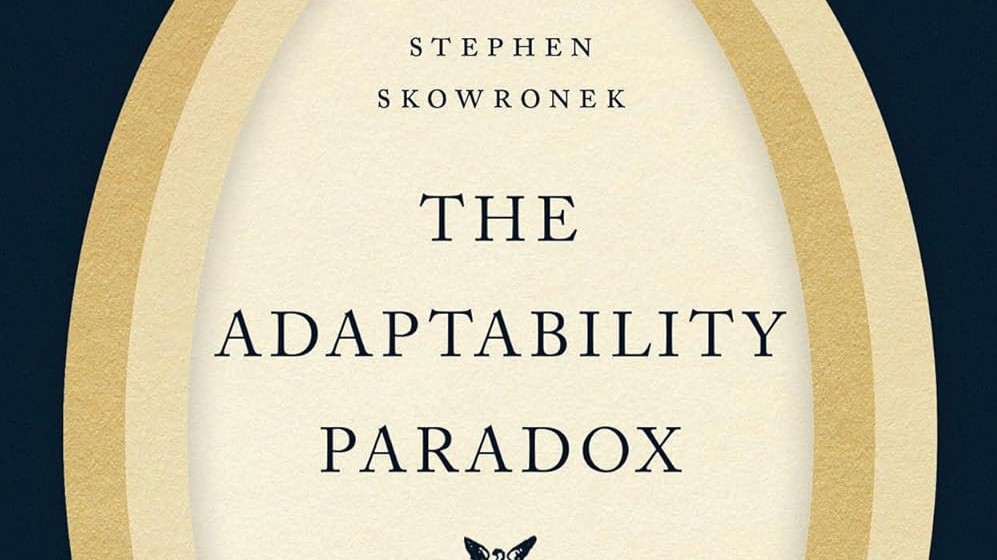
Editor’s Note: This essay originally appeared on Balkinization as part of the symposium on Stephen Skowronek’s "The Adaptability Paradox: Political Inclusion and Constitutional Resilience" (University of Chicago Press, 2025).
We live in an Era of Democratic Dissatisfaction. Over the last 10-15 years, large numbers of citizens have been continuously expressing discontent, distrust, alienation, anger and worse with governments across nearly all Western democracies, no matter which parties or coalitions are in power. One expression of this dissatisfaction is that democratic governments have become more fragile and unstable. In just the past couple years, the governments in Germany, France, Portugal, the Netherlands, and Canada have collapsed prematurely, forcing those countries to hold snap elections. Spain has been forced to hold five general elections in the last ten years, in the search for a stable governing majority; for the same reason, the U.K. held four national elections from 2015-2024 and might well be careening to another one, long before the presumptive five-year term for the current government comes to an end.
Across nearly all Western democracies, many citizens have come to feel their systems are no longer delivering for them on the issues they care most urgently about. Four aspects of the way political competition and governance is being transformed as a result illustrate the turbulence of democracy in this era. First, the traditional center-left and center-right parties that had dominated politics in nearly all these countries since World War II have been collapsing. When these parties were strong, they were able to form governing majorities either on their own or with one junior partner; as a result, government could more readily deliver on the preferences of electoral majorities. Second, the voters these parties have been hemorrhaging have moved to insurgent and more extreme parties of the left, right, or more difficult to characterize ideologies. But it is the new right parties, in particular, that have emerged most significantly as an alternative to the traditional parties and political leaders (the Reform Party in the U.K., the National Rally in France, the AfD in Germany, the Brothers of Italy, the Chega in Portugal, the Party for Freedom in the Netherlands, the Finns Party in Finland, the Progress Party in Norway, the Sweden Democrats, and others). Across 27 European countries, these new right parties barely registered in 2010, but remarkably now in the aggregate attract the same vote share as the traditional center-left and center-right parties.
Third, young voters are particularly dissatisfied with democratic governments across nearly all these countries. In many countries, these new right parties are the most popular among younger voters; where they are the second most popular, it is more extreme parties of the left that draw the most support among younger voters. Fourth, party politics throughout the West had undergone the greatest realignment since World War II, as issues of what we might call national identity have become as important or even more so than economic ones, with working-class voters becoming the base of parties on the right, while the parties of the left have become the province of more highly educated, wealthier voters. I have chronicled these developments in The Decline of Political Authority: Legal and Political Challenges in Western Democracies, 2015-2025 and Political Fragmentation in the Democracies of the West.
Steve Skowronek’s intriguing and masterful book, The Adaptability Paradox, focuses on the challenges to American democracy in this era. He doesn’t spend a lot of time defining those challenges but nods to factors such as extreme polarization, the breakdown of long-standing norms of governance, and a general sense of broad dissatisfaction with government’s seeming inability to deliver effective responses on the major economic and cultural issues roiling the nation.
In his “historical-structural” approach, he argues that the challenge American government has faced perennially is the need to adapt to the ever increasing demands of an expanding electorate, in the face of a rigid Constitution whose formal institutional structures of governance have not changed and cannot easily be changed. In the past, he argues, that challenge has been met through extra-constitutional adaptations: in the 19th century, the rise of mass political parties that integrated voter demands into a responsive government, and in the 20th century, the emergence of the administrative state, which Steve argues did the same. His animating concern is that, in the era of full democratic inclusion that began with the 1965 Voting Rights Act and the rights revolution of that era more generally, we might no longer have the ability to innovate new structures – absent a new Constitution altogether – to enable effective government that can also elicit broad consensus.
Steve’s book fundamentally raises the question of the relationship between institutional structures and political culture. How much is our unique institutional architecture of governance, which the Constitution birthed, a major cause of the democratic dissatisfaction that exists today; if we could just change those structures or invent some new mode of organizing the effective expression of today’s democratic demands, would we find the consensus Steve seeks? Or does our toxic, tribalistic politics and dysfunctional political process reflect profound cultural and political divisions and conflict that makes illusory the hope that there is some mode of “adapting” governance that would overcome these divisions. Steve’s conditions for successful adaptation are stringent: (1) adaption must satisfy the policy demands of our vast, heterogenous society; (2) maintain fidelity with the underlying “principles” of the Constitution; (3) generate widespread social buy-in.
Yet America politics over this past 10-15 years strongly resembles politics across most Western democracies. The same constant turbulence and dissatisfaction has been stirring our politics. Since 2000, in every election but two, partisan control of the House, the Senate, or the White House has changed hands, with significant likelihood this fall will continue that pattern. We have never had such an extended period of partisan churn. That pattern also expresses how sharply and closely divided the country has been over at least the past decade. Support for the major parties has plummeted; the combined approval rating for the two parties is the lowest ever recorded, while Gallup Polls calls this “The Independent Era” as self-identified independents now constitute over 40% of citizens. In our two-party system, this dissatisfaction gets expressed through the appeal of outsider candidates, whether Donald Trump or Bernie Sanders (an Independent who nearly unseated the Democratic Party’s most establishment candidate in 2016). The issues driving the new right parties in Europe have been channeled within the Republican Party, given our two-party system. The same income and education-based realignment of the parties of the left and right has taken place here. As in Europe, young voters are particularly attracted to more extreme options, whether the Democratic Socialists of America on the left or the post-liberal visions rising on the right.
I’m of two minds about the institutions v. culture question Steve’s book raises. At heart, I’m a scholar of institutions and an institutional designer. During this period of democratic dissatisfaction in the U.S., I’ve proposed a number of institutional reforms, ranging from the more practical to the less realistic, that I’ve suggested might play a role in Combatting Extremism: changing the structure of primaries, voting rules, the way we design election districts, campaign finance, or changes to the presidential nominations process. Others will take Steve’s book as support for more radical structural and institutional changes, such as abandoning the electoral college, changing the structure of the Senate, reducing the role of the Supreme Court, or other proposals.
On the other hand, I believe democratic dissatisfaction in the U.S. in this era has to be understood in the context of the pervasive dissatisfaction across nearly all Western democracies – regardless of their institutional structure. The U.K. has about as pure a majoritarian parliamentary system as any major country. No written constitution, no separation of powers, no meaningful bicameralism. Yet political alienation there is profound. Widespread disaffection with the Conservatives led to a Labour landslide in 2024, yet in little time, voters turned so strongly against Labour that its current leader, Prime Minister Keir Starmer, polls as the least popular British Prime Minister on record.
The current Fifth French Republic was specifically designed to empower a strong, independently elected President and a strong government. Its system of two-round elections was chosen to empower electoral majorities, as a rebuke of the Fourth Republic’s proportional-representation system, which was thought to have paralyzed French government. Yet France is close to ungovernable. In another variation, Germany uses a mixed-member parliamentary system that ensures proportional representation, with significant power residing in the individual states (the Länder). The prior, completely dysfunctional government was replaced in 2025; yet since then the Chancellor who had been elected, Friedrich Merz, has suffered the steepest decline in popularity, with his current “favorability” rating plummeting to -48%.
Most democratic governments in the West have been unable during this period to deliver significant economic growth and are riven with conflicts over the rise of national identity issues, including immigration. The technological revolution constantly disrupts democratic politics and weakens political authority. Steve Skowronek’s new book teems with arresting insights, but the question whether our current democratic struggles lie in our institutions, or our deeper political culture, remains open.
Editor’s Note: This essay originally appeared on Balkinization as part of the symposium on Stephen Skowronek’s "The Adaptability Paradox: Political Inclusion and Constitutional Resilience" (University of Chicago Press, 2025).
We live in an Era of Democratic Dissatisfaction. Over the last 10-15 years, large numbers of citizens have been continuously expressing discontent, distrust, alienation, anger and worse with governments across nearly all Western democracies, no matter which parties or coalitions are in power. One expression of this dissatisfaction is that democratic governments have become more fragile and unstable. In just the past couple years, the governments in Germany, France, Portugal, the Netherlands, and Canada have collapsed prematurely, forcing those countries to hold snap elections. Spain has been forced to hold five general elections in the last ten years, in the search for a stable governing majority; for the same reason, the U.K. held four national elections from 2015-2024 and might well be careening to another one, long before the presumptive five-year term for the current government comes to an end.
Across nearly all Western democracies, many citizens have come to feel their systems are no longer delivering for them on the issues they care most urgently about. Four aspects of the way political competition and governance is being transformed as a result illustrate the turbulence of democracy in this era. First, the traditional center-left and center-right parties that had dominated politics in nearly all these countries since World War II have been collapsing. When these parties were strong, they were able to form governing majorities either on their own or with one junior partner; as a result, government could more readily deliver on the preferences of electoral majorities. Second, the voters these parties have been hemorrhaging have moved to insurgent and more extreme parties of the left, right, or more difficult to characterize ideologies. But it is the new right parties, in particular, that have emerged most significantly as an alternative to the traditional parties and political leaders (the Reform Party in the U.K., the National Rally in France, the AfD in Germany, the Brothers of Italy, the Chega in Portugal, the Party for Freedom in the Netherlands, the Finns Party in Finland, the Progress Party in Norway, the Sweden Democrats, and others). Across 27 European countries, these new right parties barely registered in 2010, but remarkably now in the aggregate attract the same vote share as the traditional center-left and center-right parties.
Third, young voters are particularly dissatisfied with democratic governments across nearly all these countries. In many countries, these new right parties are the most popular among younger voters; where they are the second most popular, it is more extreme parties of the left that draw the most support among younger voters. Fourth, party politics throughout the West had undergone the greatest realignment since World War II, as issues of what we might call national identity have become as important or even more so than economic ones, with working-class voters becoming the base of parties on the right, while the parties of the left have become the province of more highly educated, wealthier voters. I have chronicled these developments in The Decline of Political Authority: Legal and Political Challenges in Western Democracies, 2015-2025 and Political Fragmentation in the Democracies of the West.
Steve Skowronek’s intriguing and masterful book, The Adaptability Paradox, focuses on the challenges to American democracy in this era. He doesn’t spend a lot of time defining those challenges but nods to factors such as extreme polarization, the breakdown of long-standing norms of governance, and a general sense of broad dissatisfaction with government’s seeming inability to deliver effective responses on the major economic and cultural issues roiling the nation.
In his “historical-structural” approach, he argues that the challenge American government has faced perennially is the need to adapt to the ever increasing demands of an expanding electorate, in the face of a rigid Constitution whose formal institutional structures of governance have not changed and cannot easily be changed. In the past, he argues, that challenge has been met through extra-constitutional adaptations: in the 19th century, the rise of mass political parties that integrated voter demands into a responsive government, and in the 20th century, the emergence of the administrative state, which Steve argues did the same. His animating concern is that, in the era of full democratic inclusion that began with the 1965 Voting Rights Act and the rights revolution of that era more generally, we might no longer have the ability to innovate new structures – absent a new Constitution altogether – to enable effective government that can also elicit broad consensus.
Steve’s book fundamentally raises the question of the relationship between institutional structures and political culture. How much is our unique institutional architecture of governance, which the Constitution birthed, a major cause of the democratic dissatisfaction that exists today; if we could just change those structures or invent some new mode of organizing the effective expression of today’s democratic demands, would we find the consensus Steve seeks? Or does our toxic, tribalistic politics and dysfunctional political process reflect profound cultural and political divisions and conflict that makes illusory the hope that there is some mode of “adapting” governance that would overcome these divisions. Steve’s conditions for successful adaptation are stringent: (1) adaption must satisfy the policy demands of our vast, heterogenous society; (2) maintain fidelity with the underlying “principles” of the Constitution; (3) generate widespread social buy-in.
Yet America politics over this past 10-15 years strongly resembles politics across most Western democracies. The same constant turbulence and dissatisfaction has been stirring our politics. Since 2000, in every election but two, partisan control of the House, the Senate, or the White House has changed hands, with significant likelihood this fall will continue that pattern. We have never had such an extended period of partisan churn. That pattern also expresses how sharply and closely divided the country has been over at least the past decade. Support for the major parties has plummeted; the combined approval rating for the two parties is the lowest ever recorded, while Gallup Polls calls this “The Independent Era” as self-identified independents now constitute over 40% of citizens. In our two-party system, this dissatisfaction gets expressed through the appeal of outsider candidates, whether Donald Trump or Bernie Sanders (an Independent who nearly unseated the Democratic Party’s most establishment candidate in 2016). The issues driving the new right parties in Europe have been channeled within the Republican Party, given our two-party system. The same income and education-based realignment of the parties of the left and right has taken place here. As in Europe, young voters are particularly attracted to more extreme options, whether the Democratic Socialists of America on the left or the post-liberal visions rising on the right.
I’m of two minds about the institutions v. culture question Steve’s book raises. At heart, I’m a scholar of institutions and an institutional designer. During this period of democratic dissatisfaction in the U.S., I’ve proposed a number of institutional reforms, ranging from the more practical to the less realistic, that I’ve suggested might play a role in Combatting Extremism: changing the structure of primaries, voting rules, the way we design election districts, campaign finance, or changes to the presidential nominations process. Others will take Steve’s book as support for more radical structural and institutional changes, such as abandoning the electoral college, changing the structure of the Senate, reducing the role of the Supreme Court, or other proposals.
On the other hand, I believe democratic dissatisfaction in the U.S. in this era has to be understood in the context of the pervasive dissatisfaction across nearly all Western democracies – regardless of their institutional structure. The U.K. has about as pure a majoritarian parliamentary system as any major country. No written constitution, no separation of powers, no meaningful bicameralism. Yet political alienation there is profound. Widespread disaffection with the Conservatives led to a Labour landslide in 2024, yet in little time, voters turned so strongly against Labour that its current leader, Prime Minister Keir Starmer, polls as the least popular British Prime Minister on record.
The current Fifth French Republic was specifically designed to empower a strong, independently elected President and a strong government. Its system of two-round elections was chosen to empower electoral majorities, as a rebuke of the Fourth Republic’s proportional-representation system, which was thought to have paralyzed French government. Yet France is close to ungovernable. In another variation, Germany uses a mixed-member parliamentary system that ensures proportional representation, with significant power residing in the individual states (the Länder). The prior, completely dysfunctional government was replaced in 2025; yet since then the Chancellor who had been elected, Friedrich Merz, has suffered the steepest decline in popularity, with his current “favorability” rating plummeting to -48%.
Most democratic governments in the West have been unable during this period to deliver significant economic growth and are riven with conflicts over the rise of national identity issues, including immigration. The technological revolution constantly disrupts democratic politics and weakens political authority. Steve Skowronek’s new book teems with arresting insights, but the question whether our current democratic struggles lie in our institutions, or our deeper political culture, remains open.
Editor’s Note: This essay originally appeared on Balkinization as part of the symposium on Stephen Skowronek’s "The Adaptability Paradox: Political Inclusion and Constitutional Resilience" (University of Chicago Press, 2025).
We live in an Era of Democratic Dissatisfaction. Over the last 10-15 years, large numbers of citizens have been continuously expressing discontent, distrust, alienation, anger and worse with governments across nearly all Western democracies, no matter which parties or coalitions are in power. One expression of this dissatisfaction is that democratic governments have become more fragile and unstable. In just the past couple years, the governments in Germany, France, Portugal, the Netherlands, and Canada have collapsed prematurely, forcing those countries to hold snap elections. Spain has been forced to hold five general elections in the last ten years, in the search for a stable governing majority; for the same reason, the U.K. held four national elections from 2015-2024 and might well be careening to another one, long before the presumptive five-year term for the current government comes to an end.
Across nearly all Western democracies, many citizens have come to feel their systems are no longer delivering for them on the issues they care most urgently about. Four aspects of the way political competition and governance is being transformed as a result illustrate the turbulence of democracy in this era. First, the traditional center-left and center-right parties that had dominated politics in nearly all these countries since World War II have been collapsing. When these parties were strong, they were able to form governing majorities either on their own or with one junior partner; as a result, government could more readily deliver on the preferences of electoral majorities. Second, the voters these parties have been hemorrhaging have moved to insurgent and more extreme parties of the left, right, or more difficult to characterize ideologies. But it is the new right parties, in particular, that have emerged most significantly as an alternative to the traditional parties and political leaders (the Reform Party in the U.K., the National Rally in France, the AfD in Germany, the Brothers of Italy, the Chega in Portugal, the Party for Freedom in the Netherlands, the Finns Party in Finland, the Progress Party in Norway, the Sweden Democrats, and others). Across 27 European countries, these new right parties barely registered in 2010, but remarkably now in the aggregate attract the same vote share as the traditional center-left and center-right parties.
Third, young voters are particularly dissatisfied with democratic governments across nearly all these countries. In many countries, these new right parties are the most popular among younger voters; where they are the second most popular, it is more extreme parties of the left that draw the most support among younger voters. Fourth, party politics throughout the West had undergone the greatest realignment since World War II, as issues of what we might call national identity have become as important or even more so than economic ones, with working-class voters becoming the base of parties on the right, while the parties of the left have become the province of more highly educated, wealthier voters. I have chronicled these developments in The Decline of Political Authority: Legal and Political Challenges in Western Democracies, 2015-2025 and Political Fragmentation in the Democracies of the West.
Steve Skowronek’s intriguing and masterful book, The Adaptability Paradox, focuses on the challenges to American democracy in this era. He doesn’t spend a lot of time defining those challenges but nods to factors such as extreme polarization, the breakdown of long-standing norms of governance, and a general sense of broad dissatisfaction with government’s seeming inability to deliver effective responses on the major economic and cultural issues roiling the nation.
In his “historical-structural” approach, he argues that the challenge American government has faced perennially is the need to adapt to the ever increasing demands of an expanding electorate, in the face of a rigid Constitution whose formal institutional structures of governance have not changed and cannot easily be changed. In the past, he argues, that challenge has been met through extra-constitutional adaptations: in the 19th century, the rise of mass political parties that integrated voter demands into a responsive government, and in the 20th century, the emergence of the administrative state, which Steve argues did the same. His animating concern is that, in the era of full democratic inclusion that began with the 1965 Voting Rights Act and the rights revolution of that era more generally, we might no longer have the ability to innovate new structures – absent a new Constitution altogether – to enable effective government that can also elicit broad consensus.
Steve’s book fundamentally raises the question of the relationship between institutional structures and political culture. How much is our unique institutional architecture of governance, which the Constitution birthed, a major cause of the democratic dissatisfaction that exists today; if we could just change those structures or invent some new mode of organizing the effective expression of today’s democratic demands, would we find the consensus Steve seeks? Or does our toxic, tribalistic politics and dysfunctional political process reflect profound cultural and political divisions and conflict that makes illusory the hope that there is some mode of “adapting” governance that would overcome these divisions. Steve’s conditions for successful adaptation are stringent: (1) adaption must satisfy the policy demands of our vast, heterogenous society; (2) maintain fidelity with the underlying “principles” of the Constitution; (3) generate widespread social buy-in.
Yet America politics over this past 10-15 years strongly resembles politics across most Western democracies. The same constant turbulence and dissatisfaction has been stirring our politics. Since 2000, in every election but two, partisan control of the House, the Senate, or the White House has changed hands, with significant likelihood this fall will continue that pattern. We have never had such an extended period of partisan churn. That pattern also expresses how sharply and closely divided the country has been over at least the past decade. Support for the major parties has plummeted; the combined approval rating for the two parties is the lowest ever recorded, while Gallup Polls calls this “The Independent Era” as self-identified independents now constitute over 40% of citizens. In our two-party system, this dissatisfaction gets expressed through the appeal of outsider candidates, whether Donald Trump or Bernie Sanders (an Independent who nearly unseated the Democratic Party’s most establishment candidate in 2016). The issues driving the new right parties in Europe have been channeled within the Republican Party, given our two-party system. The same income and education-based realignment of the parties of the left and right has taken place here. As in Europe, young voters are particularly attracted to more extreme options, whether the Democratic Socialists of America on the left or the post-liberal visions rising on the right.
I’m of two minds about the institutions v. culture question Steve’s book raises. At heart, I’m a scholar of institutions and an institutional designer. During this period of democratic dissatisfaction in the U.S., I’ve proposed a number of institutional reforms, ranging from the more practical to the less realistic, that I’ve suggested might play a role in Combatting Extremism: changing the structure of primaries, voting rules, the way we design election districts, campaign finance, or changes to the presidential nominations process. Others will take Steve’s book as support for more radical structural and institutional changes, such as abandoning the electoral college, changing the structure of the Senate, reducing the role of the Supreme Court, or other proposals.
On the other hand, I believe democratic dissatisfaction in the U.S. in this era has to be understood in the context of the pervasive dissatisfaction across nearly all Western democracies – regardless of their institutional structure. The U.K. has about as pure a majoritarian parliamentary system as any major country. No written constitution, no separation of powers, no meaningful bicameralism. Yet political alienation there is profound. Widespread disaffection with the Conservatives led to a Labour landslide in 2024, yet in little time, voters turned so strongly against Labour that its current leader, Prime Minister Keir Starmer, polls as the least popular British Prime Minister on record.
The current Fifth French Republic was specifically designed to empower a strong, independently elected President and a strong government. Its system of two-round elections was chosen to empower electoral majorities, as a rebuke of the Fourth Republic’s proportional-representation system, which was thought to have paralyzed French government. Yet France is close to ungovernable. In another variation, Germany uses a mixed-member parliamentary system that ensures proportional representation, with significant power residing in the individual states (the Länder). The prior, completely dysfunctional government was replaced in 2025; yet since then the Chancellor who had been elected, Friedrich Merz, has suffered the steepest decline in popularity, with his current “favorability” rating plummeting to -48%.
Most democratic governments in the West have been unable during this period to deliver significant economic growth and are riven with conflicts over the rise of national identity issues, including immigration. The technological revolution constantly disrupts democratic politics and weakens political authority. Steve Skowronek’s new book teems with arresting insights, but the question whether our current democratic struggles lie in our institutions, or our deeper political culture, remains open.
Editor’s Note: This essay originally appeared on Balkinization as part of the symposium on Stephen Skowronek’s "The Adaptability Paradox: Political Inclusion and Constitutional Resilience" (University of Chicago Press, 2025).
We live in an Era of Democratic Dissatisfaction. Over the last 10-15 years, large numbers of citizens have been continuously expressing discontent, distrust, alienation, anger and worse with governments across nearly all Western democracies, no matter which parties or coalitions are in power. One expression of this dissatisfaction is that democratic governments have become more fragile and unstable. In just the past couple years, the governments in Germany, France, Portugal, the Netherlands, and Canada have collapsed prematurely, forcing those countries to hold snap elections. Spain has been forced to hold five general elections in the last ten years, in the search for a stable governing majority; for the same reason, the U.K. held four national elections from 2015-2024 and might well be careening to another one, long before the presumptive five-year term for the current government comes to an end.
Across nearly all Western democracies, many citizens have come to feel their systems are no longer delivering for them on the issues they care most urgently about. Four aspects of the way political competition and governance is being transformed as a result illustrate the turbulence of democracy in this era. First, the traditional center-left and center-right parties that had dominated politics in nearly all these countries since World War II have been collapsing. When these parties were strong, they were able to form governing majorities either on their own or with one junior partner; as a result, government could more readily deliver on the preferences of electoral majorities. Second, the voters these parties have been hemorrhaging have moved to insurgent and more extreme parties of the left, right, or more difficult to characterize ideologies. But it is the new right parties, in particular, that have emerged most significantly as an alternative to the traditional parties and political leaders (the Reform Party in the U.K., the National Rally in France, the AfD in Germany, the Brothers of Italy, the Chega in Portugal, the Party for Freedom in the Netherlands, the Finns Party in Finland, the Progress Party in Norway, the Sweden Democrats, and others). Across 27 European countries, these new right parties barely registered in 2010, but remarkably now in the aggregate attract the same vote share as the traditional center-left and center-right parties.
Third, young voters are particularly dissatisfied with democratic governments across nearly all these countries. In many countries, these new right parties are the most popular among younger voters; where they are the second most popular, it is more extreme parties of the left that draw the most support among younger voters. Fourth, party politics throughout the West had undergone the greatest realignment since World War II, as issues of what we might call national identity have become as important or even more so than economic ones, with working-class voters becoming the base of parties on the right, while the parties of the left have become the province of more highly educated, wealthier voters. I have chronicled these developments in The Decline of Political Authority: Legal and Political Challenges in Western Democracies, 2015-2025 and Political Fragmentation in the Democracies of the West.
Steve Skowronek’s intriguing and masterful book, The Adaptability Paradox, focuses on the challenges to American democracy in this era. He doesn’t spend a lot of time defining those challenges but nods to factors such as extreme polarization, the breakdown of long-standing norms of governance, and a general sense of broad dissatisfaction with government’s seeming inability to deliver effective responses on the major economic and cultural issues roiling the nation.
In his “historical-structural” approach, he argues that the challenge American government has faced perennially is the need to adapt to the ever increasing demands of an expanding electorate, in the face of a rigid Constitution whose formal institutional structures of governance have not changed and cannot easily be changed. In the past, he argues, that challenge has been met through extra-constitutional adaptations: in the 19th century, the rise of mass political parties that integrated voter demands into a responsive government, and in the 20th century, the emergence of the administrative state, which Steve argues did the same. His animating concern is that, in the era of full democratic inclusion that began with the 1965 Voting Rights Act and the rights revolution of that era more generally, we might no longer have the ability to innovate new structures – absent a new Constitution altogether – to enable effective government that can also elicit broad consensus.
Steve’s book fundamentally raises the question of the relationship between institutional structures and political culture. How much is our unique institutional architecture of governance, which the Constitution birthed, a major cause of the democratic dissatisfaction that exists today; if we could just change those structures or invent some new mode of organizing the effective expression of today’s democratic demands, would we find the consensus Steve seeks? Or does our toxic, tribalistic politics and dysfunctional political process reflect profound cultural and political divisions and conflict that makes illusory the hope that there is some mode of “adapting” governance that would overcome these divisions. Steve’s conditions for successful adaptation are stringent: (1) adaption must satisfy the policy demands of our vast, heterogenous society; (2) maintain fidelity with the underlying “principles” of the Constitution; (3) generate widespread social buy-in.
Yet America politics over this past 10-15 years strongly resembles politics across most Western democracies. The same constant turbulence and dissatisfaction has been stirring our politics. Since 2000, in every election but two, partisan control of the House, the Senate, or the White House has changed hands, with significant likelihood this fall will continue that pattern. We have never had such an extended period of partisan churn. That pattern also expresses how sharply and closely divided the country has been over at least the past decade. Support for the major parties has plummeted; the combined approval rating for the two parties is the lowest ever recorded, while Gallup Polls calls this “The Independent Era” as self-identified independents now constitute over 40% of citizens. In our two-party system, this dissatisfaction gets expressed through the appeal of outsider candidates, whether Donald Trump or Bernie Sanders (an Independent who nearly unseated the Democratic Party’s most establishment candidate in 2016). The issues driving the new right parties in Europe have been channeled within the Republican Party, given our two-party system. The same income and education-based realignment of the parties of the left and right has taken place here. As in Europe, young voters are particularly attracted to more extreme options, whether the Democratic Socialists of America on the left or the post-liberal visions rising on the right.
I’m of two minds about the institutions v. culture question Steve’s book raises. At heart, I’m a scholar of institutions and an institutional designer. During this period of democratic dissatisfaction in the U.S., I’ve proposed a number of institutional reforms, ranging from the more practical to the less realistic, that I’ve suggested might play a role in Combatting Extremism: changing the structure of primaries, voting rules, the way we design election districts, campaign finance, or changes to the presidential nominations process. Others will take Steve’s book as support for more radical structural and institutional changes, such as abandoning the electoral college, changing the structure of the Senate, reducing the role of the Supreme Court, or other proposals.
On the other hand, I believe democratic dissatisfaction in the U.S. in this era has to be understood in the context of the pervasive dissatisfaction across nearly all Western democracies – regardless of their institutional structure. The U.K. has about as pure a majoritarian parliamentary system as any major country. No written constitution, no separation of powers, no meaningful bicameralism. Yet political alienation there is profound. Widespread disaffection with the Conservatives led to a Labour landslide in 2024, yet in little time, voters turned so strongly against Labour that its current leader, Prime Minister Keir Starmer, polls as the least popular British Prime Minister on record.
The current Fifth French Republic was specifically designed to empower a strong, independently elected President and a strong government. Its system of two-round elections was chosen to empower electoral majorities, as a rebuke of the Fourth Republic’s proportional-representation system, which was thought to have paralyzed French government. Yet France is close to ungovernable. In another variation, Germany uses a mixed-member parliamentary system that ensures proportional representation, with significant power residing in the individual states (the Länder). The prior, completely dysfunctional government was replaced in 2025; yet since then the Chancellor who had been elected, Friedrich Merz, has suffered the steepest decline in popularity, with his current “favorability” rating plummeting to -48%.
Most democratic governments in the West have been unable during this period to deliver significant economic growth and are riven with conflicts over the rise of national identity issues, including immigration. The technological revolution constantly disrupts democratic politics and weakens political authority. Steve Skowronek’s new book teems with arresting insights, but the question whether our current democratic struggles lie in our institutions, or our deeper political culture, remains open.
Editor’s Note: This essay originally appeared on Balkinization as part of the symposium on Stephen Skowronek’s "The Adaptability Paradox: Political Inclusion and Constitutional Resilience" (University of Chicago Press, 2025).
We live in an Era of Democratic Dissatisfaction. Over the last 10-15 years, large numbers of citizens have been continuously expressing discontent, distrust, alienation, anger and worse with governments across nearly all Western democracies, no matter which parties or coalitions are in power. One expression of this dissatisfaction is that democratic governments have become more fragile and unstable. In just the past couple years, the governments in Germany, France, Portugal, the Netherlands, and Canada have collapsed prematurely, forcing those countries to hold snap elections. Spain has been forced to hold five general elections in the last ten years, in the search for a stable governing majority; for the same reason, the U.K. held four national elections from 2015-2024 and might well be careening to another one, long before the presumptive five-year term for the current government comes to an end.
Across nearly all Western democracies, many citizens have come to feel their systems are no longer delivering for them on the issues they care most urgently about. Four aspects of the way political competition and governance is being transformed as a result illustrate the turbulence of democracy in this era. First, the traditional center-left and center-right parties that had dominated politics in nearly all these countries since World War II have been collapsing. When these parties were strong, they were able to form governing majorities either on their own or with one junior partner; as a result, government could more readily deliver on the preferences of electoral majorities. Second, the voters these parties have been hemorrhaging have moved to insurgent and more extreme parties of the left, right, or more difficult to characterize ideologies. But it is the new right parties, in particular, that have emerged most significantly as an alternative to the traditional parties and political leaders (the Reform Party in the U.K., the National Rally in France, the AfD in Germany, the Brothers of Italy, the Chega in Portugal, the Party for Freedom in the Netherlands, the Finns Party in Finland, the Progress Party in Norway, the Sweden Democrats, and others). Across 27 European countries, these new right parties barely registered in 2010, but remarkably now in the aggregate attract the same vote share as the traditional center-left and center-right parties.
Third, young voters are particularly dissatisfied with democratic governments across nearly all these countries. In many countries, these new right parties are the most popular among younger voters; where they are the second most popular, it is more extreme parties of the left that draw the most support among younger voters. Fourth, party politics throughout the West had undergone the greatest realignment since World War II, as issues of what we might call national identity have become as important or even more so than economic ones, with working-class voters becoming the base of parties on the right, while the parties of the left have become the province of more highly educated, wealthier voters. I have chronicled these developments in The Decline of Political Authority: Legal and Political Challenges in Western Democracies, 2015-2025 and Political Fragmentation in the Democracies of the West.
Steve Skowronek’s intriguing and masterful book, The Adaptability Paradox, focuses on the challenges to American democracy in this era. He doesn’t spend a lot of time defining those challenges but nods to factors such as extreme polarization, the breakdown of long-standing norms of governance, and a general sense of broad dissatisfaction with government’s seeming inability to deliver effective responses on the major economic and cultural issues roiling the nation.
In his “historical-structural” approach, he argues that the challenge American government has faced perennially is the need to adapt to the ever increasing demands of an expanding electorate, in the face of a rigid Constitution whose formal institutional structures of governance have not changed and cannot easily be changed. In the past, he argues, that challenge has been met through extra-constitutional adaptations: in the 19th century, the rise of mass political parties that integrated voter demands into a responsive government, and in the 20th century, the emergence of the administrative state, which Steve argues did the same. His animating concern is that, in the era of full democratic inclusion that began with the 1965 Voting Rights Act and the rights revolution of that era more generally, we might no longer have the ability to innovate new structures – absent a new Constitution altogether – to enable effective government that can also elicit broad consensus.
Steve’s book fundamentally raises the question of the relationship between institutional structures and political culture. How much is our unique institutional architecture of governance, which the Constitution birthed, a major cause of the democratic dissatisfaction that exists today; if we could just change those structures or invent some new mode of organizing the effective expression of today’s democratic demands, would we find the consensus Steve seeks? Or does our toxic, tribalistic politics and dysfunctional political process reflect profound cultural and political divisions and conflict that makes illusory the hope that there is some mode of “adapting” governance that would overcome these divisions. Steve’s conditions for successful adaptation are stringent: (1) adaption must satisfy the policy demands of our vast, heterogenous society; (2) maintain fidelity with the underlying “principles” of the Constitution; (3) generate widespread social buy-in.
Yet America politics over this past 10-15 years strongly resembles politics across most Western democracies. The same constant turbulence and dissatisfaction has been stirring our politics. Since 2000, in every election but two, partisan control of the House, the Senate, or the White House has changed hands, with significant likelihood this fall will continue that pattern. We have never had such an extended period of partisan churn. That pattern also expresses how sharply and closely divided the country has been over at least the past decade. Support for the major parties has plummeted; the combined approval rating for the two parties is the lowest ever recorded, while Gallup Polls calls this “The Independent Era” as self-identified independents now constitute over 40% of citizens. In our two-party system, this dissatisfaction gets expressed through the appeal of outsider candidates, whether Donald Trump or Bernie Sanders (an Independent who nearly unseated the Democratic Party’s most establishment candidate in 2016). The issues driving the new right parties in Europe have been channeled within the Republican Party, given our two-party system. The same income and education-based realignment of the parties of the left and right has taken place here. As in Europe, young voters are particularly attracted to more extreme options, whether the Democratic Socialists of America on the left or the post-liberal visions rising on the right.
I’m of two minds about the institutions v. culture question Steve’s book raises. At heart, I’m a scholar of institutions and an institutional designer. During this period of democratic dissatisfaction in the U.S., I’ve proposed a number of institutional reforms, ranging from the more practical to the less realistic, that I’ve suggested might play a role in Combatting Extremism: changing the structure of primaries, voting rules, the way we design election districts, campaign finance, or changes to the presidential nominations process. Others will take Steve’s book as support for more radical structural and institutional changes, such as abandoning the electoral college, changing the structure of the Senate, reducing the role of the Supreme Court, or other proposals.
On the other hand, I believe democratic dissatisfaction in the U.S. in this era has to be understood in the context of the pervasive dissatisfaction across nearly all Western democracies – regardless of their institutional structure. The U.K. has about as pure a majoritarian parliamentary system as any major country. No written constitution, no separation of powers, no meaningful bicameralism. Yet political alienation there is profound. Widespread disaffection with the Conservatives led to a Labour landslide in 2024, yet in little time, voters turned so strongly against Labour that its current leader, Prime Minister Keir Starmer, polls as the least popular British Prime Minister on record.
The current Fifth French Republic was specifically designed to empower a strong, independently elected President and a strong government. Its system of two-round elections was chosen to empower electoral majorities, as a rebuke of the Fourth Republic’s proportional-representation system, which was thought to have paralyzed French government. Yet France is close to ungovernable. In another variation, Germany uses a mixed-member parliamentary system that ensures proportional representation, with significant power residing in the individual states (the Länder). The prior, completely dysfunctional government was replaced in 2025; yet since then the Chancellor who had been elected, Friedrich Merz, has suffered the steepest decline in popularity, with his current “favorability” rating plummeting to -48%.
Most democratic governments in the West have been unable during this period to deliver significant economic growth and are riven with conflicts over the rise of national identity issues, including immigration. The technological revolution constantly disrupts democratic politics and weakens political authority. Steve Skowronek’s new book teems with arresting insights, but the question whether our current democratic struggles lie in our institutions, or our deeper political culture, remains open.
Editor’s Note: This essay originally appeared on Balkinization as part of the symposium on Stephen Skowronek’s "The Adaptability Paradox: Political Inclusion and Constitutional Resilience" (University of Chicago Press, 2025).
We live in an Era of Democratic Dissatisfaction. Over the last 10-15 years, large numbers of citizens have been continuously expressing discontent, distrust, alienation, anger and worse with governments across nearly all Western democracies, no matter which parties or coalitions are in power. One expression of this dissatisfaction is that democratic governments have become more fragile and unstable. In just the past couple years, the governments in Germany, France, Portugal, the Netherlands, and Canada have collapsed prematurely, forcing those countries to hold snap elections. Spain has been forced to hold five general elections in the last ten years, in the search for a stable governing majority; for the same reason, the U.K. held four national elections from 2015-2024 and might well be careening to another one, long before the presumptive five-year term for the current government comes to an end.
Across nearly all Western democracies, many citizens have come to feel their systems are no longer delivering for them on the issues they care most urgently about. Four aspects of the way political competition and governance is being transformed as a result illustrate the turbulence of democracy in this era. First, the traditional center-left and center-right parties that had dominated politics in nearly all these countries since World War II have been collapsing. When these parties were strong, they were able to form governing majorities either on their own or with one junior partner; as a result, government could more readily deliver on the preferences of electoral majorities. Second, the voters these parties have been hemorrhaging have moved to insurgent and more extreme parties of the left, right, or more difficult to characterize ideologies. But it is the new right parties, in particular, that have emerged most significantly as an alternative to the traditional parties and political leaders (the Reform Party in the U.K., the National Rally in France, the AfD in Germany, the Brothers of Italy, the Chega in Portugal, the Party for Freedom in the Netherlands, the Finns Party in Finland, the Progress Party in Norway, the Sweden Democrats, and others). Across 27 European countries, these new right parties barely registered in 2010, but remarkably now in the aggregate attract the same vote share as the traditional center-left and center-right parties.
Third, young voters are particularly dissatisfied with democratic governments across nearly all these countries. In many countries, these new right parties are the most popular among younger voters; where they are the second most popular, it is more extreme parties of the left that draw the most support among younger voters. Fourth, party politics throughout the West had undergone the greatest realignment since World War II, as issues of what we might call national identity have become as important or even more so than economic ones, with working-class voters becoming the base of parties on the right, while the parties of the left have become the province of more highly educated, wealthier voters. I have chronicled these developments in The Decline of Political Authority: Legal and Political Challenges in Western Democracies, 2015-2025 and Political Fragmentation in the Democracies of the West.
Steve Skowronek’s intriguing and masterful book, The Adaptability Paradox, focuses on the challenges to American democracy in this era. He doesn’t spend a lot of time defining those challenges but nods to factors such as extreme polarization, the breakdown of long-standing norms of governance, and a general sense of broad dissatisfaction with government’s seeming inability to deliver effective responses on the major economic and cultural issues roiling the nation.
In his “historical-structural” approach, he argues that the challenge American government has faced perennially is the need to adapt to the ever increasing demands of an expanding electorate, in the face of a rigid Constitution whose formal institutional structures of governance have not changed and cannot easily be changed. In the past, he argues, that challenge has been met through extra-constitutional adaptations: in the 19th century, the rise of mass political parties that integrated voter demands into a responsive government, and in the 20th century, the emergence of the administrative state, which Steve argues did the same. His animating concern is that, in the era of full democratic inclusion that began with the 1965 Voting Rights Act and the rights revolution of that era more generally, we might no longer have the ability to innovate new structures – absent a new Constitution altogether – to enable effective government that can also elicit broad consensus.
Steve’s book fundamentally raises the question of the relationship between institutional structures and political culture. How much is our unique institutional architecture of governance, which the Constitution birthed, a major cause of the democratic dissatisfaction that exists today; if we could just change those structures or invent some new mode of organizing the effective expression of today’s democratic demands, would we find the consensus Steve seeks? Or does our toxic, tribalistic politics and dysfunctional political process reflect profound cultural and political divisions and conflict that makes illusory the hope that there is some mode of “adapting” governance that would overcome these divisions. Steve’s conditions for successful adaptation are stringent: (1) adaption must satisfy the policy demands of our vast, heterogenous society; (2) maintain fidelity with the underlying “principles” of the Constitution; (3) generate widespread social buy-in.
Yet America politics over this past 10-15 years strongly resembles politics across most Western democracies. The same constant turbulence and dissatisfaction has been stirring our politics. Since 2000, in every election but two, partisan control of the House, the Senate, or the White House has changed hands, with significant likelihood this fall will continue that pattern. We have never had such an extended period of partisan churn. That pattern also expresses how sharply and closely divided the country has been over at least the past decade. Support for the major parties has plummeted; the combined approval rating for the two parties is the lowest ever recorded, while Gallup Polls calls this “The Independent Era” as self-identified independents now constitute over 40% of citizens. In our two-party system, this dissatisfaction gets expressed through the appeal of outsider candidates, whether Donald Trump or Bernie Sanders (an Independent who nearly unseated the Democratic Party’s most establishment candidate in 2016). The issues driving the new right parties in Europe have been channeled within the Republican Party, given our two-party system. The same income and education-based realignment of the parties of the left and right has taken place here. As in Europe, young voters are particularly attracted to more extreme options, whether the Democratic Socialists of America on the left or the post-liberal visions rising on the right.
I’m of two minds about the institutions v. culture question Steve’s book raises. At heart, I’m a scholar of institutions and an institutional designer. During this period of democratic dissatisfaction in the U.S., I’ve proposed a number of institutional reforms, ranging from the more practical to the less realistic, that I’ve suggested might play a role in Combatting Extremism: changing the structure of primaries, voting rules, the way we design election districts, campaign finance, or changes to the presidential nominations process. Others will take Steve’s book as support for more radical structural and institutional changes, such as abandoning the electoral college, changing the structure of the Senate, reducing the role of the Supreme Court, or other proposals.
On the other hand, I believe democratic dissatisfaction in the U.S. in this era has to be understood in the context of the pervasive dissatisfaction across nearly all Western democracies – regardless of their institutional structure. The U.K. has about as pure a majoritarian parliamentary system as any major country. No written constitution, no separation of powers, no meaningful bicameralism. Yet political alienation there is profound. Widespread disaffection with the Conservatives led to a Labour landslide in 2024, yet in little time, voters turned so strongly against Labour that its current leader, Prime Minister Keir Starmer, polls as the least popular British Prime Minister on record.
The current Fifth French Republic was specifically designed to empower a strong, independently elected President and a strong government. Its system of two-round elections was chosen to empower electoral majorities, as a rebuke of the Fourth Republic’s proportional-representation system, which was thought to have paralyzed French government. Yet France is close to ungovernable. In another variation, Germany uses a mixed-member parliamentary system that ensures proportional representation, with significant power residing in the individual states (the Länder). The prior, completely dysfunctional government was replaced in 2025; yet since then the Chancellor who had been elected, Friedrich Merz, has suffered the steepest decline in popularity, with his current “favorability” rating plummeting to -48%.
Most democratic governments in the West have been unable during this period to deliver significant economic growth and are riven with conflicts over the rise of national identity issues, including immigration. The technological revolution constantly disrupts democratic politics and weakens political authority. Steve Skowronek’s new book teems with arresting insights, but the question whether our current democratic struggles lie in our institutions, or our deeper political culture, remains open.
About the Author
Richard Pildes
Pildes is a founding Faculty Director of the Democracy Project and Sudler Family Professor of Constitutional Law at NYU School of Law. He is the nation’s most cited scholar on election law, a leading expert on American government and democratic governance worldwide, co-editor of Electoral Reform in the United States: Reforms for Combatting Polarization and Extremism (2025), and a member of President Biden’s Commission on the Supreme Court of the United States and the bipartisan ABA Task Force on American democracy.
About the Author
Richard Pildes
Pildes is a founding Faculty Director of the Democracy Project and Sudler Family Professor of Constitutional Law at NYU School of Law. He is the nation’s most cited scholar on election law, a leading expert on American government and democratic governance worldwide, co-editor of Electoral Reform in the United States: Reforms for Combatting Polarization and Extremism (2025), and a member of President Biden’s Commission on the Supreme Court of the United States and the bipartisan ABA Task Force on American democracy.
About the Author
Richard Pildes
Pildes is a founding Faculty Director of the Democracy Project and Sudler Family Professor of Constitutional Law at NYU School of Law. He is the nation’s most cited scholar on election law, a leading expert on American government and democratic governance worldwide, co-editor of Electoral Reform in the United States: Reforms for Combatting Polarization and Extremism (2025), and a member of President Biden’s Commission on the Supreme Court of the United States and the bipartisan ABA Task Force on American democracy.
More viewpoints in
Congress, The President & The Courts

Sep 3, 2026
The Case for Factions
James Wallner
,
Soren Dayton
Congress, The President & The Courts
Sep 3, 2026
The Case for Factions
James Wallner
,
Soren Dayton
Congress, The President & The Courts
Sep 3, 2026
The Case for Factions
James Wallner
,
Soren Dayton
Congress, The President & The Courts

Sep 1, 2026
How to Get Justice, and Judges, Closer to the People
Julio Ríos-Figueroa
Congress, The President & The Courts
Sep 1, 2026
How to Get Justice, and Judges, Closer to the People
Julio Ríos-Figueroa
Congress, The President & The Courts
Sep 1, 2026
How to Get Justice, and Judges, Closer to the People
Julio Ríos-Figueroa
Congress, The President & The Courts

Jul 29, 2026
The Decline of the Legislative Branch and the Crisis of Statecraft
Robert Greally
Congress, The President & The Courts
Jul 29, 2026
The Decline of the Legislative Branch and the Crisis of Statecraft
Robert Greally
Congress, The President & The Courts
Jul 29, 2026
The Decline of the Legislative Branch and the Crisis of Statecraft
Robert Greally
Congress, The President & The Courts
More viewpoints in
Congress, The President & The Courts
Sep 3, 2026
The Case for Factions
James Wallner
,
Soren Dayton
Congress, The President & The Courts
Sep 1, 2026
How to Get Justice, and Judges, Closer to the People
Julio Ríos-Figueroa
Congress, The President & The Courts
Jul 29, 2026
The Decline of the Legislative Branch and the Crisis of Statecraft
Robert Greally
Congress, The President & The Courts
More viewpoints in
Congress, The President & The Courts
Sep 3, 2026
The Case for Factions
James Wallner
,
Soren Dayton
Congress, The President & The Courts
Sep 1, 2026
How to Get Justice, and Judges, Closer to the People
Julio Ríos-Figueroa
Congress, The President & The Courts
Jul 29, 2026
The Decline of the Legislative Branch and the Crisis of Statecraft
Robert Greally
Congress, The President & The Courts
More viewpoints in
Congress, The President & The Courts
Sep 3, 2026
The Case for Factions
James Wallner
,
Soren Dayton
Congress, The President & The Courts
Sep 1, 2026
How to Get Justice, and Judges, Closer to the People
Julio Ríos-Figueroa
Congress, The President & The Courts
Jul 29, 2026
The Decline of the Legislative Branch and the Crisis of Statecraft
Robert Greally
Congress, The President & The Courts