Apr 15, 2026
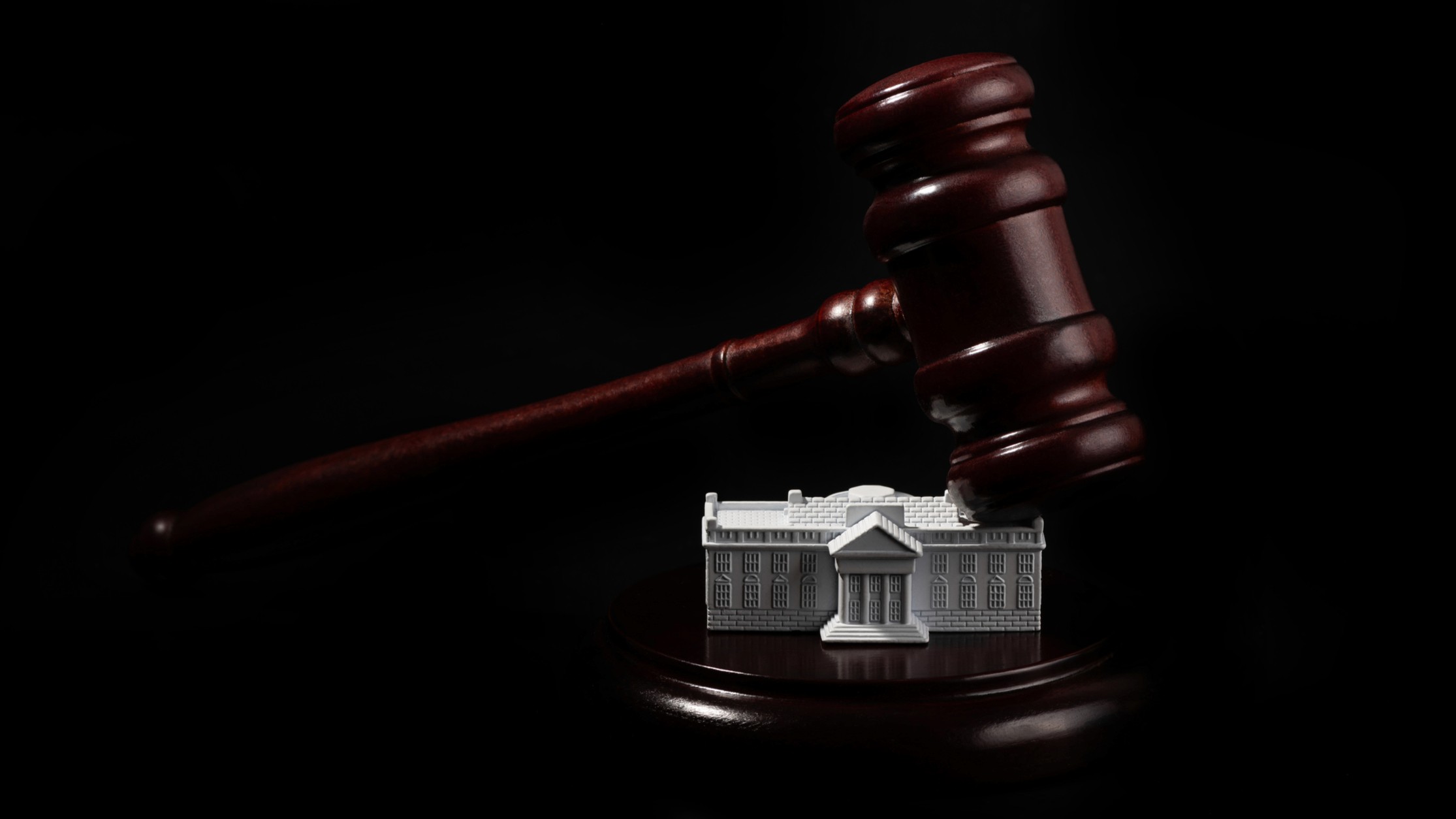
Let Congress Sue Over Abuses of Executive Power
Andrew C. McCarthy
Apr 15, 2026
Let Congress Sue Over Abuses of Executive Power
Andrew C. McCarthy
Apr 15, 2026
Let Congress Sue Over Abuses of Executive Power
Andrew C. McCarthy
Apr 15, 2026
Let Congress Sue Over Abuses of Executive Power
Andrew C. McCarthy
Apr 15, 2026
Let Congress Sue Over Abuses of Executive Power
Andrew C. McCarthy
Apr 15, 2026
Let Congress Sue Over Abuses of Executive Power
Andrew C. McCarthy
“Bring Back Congress.” That was the exhortation of my initial contribution to NYU’s Democracy Project, rooted in the premise that ours is a visionary form of republican democracy. It was established by Framers steeped in the baleful history of purer, grassroots democracy: inexorable decline into populism, instability, mob rule, and tyranny. The antidote, the American experiment in safeguarding liberty, is representative democracy: power is divided and the most fundamental rights of individuals are insulated from erosion by majority rule.
Since that essay appeared seven months ago, the United States has initiated three combat expeditions that the Trump administration resists describing as “war” precisely to avoid triggering the intrusion of Congress’s war power: the war in Iran; the invasion of Venezuela and extraction of its de facto leader, Nicolás Maduro; and the use of lethal force against vessels suspected of trafficking in narcotics in the Caribbean, resulting in the deaths of over 160 people allegedly engaged (but not proved to be engaged) in a potential federal crime but not an act of military aggression.
President Trump, moreover, continued unilaterally and capriciously imposing tariffs – i.e., taxes on imports, a constitutional power of Congress – until finally blocked by the Supreme Court in Learning Resources v. Trump (February 20, 2026), after which he berated the justices and angrily insisted he’d reinstate the tariffs by similarly dubious means, rather than seek legislative imprimatur.
And the president – when not saber-rattling about seizing Greenland, threatening to withdraw the United States from the North Atlantic Treaty Organization (amidst Russia’s war of aggression against Ukraine, no less), issuing edicts about when college football games may be played, and picking a fight with the pope – continues leveraging the government’s law enforcement and intelligence apparatus against political enemies and scapegoats. This extortionate campaign includes criminally probing the chairman of the “independent” Federal Reserve, whom the president has tirelessly pressured to lower interest rates despite lingering and now rising inflation.
Our authoritarian turn away from republican democracy did not begin with the non-consecutive presidential terms of Donald Trump. The drift has been over a century in the making: the rise of progressive governing theories and the administrative state, the shift of paramount authority from Congress to the executive branch, and the evolution of federal priorities from defense of national security to provision of a safety net whose metastasizing entitlement obligations increasingly erode budgetary room for legislative discretion. These trends have been accelerated by media and technological evolution, America’s dominant global position after World War II, and post-9/11 counterterrorism’s emphasis on lightning-strike intelligence operations rather than traditional warfighting.
A smaller world geared to crisis coverage and instantaneous reactions tilts toward executive decisiveness and away from deliberative process. To be sure, the latter can be frustratingly slow; that’s a feature, not a bug, valuing popular consensus and stability over autocracy.
Trump is different in that he is unabashed in usurping legislative powers or, at least, in exploiting congressional delegations of sweeping emergency powers in what, manifestly, are not emergency circumstances. Plus, having been boosted to victory in 2024 on a narrative that Democrats used lawfare to destroy his candidacy (a narrative that was colorable but that minimized serious misconduct on his part), Trump is uniquely brazen in the punitive use of government processes – prosecution, regulation, executive discretion over contracting and security clearances, etc. – against his political foes.
But it’s essential to bear in mind that the incumbent president did not invent these iterations of executive malfeasance. You want to say he is uniquely audacious? Fair enough. He is, however, an exacerbator, not a trailblazer. Indeed, he sees himself as a victim whose election has transmogrified him into his base’s “retribution” against Democratic abuses of power.
Perhaps you are a Trump populist who buys this tale, or an anti-Trump Democrat who dismisses it as arrant nonsense. As a conservative (as that category was understood pre-2016), I see it as a mixture of hyperbole and inevitability: the Framers’ guardrails against agglomeration of power in the executive branch have eroded over decades; it was a foregone conclusion that demagogic authoritarians would ascend.
So how to reverse this trajectory? There is no silver bullet answer.
Our governing framework assumed Congress would be the heart of republican government: closest to the people, endowed with the power to make law, jealous of its institutional prestige and thus motivated to check executive overreach. It is not obvious how the dereliction of contemporary Congress can be remedied any time soon. The modern media environment advantages the firebrands in each major party’s base; to participate in the legislative hallmarks of negotiation and compromise – not selling out but principled, good-faith bargaining – actually undermines a legislator’s electoral prospects. If Congress can neither move bills nor amass the majorities needed to discipline the president – through the power of the purse, control over executive appointments, a credible threat of impeachment and removal – then there is no effective check on executive excess.
This is not an acceptable outcome because the brute fact that induced the Framers to divide authority and give Congress the whip hand has not changed: the concentration of powers to both make and execute law in a single set of hands remains the roadmap to tyranny. The president has to be prevented from decreeing laws and then enforcing the decrees. Not just the incumbent president, any president.
Reluctantly, then, I am advocating something I’ve always opposed: new legislative and judicial protocols clarifying that members of Congress may bring lawsuits challenging the legality of presidential actions, and of administrative actions that arguably exceed the relevant agency’s statutory remit.
The Constitution endows Congress with an arsenal more than sufficient to address presidential abuses of power. It would shock the Framers to think that the Article I branch needs to turn to the Article III branch – conceived as the weakest – to do its heavy lifting. What’s more, the judiciary is the apolitical branch; I am aware that what I am proposing would intrude the courts more deeply than ever in policy matters that, in a democratic republic, should be resolved by democratically accountable actors.
Nevertheless, what we’re doing now is not working. And everything is a tradeoff. If the choice is a president unchecked by Congress or one checked by members of Congress with the judicial branch as a faithful referee, I will take the latter – even conceding that it would be better for Congress to exercise its atrophied constitutional muscles and for courts to stick to redressing concrete injuries suffered by victims of unlawful government action.
A few closing observations.
First, I limit this proposal to congressional lawsuits. The courts would be overwhelmed by a general slackening of standing requirements enabling private litigants and special interest groups to sue over generalized complaints (“the president is violating X law”) with no particularized injury. And members of Congress would be politically accountable if they file abusive lawsuits.
Second, this is no perfect solution. The courts have no power to enforce their rulings and an abusive president could defy a finding of ultra vires executive action. But a clear judicial conclusion of lawlessness could catalyze Congress to take corrective measures – and its powers have real teeth.
Finally, this is only a salutary measure if the judiciary retains its character as neutral vindicator of the rule of law. Court packing schemes, the wayward presumption of which fault the Supreme Court for failing to produce ideological results, rather than judgments grounded in law, would devolve the Court into a partisan super-legislature. This would forfeit its value as the non-political expositor of what the law is.
We need that value, now more than ever.
“Bring Back Congress.” That was the exhortation of my initial contribution to NYU’s Democracy Project, rooted in the premise that ours is a visionary form of republican democracy. It was established by Framers steeped in the baleful history of purer, grassroots democracy: inexorable decline into populism, instability, mob rule, and tyranny. The antidote, the American experiment in safeguarding liberty, is representative democracy: power is divided and the most fundamental rights of individuals are insulated from erosion by majority rule.
Since that essay appeared seven months ago, the United States has initiated three combat expeditions that the Trump administration resists describing as “war” precisely to avoid triggering the intrusion of Congress’s war power: the war in Iran; the invasion of Venezuela and extraction of its de facto leader, Nicolás Maduro; and the use of lethal force against vessels suspected of trafficking in narcotics in the Caribbean, resulting in the deaths of over 160 people allegedly engaged (but not proved to be engaged) in a potential federal crime but not an act of military aggression.
President Trump, moreover, continued unilaterally and capriciously imposing tariffs – i.e., taxes on imports, a constitutional power of Congress – until finally blocked by the Supreme Court in Learning Resources v. Trump (February 20, 2026), after which he berated the justices and angrily insisted he’d reinstate the tariffs by similarly dubious means, rather than seek legislative imprimatur.
And the president – when not saber-rattling about seizing Greenland, threatening to withdraw the United States from the North Atlantic Treaty Organization (amidst Russia’s war of aggression against Ukraine, no less), issuing edicts about when college football games may be played, and picking a fight with the pope – continues leveraging the government’s law enforcement and intelligence apparatus against political enemies and scapegoats. This extortionate campaign includes criminally probing the chairman of the “independent” Federal Reserve, whom the president has tirelessly pressured to lower interest rates despite lingering and now rising inflation.
Our authoritarian turn away from republican democracy did not begin with the non-consecutive presidential terms of Donald Trump. The drift has been over a century in the making: the rise of progressive governing theories and the administrative state, the shift of paramount authority from Congress to the executive branch, and the evolution of federal priorities from defense of national security to provision of a safety net whose metastasizing entitlement obligations increasingly erode budgetary room for legislative discretion. These trends have been accelerated by media and technological evolution, America’s dominant global position after World War II, and post-9/11 counterterrorism’s emphasis on lightning-strike intelligence operations rather than traditional warfighting.
A smaller world geared to crisis coverage and instantaneous reactions tilts toward executive decisiveness and away from deliberative process. To be sure, the latter can be frustratingly slow; that’s a feature, not a bug, valuing popular consensus and stability over autocracy.
Trump is different in that he is unabashed in usurping legislative powers or, at least, in exploiting congressional delegations of sweeping emergency powers in what, manifestly, are not emergency circumstances. Plus, having been boosted to victory in 2024 on a narrative that Democrats used lawfare to destroy his candidacy (a narrative that was colorable but that minimized serious misconduct on his part), Trump is uniquely brazen in the punitive use of government processes – prosecution, regulation, executive discretion over contracting and security clearances, etc. – against his political foes.
But it’s essential to bear in mind that the incumbent president did not invent these iterations of executive malfeasance. You want to say he is uniquely audacious? Fair enough. He is, however, an exacerbator, not a trailblazer. Indeed, he sees himself as a victim whose election has transmogrified him into his base’s “retribution” against Democratic abuses of power.
Perhaps you are a Trump populist who buys this tale, or an anti-Trump Democrat who dismisses it as arrant nonsense. As a conservative (as that category was understood pre-2016), I see it as a mixture of hyperbole and inevitability: the Framers’ guardrails against agglomeration of power in the executive branch have eroded over decades; it was a foregone conclusion that demagogic authoritarians would ascend.
So how to reverse this trajectory? There is no silver bullet answer.
Our governing framework assumed Congress would be the heart of republican government: closest to the people, endowed with the power to make law, jealous of its institutional prestige and thus motivated to check executive overreach. It is not obvious how the dereliction of contemporary Congress can be remedied any time soon. The modern media environment advantages the firebrands in each major party’s base; to participate in the legislative hallmarks of negotiation and compromise – not selling out but principled, good-faith bargaining – actually undermines a legislator’s electoral prospects. If Congress can neither move bills nor amass the majorities needed to discipline the president – through the power of the purse, control over executive appointments, a credible threat of impeachment and removal – then there is no effective check on executive excess.
This is not an acceptable outcome because the brute fact that induced the Framers to divide authority and give Congress the whip hand has not changed: the concentration of powers to both make and execute law in a single set of hands remains the roadmap to tyranny. The president has to be prevented from decreeing laws and then enforcing the decrees. Not just the incumbent president, any president.
Reluctantly, then, I am advocating something I’ve always opposed: new legislative and judicial protocols clarifying that members of Congress may bring lawsuits challenging the legality of presidential actions, and of administrative actions that arguably exceed the relevant agency’s statutory remit.
The Constitution endows Congress with an arsenal more than sufficient to address presidential abuses of power. It would shock the Framers to think that the Article I branch needs to turn to the Article III branch – conceived as the weakest – to do its heavy lifting. What’s more, the judiciary is the apolitical branch; I am aware that what I am proposing would intrude the courts more deeply than ever in policy matters that, in a democratic republic, should be resolved by democratically accountable actors.
Nevertheless, what we’re doing now is not working. And everything is a tradeoff. If the choice is a president unchecked by Congress or one checked by members of Congress with the judicial branch as a faithful referee, I will take the latter – even conceding that it would be better for Congress to exercise its atrophied constitutional muscles and for courts to stick to redressing concrete injuries suffered by victims of unlawful government action.
A few closing observations.
First, I limit this proposal to congressional lawsuits. The courts would be overwhelmed by a general slackening of standing requirements enabling private litigants and special interest groups to sue over generalized complaints (“the president is violating X law”) with no particularized injury. And members of Congress would be politically accountable if they file abusive lawsuits.
Second, this is no perfect solution. The courts have no power to enforce their rulings and an abusive president could defy a finding of ultra vires executive action. But a clear judicial conclusion of lawlessness could catalyze Congress to take corrective measures – and its powers have real teeth.
Finally, this is only a salutary measure if the judiciary retains its character as neutral vindicator of the rule of law. Court packing schemes, the wayward presumption of which fault the Supreme Court for failing to produce ideological results, rather than judgments grounded in law, would devolve the Court into a partisan super-legislature. This would forfeit its value as the non-political expositor of what the law is.
We need that value, now more than ever.
“Bring Back Congress.” That was the exhortation of my initial contribution to NYU’s Democracy Project, rooted in the premise that ours is a visionary form of republican democracy. It was established by Framers steeped in the baleful history of purer, grassroots democracy: inexorable decline into populism, instability, mob rule, and tyranny. The antidote, the American experiment in safeguarding liberty, is representative democracy: power is divided and the most fundamental rights of individuals are insulated from erosion by majority rule.
Since that essay appeared seven months ago, the United States has initiated three combat expeditions that the Trump administration resists describing as “war” precisely to avoid triggering the intrusion of Congress’s war power: the war in Iran; the invasion of Venezuela and extraction of its de facto leader, Nicolás Maduro; and the use of lethal force against vessels suspected of trafficking in narcotics in the Caribbean, resulting in the deaths of over 160 people allegedly engaged (but not proved to be engaged) in a potential federal crime but not an act of military aggression.
President Trump, moreover, continued unilaterally and capriciously imposing tariffs – i.e., taxes on imports, a constitutional power of Congress – until finally blocked by the Supreme Court in Learning Resources v. Trump (February 20, 2026), after which he berated the justices and angrily insisted he’d reinstate the tariffs by similarly dubious means, rather than seek legislative imprimatur.
And the president – when not saber-rattling about seizing Greenland, threatening to withdraw the United States from the North Atlantic Treaty Organization (amidst Russia’s war of aggression against Ukraine, no less), issuing edicts about when college football games may be played, and picking a fight with the pope – continues leveraging the government’s law enforcement and intelligence apparatus against political enemies and scapegoats. This extortionate campaign includes criminally probing the chairman of the “independent” Federal Reserve, whom the president has tirelessly pressured to lower interest rates despite lingering and now rising inflation.
Our authoritarian turn away from republican democracy did not begin with the non-consecutive presidential terms of Donald Trump. The drift has been over a century in the making: the rise of progressive governing theories and the administrative state, the shift of paramount authority from Congress to the executive branch, and the evolution of federal priorities from defense of national security to provision of a safety net whose metastasizing entitlement obligations increasingly erode budgetary room for legislative discretion. These trends have been accelerated by media and technological evolution, America’s dominant global position after World War II, and post-9/11 counterterrorism’s emphasis on lightning-strike intelligence operations rather than traditional warfighting.
A smaller world geared to crisis coverage and instantaneous reactions tilts toward executive decisiveness and away from deliberative process. To be sure, the latter can be frustratingly slow; that’s a feature, not a bug, valuing popular consensus and stability over autocracy.
Trump is different in that he is unabashed in usurping legislative powers or, at least, in exploiting congressional delegations of sweeping emergency powers in what, manifestly, are not emergency circumstances. Plus, having been boosted to victory in 2024 on a narrative that Democrats used lawfare to destroy his candidacy (a narrative that was colorable but that minimized serious misconduct on his part), Trump is uniquely brazen in the punitive use of government processes – prosecution, regulation, executive discretion over contracting and security clearances, etc. – against his political foes.
But it’s essential to bear in mind that the incumbent president did not invent these iterations of executive malfeasance. You want to say he is uniquely audacious? Fair enough. He is, however, an exacerbator, not a trailblazer. Indeed, he sees himself as a victim whose election has transmogrified him into his base’s “retribution” against Democratic abuses of power.
Perhaps you are a Trump populist who buys this tale, or an anti-Trump Democrat who dismisses it as arrant nonsense. As a conservative (as that category was understood pre-2016), I see it as a mixture of hyperbole and inevitability: the Framers’ guardrails against agglomeration of power in the executive branch have eroded over decades; it was a foregone conclusion that demagogic authoritarians would ascend.
So how to reverse this trajectory? There is no silver bullet answer.
Our governing framework assumed Congress would be the heart of republican government: closest to the people, endowed with the power to make law, jealous of its institutional prestige and thus motivated to check executive overreach. It is not obvious how the dereliction of contemporary Congress can be remedied any time soon. The modern media environment advantages the firebrands in each major party’s base; to participate in the legislative hallmarks of negotiation and compromise – not selling out but principled, good-faith bargaining – actually undermines a legislator’s electoral prospects. If Congress can neither move bills nor amass the majorities needed to discipline the president – through the power of the purse, control over executive appointments, a credible threat of impeachment and removal – then there is no effective check on executive excess.
This is not an acceptable outcome because the brute fact that induced the Framers to divide authority and give Congress the whip hand has not changed: the concentration of powers to both make and execute law in a single set of hands remains the roadmap to tyranny. The president has to be prevented from decreeing laws and then enforcing the decrees. Not just the incumbent president, any president.
Reluctantly, then, I am advocating something I’ve always opposed: new legislative and judicial protocols clarifying that members of Congress may bring lawsuits challenging the legality of presidential actions, and of administrative actions that arguably exceed the relevant agency’s statutory remit.
The Constitution endows Congress with an arsenal more than sufficient to address presidential abuses of power. It would shock the Framers to think that the Article I branch needs to turn to the Article III branch – conceived as the weakest – to do its heavy lifting. What’s more, the judiciary is the apolitical branch; I am aware that what I am proposing would intrude the courts more deeply than ever in policy matters that, in a democratic republic, should be resolved by democratically accountable actors.
Nevertheless, what we’re doing now is not working. And everything is a tradeoff. If the choice is a president unchecked by Congress or one checked by members of Congress with the judicial branch as a faithful referee, I will take the latter – even conceding that it would be better for Congress to exercise its atrophied constitutional muscles and for courts to stick to redressing concrete injuries suffered by victims of unlawful government action.
A few closing observations.
First, I limit this proposal to congressional lawsuits. The courts would be overwhelmed by a general slackening of standing requirements enabling private litigants and special interest groups to sue over generalized complaints (“the president is violating X law”) with no particularized injury. And members of Congress would be politically accountable if they file abusive lawsuits.
Second, this is no perfect solution. The courts have no power to enforce their rulings and an abusive president could defy a finding of ultra vires executive action. But a clear judicial conclusion of lawlessness could catalyze Congress to take corrective measures – and its powers have real teeth.
Finally, this is only a salutary measure if the judiciary retains its character as neutral vindicator of the rule of law. Court packing schemes, the wayward presumption of which fault the Supreme Court for failing to produce ideological results, rather than judgments grounded in law, would devolve the Court into a partisan super-legislature. This would forfeit its value as the non-political expositor of what the law is.
We need that value, now more than ever.
“Bring Back Congress.” That was the exhortation of my initial contribution to NYU’s Democracy Project, rooted in the premise that ours is a visionary form of republican democracy. It was established by Framers steeped in the baleful history of purer, grassroots democracy: inexorable decline into populism, instability, mob rule, and tyranny. The antidote, the American experiment in safeguarding liberty, is representative democracy: power is divided and the most fundamental rights of individuals are insulated from erosion by majority rule.
Since that essay appeared seven months ago, the United States has initiated three combat expeditions that the Trump administration resists describing as “war” precisely to avoid triggering the intrusion of Congress’s war power: the war in Iran; the invasion of Venezuela and extraction of its de facto leader, Nicolás Maduro; and the use of lethal force against vessels suspected of trafficking in narcotics in the Caribbean, resulting in the deaths of over 160 people allegedly engaged (but not proved to be engaged) in a potential federal crime but not an act of military aggression.
President Trump, moreover, continued unilaterally and capriciously imposing tariffs – i.e., taxes on imports, a constitutional power of Congress – until finally blocked by the Supreme Court in Learning Resources v. Trump (February 20, 2026), after which he berated the justices and angrily insisted he’d reinstate the tariffs by similarly dubious means, rather than seek legislative imprimatur.
And the president – when not saber-rattling about seizing Greenland, threatening to withdraw the United States from the North Atlantic Treaty Organization (amidst Russia’s war of aggression against Ukraine, no less), issuing edicts about when college football games may be played, and picking a fight with the pope – continues leveraging the government’s law enforcement and intelligence apparatus against political enemies and scapegoats. This extortionate campaign includes criminally probing the chairman of the “independent” Federal Reserve, whom the president has tirelessly pressured to lower interest rates despite lingering and now rising inflation.
Our authoritarian turn away from republican democracy did not begin with the non-consecutive presidential terms of Donald Trump. The drift has been over a century in the making: the rise of progressive governing theories and the administrative state, the shift of paramount authority from Congress to the executive branch, and the evolution of federal priorities from defense of national security to provision of a safety net whose metastasizing entitlement obligations increasingly erode budgetary room for legislative discretion. These trends have been accelerated by media and technological evolution, America’s dominant global position after World War II, and post-9/11 counterterrorism’s emphasis on lightning-strike intelligence operations rather than traditional warfighting.
A smaller world geared to crisis coverage and instantaneous reactions tilts toward executive decisiveness and away from deliberative process. To be sure, the latter can be frustratingly slow; that’s a feature, not a bug, valuing popular consensus and stability over autocracy.
Trump is different in that he is unabashed in usurping legislative powers or, at least, in exploiting congressional delegations of sweeping emergency powers in what, manifestly, are not emergency circumstances. Plus, having been boosted to victory in 2024 on a narrative that Democrats used lawfare to destroy his candidacy (a narrative that was colorable but that minimized serious misconduct on his part), Trump is uniquely brazen in the punitive use of government processes – prosecution, regulation, executive discretion over contracting and security clearances, etc. – against his political foes.
But it’s essential to bear in mind that the incumbent president did not invent these iterations of executive malfeasance. You want to say he is uniquely audacious? Fair enough. He is, however, an exacerbator, not a trailblazer. Indeed, he sees himself as a victim whose election has transmogrified him into his base’s “retribution” against Democratic abuses of power.
Perhaps you are a Trump populist who buys this tale, or an anti-Trump Democrat who dismisses it as arrant nonsense. As a conservative (as that category was understood pre-2016), I see it as a mixture of hyperbole and inevitability: the Framers’ guardrails against agglomeration of power in the executive branch have eroded over decades; it was a foregone conclusion that demagogic authoritarians would ascend.
So how to reverse this trajectory? There is no silver bullet answer.
Our governing framework assumed Congress would be the heart of republican government: closest to the people, endowed with the power to make law, jealous of its institutional prestige and thus motivated to check executive overreach. It is not obvious how the dereliction of contemporary Congress can be remedied any time soon. The modern media environment advantages the firebrands in each major party’s base; to participate in the legislative hallmarks of negotiation and compromise – not selling out but principled, good-faith bargaining – actually undermines a legislator’s electoral prospects. If Congress can neither move bills nor amass the majorities needed to discipline the president – through the power of the purse, control over executive appointments, a credible threat of impeachment and removal – then there is no effective check on executive excess.
This is not an acceptable outcome because the brute fact that induced the Framers to divide authority and give Congress the whip hand has not changed: the concentration of powers to both make and execute law in a single set of hands remains the roadmap to tyranny. The president has to be prevented from decreeing laws and then enforcing the decrees. Not just the incumbent president, any president.
Reluctantly, then, I am advocating something I’ve always opposed: new legislative and judicial protocols clarifying that members of Congress may bring lawsuits challenging the legality of presidential actions, and of administrative actions that arguably exceed the relevant agency’s statutory remit.
The Constitution endows Congress with an arsenal more than sufficient to address presidential abuses of power. It would shock the Framers to think that the Article I branch needs to turn to the Article III branch – conceived as the weakest – to do its heavy lifting. What’s more, the judiciary is the apolitical branch; I am aware that what I am proposing would intrude the courts more deeply than ever in policy matters that, in a democratic republic, should be resolved by democratically accountable actors.
Nevertheless, what we’re doing now is not working. And everything is a tradeoff. If the choice is a president unchecked by Congress or one checked by members of Congress with the judicial branch as a faithful referee, I will take the latter – even conceding that it would be better for Congress to exercise its atrophied constitutional muscles and for courts to stick to redressing concrete injuries suffered by victims of unlawful government action.
A few closing observations.
First, I limit this proposal to congressional lawsuits. The courts would be overwhelmed by a general slackening of standing requirements enabling private litigants and special interest groups to sue over generalized complaints (“the president is violating X law”) with no particularized injury. And members of Congress would be politically accountable if they file abusive lawsuits.
Second, this is no perfect solution. The courts have no power to enforce their rulings and an abusive president could defy a finding of ultra vires executive action. But a clear judicial conclusion of lawlessness could catalyze Congress to take corrective measures – and its powers have real teeth.
Finally, this is only a salutary measure if the judiciary retains its character as neutral vindicator of the rule of law. Court packing schemes, the wayward presumption of which fault the Supreme Court for failing to produce ideological results, rather than judgments grounded in law, would devolve the Court into a partisan super-legislature. This would forfeit its value as the non-political expositor of what the law is.
We need that value, now more than ever.
“Bring Back Congress.” That was the exhortation of my initial contribution to NYU’s Democracy Project, rooted in the premise that ours is a visionary form of republican democracy. It was established by Framers steeped in the baleful history of purer, grassroots democracy: inexorable decline into populism, instability, mob rule, and tyranny. The antidote, the American experiment in safeguarding liberty, is representative democracy: power is divided and the most fundamental rights of individuals are insulated from erosion by majority rule.
Since that essay appeared seven months ago, the United States has initiated three combat expeditions that the Trump administration resists describing as “war” precisely to avoid triggering the intrusion of Congress’s war power: the war in Iran; the invasion of Venezuela and extraction of its de facto leader, Nicolás Maduro; and the use of lethal force against vessels suspected of trafficking in narcotics in the Caribbean, resulting in the deaths of over 160 people allegedly engaged (but not proved to be engaged) in a potential federal crime but not an act of military aggression.
President Trump, moreover, continued unilaterally and capriciously imposing tariffs – i.e., taxes on imports, a constitutional power of Congress – until finally blocked by the Supreme Court in Learning Resources v. Trump (February 20, 2026), after which he berated the justices and angrily insisted he’d reinstate the tariffs by similarly dubious means, rather than seek legislative imprimatur.
And the president – when not saber-rattling about seizing Greenland, threatening to withdraw the United States from the North Atlantic Treaty Organization (amidst Russia’s war of aggression against Ukraine, no less), issuing edicts about when college football games may be played, and picking a fight with the pope – continues leveraging the government’s law enforcement and intelligence apparatus against political enemies and scapegoats. This extortionate campaign includes criminally probing the chairman of the “independent” Federal Reserve, whom the president has tirelessly pressured to lower interest rates despite lingering and now rising inflation.
Our authoritarian turn away from republican democracy did not begin with the non-consecutive presidential terms of Donald Trump. The drift has been over a century in the making: the rise of progressive governing theories and the administrative state, the shift of paramount authority from Congress to the executive branch, and the evolution of federal priorities from defense of national security to provision of a safety net whose metastasizing entitlement obligations increasingly erode budgetary room for legislative discretion. These trends have been accelerated by media and technological evolution, America’s dominant global position after World War II, and post-9/11 counterterrorism’s emphasis on lightning-strike intelligence operations rather than traditional warfighting.
A smaller world geared to crisis coverage and instantaneous reactions tilts toward executive decisiveness and away from deliberative process. To be sure, the latter can be frustratingly slow; that’s a feature, not a bug, valuing popular consensus and stability over autocracy.
Trump is different in that he is unabashed in usurping legislative powers or, at least, in exploiting congressional delegations of sweeping emergency powers in what, manifestly, are not emergency circumstances. Plus, having been boosted to victory in 2024 on a narrative that Democrats used lawfare to destroy his candidacy (a narrative that was colorable but that minimized serious misconduct on his part), Trump is uniquely brazen in the punitive use of government processes – prosecution, regulation, executive discretion over contracting and security clearances, etc. – against his political foes.
But it’s essential to bear in mind that the incumbent president did not invent these iterations of executive malfeasance. You want to say he is uniquely audacious? Fair enough. He is, however, an exacerbator, not a trailblazer. Indeed, he sees himself as a victim whose election has transmogrified him into his base’s “retribution” against Democratic abuses of power.
Perhaps you are a Trump populist who buys this tale, or an anti-Trump Democrat who dismisses it as arrant nonsense. As a conservative (as that category was understood pre-2016), I see it as a mixture of hyperbole and inevitability: the Framers’ guardrails against agglomeration of power in the executive branch have eroded over decades; it was a foregone conclusion that demagogic authoritarians would ascend.
So how to reverse this trajectory? There is no silver bullet answer.
Our governing framework assumed Congress would be the heart of republican government: closest to the people, endowed with the power to make law, jealous of its institutional prestige and thus motivated to check executive overreach. It is not obvious how the dereliction of contemporary Congress can be remedied any time soon. The modern media environment advantages the firebrands in each major party’s base; to participate in the legislative hallmarks of negotiation and compromise – not selling out but principled, good-faith bargaining – actually undermines a legislator’s electoral prospects. If Congress can neither move bills nor amass the majorities needed to discipline the president – through the power of the purse, control over executive appointments, a credible threat of impeachment and removal – then there is no effective check on executive excess.
This is not an acceptable outcome because the brute fact that induced the Framers to divide authority and give Congress the whip hand has not changed: the concentration of powers to both make and execute law in a single set of hands remains the roadmap to tyranny. The president has to be prevented from decreeing laws and then enforcing the decrees. Not just the incumbent president, any president.
Reluctantly, then, I am advocating something I’ve always opposed: new legislative and judicial protocols clarifying that members of Congress may bring lawsuits challenging the legality of presidential actions, and of administrative actions that arguably exceed the relevant agency’s statutory remit.
The Constitution endows Congress with an arsenal more than sufficient to address presidential abuses of power. It would shock the Framers to think that the Article I branch needs to turn to the Article III branch – conceived as the weakest – to do its heavy lifting. What’s more, the judiciary is the apolitical branch; I am aware that what I am proposing would intrude the courts more deeply than ever in policy matters that, in a democratic republic, should be resolved by democratically accountable actors.
Nevertheless, what we’re doing now is not working. And everything is a tradeoff. If the choice is a president unchecked by Congress or one checked by members of Congress with the judicial branch as a faithful referee, I will take the latter – even conceding that it would be better for Congress to exercise its atrophied constitutional muscles and for courts to stick to redressing concrete injuries suffered by victims of unlawful government action.
A few closing observations.
First, I limit this proposal to congressional lawsuits. The courts would be overwhelmed by a general slackening of standing requirements enabling private litigants and special interest groups to sue over generalized complaints (“the president is violating X law”) with no particularized injury. And members of Congress would be politically accountable if they file abusive lawsuits.
Second, this is no perfect solution. The courts have no power to enforce their rulings and an abusive president could defy a finding of ultra vires executive action. But a clear judicial conclusion of lawlessness could catalyze Congress to take corrective measures – and its powers have real teeth.
Finally, this is only a salutary measure if the judiciary retains its character as neutral vindicator of the rule of law. Court packing schemes, the wayward presumption of which fault the Supreme Court for failing to produce ideological results, rather than judgments grounded in law, would devolve the Court into a partisan super-legislature. This would forfeit its value as the non-political expositor of what the law is.
We need that value, now more than ever.
“Bring Back Congress.” That was the exhortation of my initial contribution to NYU’s Democracy Project, rooted in the premise that ours is a visionary form of republican democracy. It was established by Framers steeped in the baleful history of purer, grassroots democracy: inexorable decline into populism, instability, mob rule, and tyranny. The antidote, the American experiment in safeguarding liberty, is representative democracy: power is divided and the most fundamental rights of individuals are insulated from erosion by majority rule.
Since that essay appeared seven months ago, the United States has initiated three combat expeditions that the Trump administration resists describing as “war” precisely to avoid triggering the intrusion of Congress’s war power: the war in Iran; the invasion of Venezuela and extraction of its de facto leader, Nicolás Maduro; and the use of lethal force against vessels suspected of trafficking in narcotics in the Caribbean, resulting in the deaths of over 160 people allegedly engaged (but not proved to be engaged) in a potential federal crime but not an act of military aggression.
President Trump, moreover, continued unilaterally and capriciously imposing tariffs – i.e., taxes on imports, a constitutional power of Congress – until finally blocked by the Supreme Court in Learning Resources v. Trump (February 20, 2026), after which he berated the justices and angrily insisted he’d reinstate the tariffs by similarly dubious means, rather than seek legislative imprimatur.
And the president – when not saber-rattling about seizing Greenland, threatening to withdraw the United States from the North Atlantic Treaty Organization (amidst Russia’s war of aggression against Ukraine, no less), issuing edicts about when college football games may be played, and picking a fight with the pope – continues leveraging the government’s law enforcement and intelligence apparatus against political enemies and scapegoats. This extortionate campaign includes criminally probing the chairman of the “independent” Federal Reserve, whom the president has tirelessly pressured to lower interest rates despite lingering and now rising inflation.
Our authoritarian turn away from republican democracy did not begin with the non-consecutive presidential terms of Donald Trump. The drift has been over a century in the making: the rise of progressive governing theories and the administrative state, the shift of paramount authority from Congress to the executive branch, and the evolution of federal priorities from defense of national security to provision of a safety net whose metastasizing entitlement obligations increasingly erode budgetary room for legislative discretion. These trends have been accelerated by media and technological evolution, America’s dominant global position after World War II, and post-9/11 counterterrorism’s emphasis on lightning-strike intelligence operations rather than traditional warfighting.
A smaller world geared to crisis coverage and instantaneous reactions tilts toward executive decisiveness and away from deliberative process. To be sure, the latter can be frustratingly slow; that’s a feature, not a bug, valuing popular consensus and stability over autocracy.
Trump is different in that he is unabashed in usurping legislative powers or, at least, in exploiting congressional delegations of sweeping emergency powers in what, manifestly, are not emergency circumstances. Plus, having been boosted to victory in 2024 on a narrative that Democrats used lawfare to destroy his candidacy (a narrative that was colorable but that minimized serious misconduct on his part), Trump is uniquely brazen in the punitive use of government processes – prosecution, regulation, executive discretion over contracting and security clearances, etc. – against his political foes.
But it’s essential to bear in mind that the incumbent president did not invent these iterations of executive malfeasance. You want to say he is uniquely audacious? Fair enough. He is, however, an exacerbator, not a trailblazer. Indeed, he sees himself as a victim whose election has transmogrified him into his base’s “retribution” against Democratic abuses of power.
Perhaps you are a Trump populist who buys this tale, or an anti-Trump Democrat who dismisses it as arrant nonsense. As a conservative (as that category was understood pre-2016), I see it as a mixture of hyperbole and inevitability: the Framers’ guardrails against agglomeration of power in the executive branch have eroded over decades; it was a foregone conclusion that demagogic authoritarians would ascend.
So how to reverse this trajectory? There is no silver bullet answer.
Our governing framework assumed Congress would be the heart of republican government: closest to the people, endowed with the power to make law, jealous of its institutional prestige and thus motivated to check executive overreach. It is not obvious how the dereliction of contemporary Congress can be remedied any time soon. The modern media environment advantages the firebrands in each major party’s base; to participate in the legislative hallmarks of negotiation and compromise – not selling out but principled, good-faith bargaining – actually undermines a legislator’s electoral prospects. If Congress can neither move bills nor amass the majorities needed to discipline the president – through the power of the purse, control over executive appointments, a credible threat of impeachment and removal – then there is no effective check on executive excess.
This is not an acceptable outcome because the brute fact that induced the Framers to divide authority and give Congress the whip hand has not changed: the concentration of powers to both make and execute law in a single set of hands remains the roadmap to tyranny. The president has to be prevented from decreeing laws and then enforcing the decrees. Not just the incumbent president, any president.
Reluctantly, then, I am advocating something I’ve always opposed: new legislative and judicial protocols clarifying that members of Congress may bring lawsuits challenging the legality of presidential actions, and of administrative actions that arguably exceed the relevant agency’s statutory remit.
The Constitution endows Congress with an arsenal more than sufficient to address presidential abuses of power. It would shock the Framers to think that the Article I branch needs to turn to the Article III branch – conceived as the weakest – to do its heavy lifting. What’s more, the judiciary is the apolitical branch; I am aware that what I am proposing would intrude the courts more deeply than ever in policy matters that, in a democratic republic, should be resolved by democratically accountable actors.
Nevertheless, what we’re doing now is not working. And everything is a tradeoff. If the choice is a president unchecked by Congress or one checked by members of Congress with the judicial branch as a faithful referee, I will take the latter – even conceding that it would be better for Congress to exercise its atrophied constitutional muscles and for courts to stick to redressing concrete injuries suffered by victims of unlawful government action.
A few closing observations.
First, I limit this proposal to congressional lawsuits. The courts would be overwhelmed by a general slackening of standing requirements enabling private litigants and special interest groups to sue over generalized complaints (“the president is violating X law”) with no particularized injury. And members of Congress would be politically accountable if they file abusive lawsuits.
Second, this is no perfect solution. The courts have no power to enforce their rulings and an abusive president could defy a finding of ultra vires executive action. But a clear judicial conclusion of lawlessness could catalyze Congress to take corrective measures – and its powers have real teeth.
Finally, this is only a salutary measure if the judiciary retains its character as neutral vindicator of the rule of law. Court packing schemes, the wayward presumption of which fault the Supreme Court for failing to produce ideological results, rather than judgments grounded in law, would devolve the Court into a partisan super-legislature. This would forfeit its value as the non-political expositor of what the law is.
We need that value, now more than ever.
About the Author
Andrew C. McCarthy
Andrew C. McCarthy is a former federal prosecutor, bestselling author, and National Review contributing editor.
About the Author
Andrew C. McCarthy
Andrew C. McCarthy is a former federal prosecutor, bestselling author, and National Review contributing editor.
About the Author
Andrew C. McCarthy
Andrew C. McCarthy is a former federal prosecutor, bestselling author, and National Review contributing editor.
More viewpoints in
Congress, The President & The Courts

Oct 5, 2026
Special Feature: Magyar’s Constitutional Moment
Wojciech Sadurski
Congress, The President & The Courts
Oct 5, 2026
Special Feature: Magyar’s Constitutional Moment
Wojciech Sadurski
Congress, The President & The Courts
Oct 5, 2026
Special Feature: Magyar’s Constitutional Moment
Wojciech Sadurski
Congress, The President & The Courts

Sep 3, 2026
The Case for Factions
James Wallner
,
Soren Dayton
Congress, The President & The Courts
Sep 3, 2026
The Case for Factions
James Wallner
,
Soren Dayton
Congress, The President & The Courts
Sep 3, 2026
The Case for Factions
James Wallner
,
Soren Dayton
Congress, The President & The Courts

Sep 1, 2026
How to Get Justice, and Judges, Closer to the People
Julio Ríos-Figueroa
Congress, The President & The Courts
Sep 1, 2026
How to Get Justice, and Judges, Closer to the People
Julio Ríos-Figueroa
Congress, The President & The Courts
Sep 1, 2026
How to Get Justice, and Judges, Closer to the People
Julio Ríos-Figueroa
Congress, The President & The Courts
More viewpoints in
Congress, The President & The Courts
Oct 5, 2026
Special Feature: Magyar’s Constitutional Moment
Wojciech Sadurski
Congress, The President & The Courts
Sep 3, 2026
The Case for Factions
James Wallner
,
Soren Dayton
Congress, The President & The Courts
Sep 1, 2026
How to Get Justice, and Judges, Closer to the People
Julio Ríos-Figueroa
Congress, The President & The Courts
More viewpoints in
Congress, The President & The Courts
Oct 5, 2026
Special Feature: Magyar’s Constitutional Moment
Wojciech Sadurski
Congress, The President & The Courts
Sep 3, 2026
The Case for Factions
James Wallner
,
Soren Dayton
Congress, The President & The Courts
Sep 1, 2026
How to Get Justice, and Judges, Closer to the People
Julio Ríos-Figueroa
Congress, The President & The Courts
More viewpoints in
Congress, The President & The Courts
Oct 5, 2026
Special Feature: Magyar’s Constitutional Moment
Wojciech Sadurski
Congress, The President & The Courts
Sep 3, 2026
The Case for Factions
James Wallner
,
Soren Dayton
Congress, The President & The Courts
Sep 1, 2026
How to Get Justice, and Judges, Closer to the People
Julio Ríos-Figueroa
Congress, The President & The Courts