Oct 26, 2026
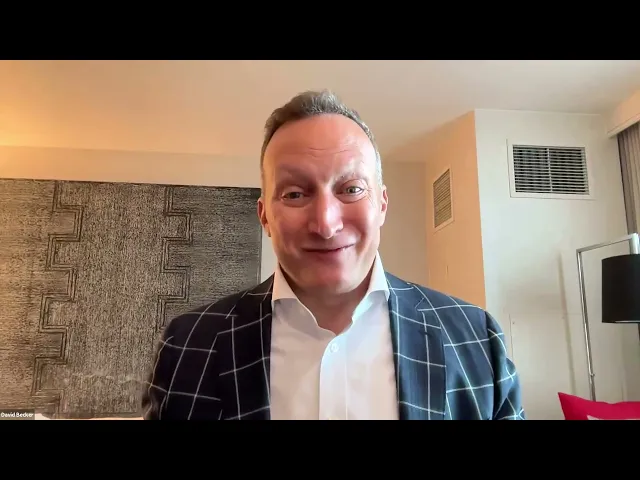
PODCAST: The 2026 Elections - Where We Stand. A Conversation Between David Becker and Rick Pildes.
A conversation on the 2026 Elections between David Becker, Executive Director and Founder of the Center for Election Innovation and Research, and Faculty Director and Professor Rick Pildes of NYU School of Law.
Richard Pildes
Editor's Note: This is an edited transcript of the Democracy Project Podcast.
Rick Pildes: I wanted to discuss with David Becker where we stand less than two weeks before the election on issues concerning the integrity of the election process. I consider David one of the most knowledgeable figures in the country on all aspects of the voting process and how our elections are administered. Let me briefly introduce him a bit more formally. He's the Executive Director and Founder of the nonpartisan, nonprofit Center for Election Innovation and Research, which works with election officials of both parties all around the country to ensure the integrity of the election process in a process voters have confidence in and can trust. He also manages the Election Official Defense Network, which provides pro bono legal assistance to election officials, who are threatened with frivolous criminal prosecution, harassment, physical violence, unfortunately, this is part of the world our elections take place in these days.
But David, thanks for taking the time out of your busy schedule on the eve of the elections to talk. Here's the first question I wanted to ask you. I've been sort of writing for months that a lot of the commentary about threats to the integrity of the election process are highly speculative, sometimes overblown and exaggerated. We know now nothing the federal government has done or been able to do, has forced any state to change its voting process. I'm curious, what are your thoughts about that? Am I too calm? Or should I be more concerned? Before we talk about the things that do concern me.
David Becker: Yeah, no, I mean, you and I are very much on the same page. I get accused of being an optimist a lot, and I guess what counts for optimism these days is seeing unprecedented attacks on our election process fail and being confident they will continue to fail. But I get why people are uneasy. I mean, I talk to a lot of voters and election officials out in the field, and people have a lot of concerns. As you mentioned, I mean, it's been 21 months of this administration. We've seen them try to enact two really broad executive orders seeking to seize power from the states to run elections, nationalize elections. We've seen the president instruct his DOJ to attempt to seize sensitive voter data, social security numbers, driver's license numbers, and dates of birth, which are not public and could be used for things like identity theft. We've seen investigations of past elections, including, of course, that warrant in Fulton County, which I think did shock a lot of us, and we've seen efforts to pass things like the Save America Act, and the president even held a primetime speech that was allegedly going to blow the lid off the massive election fraud.
But as you noted, everything has failed. I mean, they have an unprecedented record of failure here. I mean, the institutions and courts have held, both executive orders have been blocked by multiple courts, including the Supreme Court. The lawsuits that were brought by kind of, you know, I think it's fair to say, a weaponized DOJ to try to seize this voter data, there's over 30 lawsuits, 26 of those lawsuits have been resolved, and the DOJ has a perfect record. They're 0-26. I mean, as a former DOJ lawyer, Rick, I mean, if I had gone 0-1, I would be called into the office, because historically, in every other administration before this one, the layers of review you had to get to before you could even send a letter or threaten a lawsuit were really substantial, I mean, both political and career. So by the time the DOJ came and filed a lawsuit, the DOJ was pretty darn certain it was going to win. So going 0-1, or certainly 0-2, is very hard to wrap your head around. Going 0-26, I don't even know what that is. I mean, I don't know how the Department of Justice can do that.
The past investigations of elections have resulted in nothing. That warrant was issued 9 months ago. We haven't heard anything that they've found, and no other warrants have been issued, which I think is really important. A Trump-appointed judge called that warrant troubling. A different Trump-appointed judge blocked a subpoena seeking sensitive poll worker data from 2020. The Save America Act isn't passing. It was never going to pass. Republicans in both houses, certainly in the Senate, are not big fans.
I think, while I understand the concern, I mean, I'm with you. I think at this point, the administration's acting somewhat desperately, with some recognition that they are failing to have this effect. So I think they will turn up the volume and the noise. I think we're going to hear a lot of noise. I'm here in California right now. Obviously, they've been subject to some of that recently. But I don't think it's actually having any impact on the election. I don't know what you're seeing, Rick, but I keep tabs on the early voting numbers every day. And the numbers we're seeing are on pace to be among the highest, if not record pace for overall growth.
Rick: That's an important point that I'm not sure people kind of fully appreciate now. We've had, since the mid-2000s or so, incredibly expanded access to the voting process, so most states have a significant period of early voting these days. 20-some years ago, if you wanted to vote absentee, in many states, you needed a specific excuse to be out of the jurisdiction. Now, most places have no excuse absentee voting. So we now expect only about 30% of votes are cast on Election Day. And the rest are cast early or cast by absentee. So that takes some of the pressure and focus off Election Day, but I'm glad to hear that you also kind of see a lot of positive developments about the stability and the integrity of the process. I do want to talk about the concerns that still exist, or at least start by asking you, what are you most concerned about at this point, given all the positive developments that have happened so far?
David: I think the thing I'm most concerned about is, even though we're seeing very high early voting numbers, and as we're talking, we should note, to your point about the ease of access, 47 states offer some kind of early in-person voting. Only Alabama, Mississippi, and New Hampshire don't. Three-fourths of the states offer mail voting without an excuse. I was just looking at the numbers in Georgia, and this is, you know, with about 14 days left in voting, they had over a million people cast ballots, and their record for a midterm election is 3.9 million. So they are over 25% of their record with two weeks left to go in voting, and other states are seeing a lot of other stuff like that. It is, I know there's this narrative that on the one hand, maybe from the extreme right that voter fraud is all over the place, and maybe from the extreme left, that voter suppression is all over the place. But we're actually seeing very high registration numbers nationally. We're seeing the last four federal elections have seen some of the highest turnout we've ever seen, and there's more access to convenience voting and convenience registration, like online voter registration, same-day registration, automatic voter registration. More voters have access to that than ever before. And that's the good news.
That doesn't mean we can't improve, that doesn't mean there aren't problems in places, but that's going on. And what we're seeing here in the early voting period, and with mail. I mean, look for problems. I mean, there's hardly any problems that are actually happening despite that. So what am I concerned about? I'm actually concerned that some of this noise will cause some voters to stay home, that might fear for themselves. I worry that some who might oppose these efforts might unintentionally amplify them. I do worry that in the post-election period, things could get volatile.
I'd be interested to hear your thought on this, too. I think there are two possible consequences here. One I'm not concerned with, and one I am. I think the people who win elections are going to take office. I think we've not seen any efforts that have succeeded in that. I mean, look, if there's a legitimate statewide election decided by 100 votes, that's a legitimate litigation circumstance. But otherwise, I think that's going to happen. I am worried about the kind of lasting danger to our democracy from continued attacks on our process, and of course, the potential for isolated or even organized political violence, that concerns me. We saw it on January 6th.
Rick: What about, certainly a lot of people expressed concern about this possible scenario, that the president might issue an executive order or commands to the Justice Department that, asserting there's vote fraud going on in the polling places, sending in DOJ or the FBI to seize ballots or to seize voting machines in the midst of the election process. I guess A.) how worried are you about that scenario, and B.) can you kind of walk us through what would happen if that actually emerged in some cities? I assume if any of this happened, it would be in blue cities, maybe in blue cities in red states, like Texas, where state-level officials might be more sympathetic to the administration's efforts. So how worried are you?
David: So, first of all, I think we do have to acknowledge, it's crazy that you and I are having this conversation. I mean, we're living in a country where we have to actually even entertain the idea that a weaponized federal government could come in and try to seize ballots or interfere with the ballot counting and certification process in elections that, under the Constitution, have to be run by the states under the Elections Clause, Article 1, Section 4. I think something that's really telling was that warrant in Fulton County. I think in order to do this under the law, they're going to need a warrant. And election officials are charged under both federal and state law with maintaining chain of custody of all materials, from the beginning of an election, which means weeks and weeks ago, through certification, and actually under federal law for 22 months after an election. And state laws mostly track that. And that chain of custody's really important, because if there is a legitimate legal challenge, you need to demonstrate that every single ballot was maintained under strict chain of custody, just like any other piece of evidence. And, so a warrant is the big concern. Because a warrant could breach that chain of custody before the election officials could get before a court and talk to the judge and say, hey, stop this. Because a warrant is issued ex parte without the jurisdiction being there to argue that it shouldn't be done, and that's what happened in Fulton County.
But we should also recognize that was 9 months ago, and the administration has engaged in other evidence-gathering efforts, and they haven't been able to get another warrant. I don't know if they've tried, I suspect they might have. But it appears the federal judiciary is kind of wise to these efforts. And remember, that warrant in Fulton County was issued for materials relating to an election over five years before that had been long since certified. You know, breaching chain of custody of ballots that are on an ongoing basis, I think, is a bridge too far for any federal judge. So I am not particularly worried about it.
Rick: What is the standard that a federal judge would have to decide the government met in order to issue a warrant? And I assume this might be a magistrate judge or a federal district judge?
David:That's my understanding, and I primarily practice civil law, so I would not put myself out there as a criminal procedure expert, but as I understand it, basically, the standard is they have to prove that they have probable cause to believe there's evidence of a federal crime at the site and the materials that they're seizing. They have to state that with particularity, which is why the Fulton County warrant was so troubling, because it really didn't even come close to meeting that standard. And I think it'd be very difficult to meet that standard, and I think the judiciary is kind of wise to that. But I think also, to your point, we can't rule it out. It happened in Fulton County, and it would be very difficult.
I will tell you also, my organization has hosted some informational briefings with state election officials, county election officials, and their council in various states to kind of talk through what would happen. And it's going to be really important for jurisdictions, if they see the FBI come, and if they have a valid warrant, to try to get in front of a judge as quickly as possible. I do think the federal judiciary has acted responsibly when it comes to election process and procedure. I think as many might have concerns about the Supreme Court and how it rules, I think when it comes to the nuts and bolts process of casting and counting and certifying ballots, the Supreme Court has acted on the side of stability.
Rick: So, it's also my understanding that even if the federal government does show up with a warrant, the DOJ or the FBI, if they do get a warrant, the warrant does not entitle them to seize ballots. Under federal law, if they have the warrant, what they are entitled to do is to copy ballots. To inspect, but not to actually seize and take them away, partly because of these chain of custody issues.
David: I think that's possible, but, I mean, the seizure in Fulton County was really unusual. I mean, they seized the actual ballots in Fulton County. There were copies that were available. There are ballot images, by the way, that are digital in most places, that can be taken or just requested very easily. And by the way, I mean, if, let's say, hypothetically, the federal government actually had reason to believe that there was a crime that related to the voting process that the ballots or other materials might have evidence regarding. So, if that were the case, there's a variety of less intrusive ways that the government could go around about that. You know, a subpoena, a simple request, there are legal challenges that could happen if an election is actually really close. The candidates and campaigns will be well situated with lawyers to do that. We know that, we've seen that before. Many lawyers we know who work in this space. But, so I think a warrant is really unlikely and completely unwarranted, forgive the pun.
But I do think one of the reasons we have concerns is because the federal government, especially the DOJ, does not seem like it's acting really as a law enforcement agency right now. It looks like it's more acting as a propaganda agency for political purposes. I think the recent California lawsuit's a pretty good example of that. So if you think that they're trying to create chaos so they can give the president room to argue that the election was stolen, I mean, who knows what they'll ask a judge for. I just feel fairly confident the judiciary's not going to succumb to that.
Rick: You've alluded to this California situation a few times, and you're out there right now. So maybe we should explain to people what's going on, because this is the most concrete thing that's happening right at this very moment. So, if you want to kind of provide the context, or I'll provide.
David: Yeah, yeah, and I'd love to hear your thoughts on this, too. The president and the administration have banged the drum about widespread non-citizen voting for a long time, and in 21 months, they can't find it. They're finding out of, you know, nearly 250 million registered voters in the United States, they have found a few dozen cases where they've made arrests. That's it. Not even convictions, just arrests. And yet, in July, July 17th, the Secretary of Homeland Security stood up and said they found 250,000 non-citizens in California, Nevada, Pennsylvania, and New Jersey, 190,000 of them in California. All four of those states wrote back to the Secretary immediately and said, show us your work. Give us the names, show us your methodology. Because DHS has a very bad track record of accuracy on this data. With regard to Pennsylvania.
Rick: Actually, let me just interrupt you for one second, again, to help people understand the overall context here. So, in the United States, we don't have any kind of national registry of citizens and non-citizens. We don't have a national ID card, which many major democracies have. That's a big part of why we have the contested policy fights we have about voter identification or proof of citizenship. Because those are not really issues in most other democracies, since everybody has a national ID card, which has a photo and indicates if they're a citizen. In the United States, the civil libertarian culture on both the left and the right have always kind of been forceful enough to fight off any effort to have a national ID card in the U.S. And the government doesn't have a database of citizens and non-citizens.
David: That's right.
Rick: Now, in a sense, that's part of what the Trump administration is trying to do, is to create that kind of database. But they're doing it in the election context at the midnight hour, in a context in which if you rush this process through, there are inevitably going to be tons and tons of errors, as they try to integrate various federal databases. So that's kind of the background context.
David: Yeah, that's exactly right. We're one of the few countries that doesn't have the magic list, right? Doesn't have the big national citizenship list. And let's just put aside for a second whether that's a good idea or not. But if you were going to want to create one, first of all, you'd want to get congressional authority. I think you need congressional authority, which hasn't happened. And secondly, you wouldn't create this Frankenstein monster that the DHS has created, which we know has resulted in massive errors, perhaps massive error rates that are well, well over 50%, maybe as high as 90% plus. Meaning false positives, meaning flagging people as non-citizens who are citizens. They have incomplete data, they don't have the technology to effectively match, for instance, David Becker on one list, and David Becker on another list, and say that's the same person.
Rick: David J. Becker versus David Becker.
David: Exactly. And it's particularly hard when you get into some names like Maria Rodriguez, or John Lee, or Sean O'Hara, or anyone named Muhammad. Muhammad is one of the most common names in the United States, and there are multiple spellings. As you and I have been talking, there have been multiple Maria Rodriguezes born in the same city, and telling them apart is very difficult on a data basis. So we don't have that.
Whether or not we should is an open question. I think we would all agree that if we were going to do that, that is something that should be authorized by Congress. But, since we don't have that, and DHS has been working so hard to manufacture evidence that would support the President's longtime claims of widespread fraud, particularly by non-citizens, they've been rushing this, they've been doing it poorly, and they create these problems. And we know this because in Pennsylvania, they literally told the Pennsylvania Secretary of State, we can't justify any of our numbers. And in Nevada, after they initially said 16,000, they only gave them 185 names, and it turns out every single one of those 185 were documented citizens, so it went from 16,000 to 185 to zero.
And in California, they made the claim of 190,000, didn't give the names or the methodology to the state of California at all. And eight days after the DOJ knew that ballots had gone out, ballots went out on October 5th, the letter to California went out on October 13th, during the 90-day quiet period under the National Voter Registration Act, where states can no longer do systematic voter list maintenance, they claimed 20,000. And then this week they arrested 28. So we've gone from 190,000 to 20,000 to 28.
This is very typical of the claims. My organization has a tracker on our website, electioninnovation.org, of non-citizen voter claims. This is what we see in every state. Political claims that are very high, usually during the political season of an even-numbered year. As they start being subjected to scrutiny, they shrink down and down and down, and go from the tens of thousands down to the few dozen, sometimes even single digits, which is to say that it does happen. It's almost always accidental, or an administrative error. No non-citizen sitting in the United States wants to risk their presence here for the right to cast one ballot in an election in which 150 million ballots are going to be cast. But, it does happen. States are doing their best to keep them off the list. There's no evidence it's had an effect on any election.
Rick: So right now in California, one of the things the government has done after sending California this list of supposedly 20,000 non-citizens on the registration rolls, is it's gone to court and asked the court to order the ballots of those voters if they vote segregated.
David: Yeah.
Rick: So that issues about their eligibility can be looked at, after the election.
But again, to put this in the overall context, to give people some feel for the numbers, whatever you think about this effort and the high likelihood that there's going to be lots and lots of errors, in this list, maybe all of them are actually eligible voters from past experience with this system. You're talking about 20,000 people in a state in which over 11 million people are probably going to vote in the midterm.
David: Over 23 million registered in California. You know, I think, there have been 1.5 million ballots cast already. 20,000 statewide. So is it possible there's a congressional race, a single one of the 52 that might be decided by 20,000? That's possible.
Rick: Yeah, but it comes to 384 people per congressional district in California, given how many districts they have.
David: I mean, this is the best they can do.
Rick: And at this point, I mean, these people are all eligible to vote. The government's position is, well, let's segregate those ballots. And fight after the election about citizenship issues.
David: One of the things that I don't think has been discussed a lot is there are also federal and state laws against interfering with an eligible voter’s casting a ballot. And it may be that federal actors are implicating those laws in some way. I mean, the DOJ has admitted that on that 20,000 list, there are almost certainly eligible citizens who are registered, and by segregating their ballots, it's very likely they're interfering with their right to cast a ballot. And that one of the talking points the DOJ puts out, and it's putting out a lot of social media on this, which does make it look like this is more of a propaganda effort than a law enforcement effort. But one of the talking points is every single non-citizen vote dilutes the vote of an eligible voter. That's a good talking point. But disenfranchising an eligible voter does that far more directly.
And they don't seem as concerned with that. And if you talk to the election officials out there who I work with, there's not a Republican that wants to disenfranchise an eligible voter, and there's not a Democrat that wants an ineligible voter on their list. They are all completely committed to ensuring all eligible voters and only eligible voters, and they're just looking for the tools and resources to do that. And that's where this gets lost in this political noise that we're hearing from the White House and elsewhere, which is probably designed to – you know, back to our original question – put us all into a doom loop. And I try really hard to reject that.
Rick: Yeah, I've been certainly trying to avoid contributing to the sense of there'll be lots of chaos at the polls and lots of uncertainty. We talked about the specter of ballots being seized or voting machines. Let me shift to a different issue that a lot of people also have concerns about, which is after the voting process. So, we know that there are now some number of election administration officials in office, who have denied the validity of the 2020 election. So, how worried should we be about whether some local officials or state officials will refuse to certify the vote in their jurisdiction, because they have their own suspicions about whether fraud has gone on, or non-citizen voting, or something like that. Now, certification should be a purely ministerial function. It's not a place where election officials are supposed to have a lot of discretion to second-guess the election process. But I think we can anticipate that, at least in some places, maybe at the local level, we may see some of that. We have seen since 2020, a few incidents of this in state and local elections, A.) what do you think about the prospect of that happening, and B.) how much of a concern is it?
David: Yeah, so you're right, we have seen this in a handful of places, so it's not hypothetical, it's not wrong to ask about this. But I would also say we have hundreds of thousands of election officials all over the country in about almost 10,000 jurisdictions, and the number that we've seen corrupted by these lies and conspiracies over the last 6 plus years, I can count on one hand. It's remarkable how much, and on a bipartisan basis, Republicans and Democrats have just stood for principle. It's not just Secretary Raffensperger in Georgia, it certainly is him, but it's many, many others. And as you point out, it's ministerial. I mean, the certification process, I define it to laypeople, it's just the act of giving the result of an election legal effect. Just saying, yes, this person won, they get to take office. That's what it is.
And there are other processes for saying there was something wrong with the election, and we got the wrong winner. Every state has legal challenges. That's a different process, but by the time it gets to certification, which is usually mid-November to early December, the entity charged with certification, which may be the Secretary of State, it might be the Governor, it might be a Board of Elections, might also be at the county level and then the state level, just effectively rubber stamp, saying yes, these are the numbers.
I think it's right to say that there might be some shenanigans in a very small number of places. But I think we will see them smacked down very quickly by the courts. Yeah, and by the way, by attorneys general and secretaries of state in those states. And we've seen, by the way, it's not just Democrats, Republicans too, who have said, no, no, no, no, you're not going to stop our election from being certified. We're going to order you to certify. They’ve even had to threaten criminal charges if the local jurisdiction refused. That happened in Arizona, they did it. So, they went ahead and certified. And remember, if a county doesn't certify, that affects the whole state certification. So, it's a piece of the puzzle that hasn't been inserted into the puzzle yet. So the state's going to act pretty strongly on this. And I do expect, and I'd love to hear what you think on this, I think, for instance, in the House races, I think we're going to get single certificates of election in 435 districts nationwide. With the possible exception, look, if there's a legitimate, like, one race is decided by 5 votes and it's in litigation, that can happen, that's normal, the legal process will play out.
Rick: Yeah, so, I basically agree with that. I think I wouldn't be shocked to see, at the local level, some refusals to certify, but I expect those, if that happens, I expect that to be taken care of pretty quickly, based on what courts have done in the past. Let me throw another issue at you. So the whole question of potential foreign interference in the voting process, or the vote tabulation process, there's a lot of concern you know, about disinformation and all of that, but now that we're sort of moving into the actual election phase, should people be concerned about foreign efforts to hack into voting machines and the like, or is that really a non-issue?
David: So we have had circumstances where foreign adversaries have hacked into election infrastructure, and 2016 was probably the most notable instance where a team under the Russian GRU actually gained access to the Illinois Statewide Voter Registration Database for a period of time in the summer of 2016. And for a couple of weeks, they went undetected. They were just probing very gently. And then all of a sudden, they started accessing thousands of records a second, and Illinois immediately noticed it and shut everything down.
And the Illinois election officials will tell you there was no way we couldn't have noticed that. And the question I often get is, why did Russia do that? If they were sitting inside a voter registration database undetected, why did they do something that would be noticed? And the reason, of course, is they wanted to be noticed. They were probably a little bit frustrated they weren't getting noticed. Because, look, if Russia wanted to affect the presidential election in 2016, you don't target the Illinois voter registration database, right? I mean, if Illinois went for President Trump, there'd be a lot of questions to ask, right? And I think what that taught our foreign adversaries is because our voter registration databases have actually much better cybersecurity protocols around them now. There's also a variety of backups and other things. We do a report on this every two years to talk about what states are doing. And also because our voting machines aren't attached to the internet, and because we have paper ballots nationwide in every single state other than Louisiana, and those paper ballots are audited to confirm that the machines count them correctly. Our foreign adversaries realize very quickly that to actually try to interfere with our infrastructure. To change the results of an election is very high risk with very low chance of reward.
Rick: So I just want to drive home two things you said there that I don't want to have them get lost. One is voting machines are not connected to the internet. You know, the voter registration rolls, maybe.
David: Because we have online voter registration, that's actually how the Russians got into Illinois. There was a backdoor through the online voter registration portal. But voter rolls, unlike our secret ballot, those are public, mostly, right? I mean, there's parts of it that aren't public, but the voter lists themselves are public, and they're backed up in most cases, every single day on a device, on media that is not connected to the internet. So if there was ever a problem, they could restore that very, very easily.
Rick: Yeah. And the other thing I want to emphasize that you mentioned is that I'm not sure most people appreciate, 99% of us are going to vote with paper ballots. The paper ballots are fed into machines that do the tabulation. But the ballots are there, or the ballot receipts that record the way the voter voted are there. Those are all available for recounts, they're available for what we call post-election audits, which audit a sample of the ballots to make sure the machine counts are consistent with the actual ballots. So, President Trump, for a long time, has been saying everybody should vote on paper ballots. Everybody does vote on paper ballots.
David: Yeah, welcome to 2018. I mean we already did this. I was just talking to election officials here in California, and for instance, Los Angeles County's ballot is 8 pages. It is 4 pages front and back. That's how many contests are on it. You can't count that by hand in any kind of reasonable amount of time. We need machines. Machines do a really good job. They're accurate and they're fast. They're cheap.
But in LA County, and nationwide, they don't just say, oh, the machines took care of it, we're just going to let that stand. They take random samples of those paper ballots that the voter has looked at, and they count them by hand, and they match them to the machines, and see if they match up. And if there's a problem, they'll keep going.
And the candidates can request a recount, right? And they can do, I know you know this well, Rick, people we know who litigated in 2008 in the Minnesota Senate race, where they were literally litigating over every single paper ballot and arguing over what a particular mark might mean. And so, that paper really should give us a good sense of security and prevents those foreign adversaries from attacking us, which is why they decided that their best play, and by the way, they were right, is to make us just believe that the election was hacked. And it's not just on the right, there's a group on the extreme left that is trying to raise money around the completely fraudulent idea that Kamala Harris won the 2024 election.
Rick: Oh, that's news to me, I hadn't been aware of that. Probably would have been happier if I hadn't heard that, but yeah. So in a sense, we've talked about three phases of the process. One is, what are the voting policies going to be, and that's basically settled now, and we've talked about how most people are going to vote essentially the same way they voted in the past. The second is the actual election process itself, and what might kind of go wrong, or protections against interference. The third is the certification or counting process. The last phase is something you mentioned earlier, which is post-election disputes or litigation. I would say one of the things that I would be more worried about in another context would be if the partisan margin of control in the House depended on a handful of contested seats in California. We know that in California, given the way they structure their process, close elections there might not be resolved for maybe 2 weeks, even. And I think that in a world in which there is so much distrust and so much concerns about manipulation behind the scenes and all that, I think there would be a lot of social media and conspiracy theories circulating, if control of the House turned on a couple of seats that couldn't be counted until two weeks after the election. Now, I don't think that's the way things are going to play out, assuming national polling data is right. But that would be a concern I would have, not because there’d be anything wrong in the process, but because perceptions about what was going on in this culture of distrust would be a real problem, I think.
David: So, you and I both share that. Look, if there's an area we're concerned about, it's the post-election period. And I might push back a little bit, just on this idea, there is this idea that California takes a long time to count. I don't think California does take a long time to count ballots. There are two factors that affect whether people perceive a state to be counting ballots fast, and it's mostly perception. One is, how many mail ballots are delivered at the last minute? Because states and counties can't do anything with those ballots until they get them. So if a bunch of ballots are delivered on Election Day, those are not going to begun to be processed until Wednesday or Thursday, really. That's going to take time. And the second, and this is the biggest factor, is the margin of victory. I mean, if there's a congressional race decided by 100 votes, I don't care whether it's in California or Texas or Florida or Minnesota we're going to be waiting a couple weeks on that, because military votes will come in late, provisional ballots will have to be reviewed, that kind of thing. So let's, from the election official's prayer – let the margins be wide and turnout be high.
We should hope that the margins are in the thousands or tens of thousands. I mean, you and I both know as experienced election lawyers, I would say. As much as people might look at a margin of 11,779 votes, just to pick a number out of the blue. As being really narrow in a state, to election lawyers, we would call that a landslide. I mean, that is well.
Rick: In a sense that there aren't likely to be errors that could possibly be of that magnitude or problems.
David: To my knowledge, there has never been in American history a statewide race decided by over a thousand votes that's been overturned by the courts. I mean, almost all of the really close elections we see, Bush-Gore in Florida, 537 votes, 2004 Washington gubernatorial race was a couple hundred votes, Minnesota Senate, 2008, a couple hundred votes. Those are legit challenges. I mean, I believe the Minnesota race was Ben Ginsburg and Mark Elias against each other, two of the most experienced election lawyers in the country. No one would claim that any of them, are diminishing the electoral process by litigating those kinds of claims.
Rick: Yeah, I think if we have that kind of litigation, my guess would be, if it were high stakes, it would focus more on Senate contests. Because in the Senate, every seat matters, even apart from which party controls the Senate. You know, having 51 seats, or 52, or 53, all of that makes a difference. And at least the polling data, suggests we might have a lot of Senate races that are within a couple of points. So, I would guess that, if you’re thinking about where high-stakes post-election litigation might take place with small margins and a lot at stake, probably would be on Senate races, even though a lot of the attention so far has been on the House.
David: Yeah, I think that could be the case. I mean, it depends. One of the things I try, I do it in my head, but I try not to publicly talk about is my political prognostication about what might happen. But I do think there were a lot of politicians in some states who criticized election officials in states who were dealing with very narrow margins and a lot of pressure from the president, who would throw shade at Arizona and Georgia and Michigan. Enjoying that their states did not have narrow margins. And somewhat ironically, some of those states are going to have narrow margins in this election cycle. And, look, Florida gets a lot of credit. I think the county election officials in Florida are outstanding. They're vastly majority Republican. They're very good. Florida does count ballots pretty darn fast, but they also have the benefit of pretty wide margins over the last several years. We all have short memories. In 2018, they had two statewide races decided by 0.25% or less. And in 2018, we didn't know who won those races for weeks, but we didn't attack Florida and say they're taking too long to count ballots. They just had a real close Senate and Governor's race. People forget Ron DeSantis ran an incredibly close race in 2018. And so look, we should, we all have to be patient on election night, because, back to California for a second. We all know that at 8.01 PM Pacific time, the networks are going to call the governor's race in California. And they will probably have called virtually none of the congressional races at that time. That doesn't mean that, like, the governor's race was on one set of ballots, and the others were on another set of ballots, and they're taking their time with the others. They're all on the same pieces of paper, just the margins are going to be much more narrow, and the election officials are doing the best to get the election results reported for the media.
Rick: Well, I could keep talking to you about these issues for at least another half hour, but I'm reassured, and I hope people watching are reassured about your calm about the likely prospects for the integrity of the election process, given that you actually are deeply, deeply experienced with the process. I do want to thank you for taking the time. I really enjoyed the conversation. I hope people in the audience enjoy it as much as I did. Thanks very much. Sorry we can't keep going. It'd be a lot of fun.
David: No, I appreciate it. It was great talking with you, Rick. I mean I do think we have to say, I mean, I think everything's going be alright, but it is taking an enormous amount of work. And it's exhausting for the election officials out there. People listening to this make a plan to vote, vote early. Thank your election officials, volunteer to be a poll worker if you can, although it's fairly late in the process. I mean, it is, just because we're confident that we're going to be fine at the end, it is just taken an enormous amount of work, so I think it's right that people are raising the questions and asking these questions.
Rick: That's a very, very good point. So, thanks again, David, really appreciate it.
David: Thanks, Rick, great talking with you.
About the Author
Richard Pildes
Pildes is a founding Faculty Director of the Democracy Project and Sudler Family Professor of Constitutional Law at NYU School of Law. He is the nation’s most cited scholar on election law, a leading expert on American government and democratic governance worldwide, co-editor of Electoral Reform in the United States: Reforms for Combatting Polarization and Extremism (2025), and a member of President Biden’s Commission on the Supreme Court of the United States and the bipartisan ABA Task Force on American democracy.
More viewpoints in
Elections & Political Parties

Oct 26, 2026
PODCAST: The 2026 Elections - Where We Stand. A Conversation Between David Becker and Rick Pildes.
Richard Pildes
Elections & Political Parties
Oct 26, 2026
PODCAST: The 2026 Elections - Where We Stand. A Conversation Between David Becker and Rick Pildes.
Richard Pildes
Elections & Political Parties
Oct 26, 2026
PODCAST: The 2026 Elections - Where We Stand. A Conversation Between David Becker and Rick Pildes.
Richard Pildes
Elections & Political Parties

Oct 22, 2026
Clean Rolls Don’t Require Federal Control
Charles Stewart III
Elections & Political Parties
Oct 22, 2026
Clean Rolls Don’t Require Federal Control
Charles Stewart III
Elections & Political Parties
Oct 22, 2026
Clean Rolls Don’t Require Federal Control
Charles Stewart III
Elections & Political Parties

Oct 21, 2026
Three Structural Reforms
Thomas R. Phillips
Elections & Political Parties
Oct 21, 2026
Three Structural Reforms
Thomas R. Phillips
Elections & Political Parties
Oct 21, 2026
Three Structural Reforms
Thomas R. Phillips
Elections & Political Parties
More viewpoints in
Elections & Political Parties
Oct 26, 2026
PODCAST: The 2026 Elections - Where We Stand. A Conversation Between David Becker and Rick Pildes.
Richard Pildes
Elections & Political Parties
Oct 22, 2026
Clean Rolls Don’t Require Federal Control
Charles Stewart III
Elections & Political Parties
Oct 21, 2026
Three Structural Reforms
Thomas R. Phillips
Elections & Political Parties