Feb 3, 2026
Cleaner Politics Is as Important as Cleaner Fuels
Bruce E. Cain
Feb 3, 2026
Cleaner Politics Is as Important as Cleaner Fuels
Bruce E. Cain
Feb 3, 2026
Cleaner Politics Is as Important as Cleaner Fuels
Bruce E. Cain
Feb 3, 2026
Cleaner Politics Is as Important as Cleaner Fuels
Bruce E. Cain
Feb 3, 2026
Cleaner Politics Is as Important as Cleaner Fuels
Bruce E. Cain
Feb 3, 2026
Cleaner Politics Is as Important as Cleaner Fuels
Bruce E. Cain
Editor’s Note: This piece is the second in the Democracy Project’s "What's Next?" series, which analyzes democratic reforms.
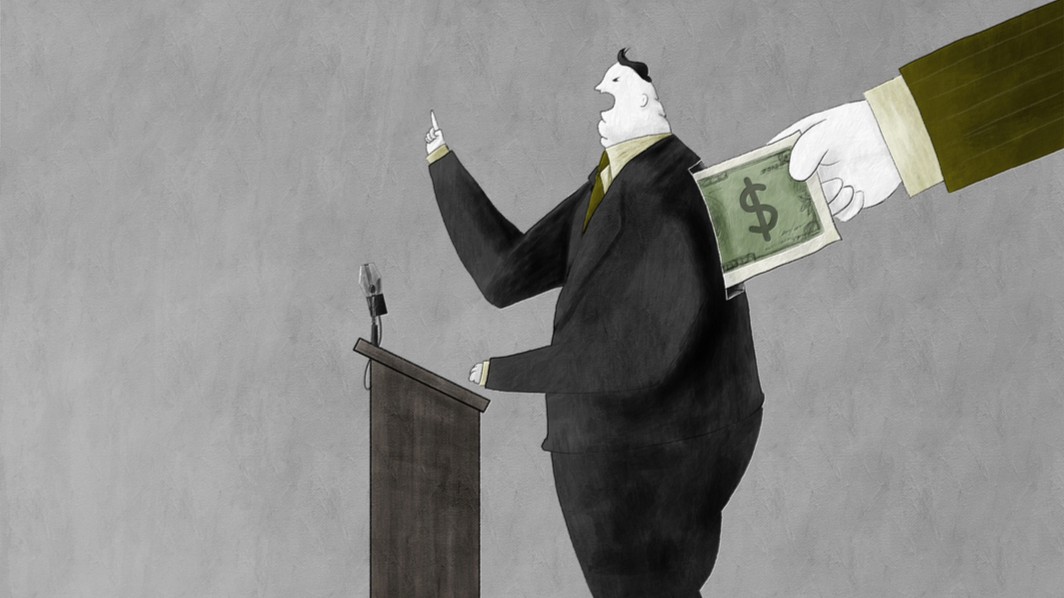
Despite multiple efforts since the 19th century to reduce political corruption, the US now finds itself in a new gilded era of plutocracy and self-enrichment. The signs of anti-corruption failure are everywhere, but especially in the White House. Even worse, as we move towards stronger unilateral executive action and deeper political penetration into the bureaucracy, the US could be unintentionally increasing the potential for more corruption unless steps are taken to prevent that from happening.
According to the New York Times, our incumbent President has amassed a fortune of $1.4 billion since his return to office. He has, for instance, profited from the sale of commemorative coins by Trump Organization affiliates such as CIC Digital LLC and Fight Fight Fight LLC, providing an opportunity for those seeking access or policy returns from him in return for their coin investment. Trump has also pardoned major donors in gratitude for their support.
Some of Trump’s transactions have more than a whiff of extortion, such as the $90 million from legal settlements with major media companies. Others have the appearance of corruptly trading policy favors for material rewards such as Vietnam’s lower tariff deals in exchange for approving a $1.5-billion Trump golf complex. As the Congress has become more supine in periods of trifecta control and the President has become more unilaterally powerful, influence money will continue to flow in President Trump’s direction over the next year.
A core premise of Madisonian design is that democracies must be robust to the full range of political personalities who might hold office, from the near saints to the deeply sociopathic. Anti-corruption policy tools such as the Emoluments Clause, prohibitions, conflict of interest laws, financial disclosure requirements, and the like are meant to protect against the corrupt activities of malevolent actors who make their way into office. Like the hacker who finds the security loopholes in computer code, President Trump exploits the system’s weaknesses adroitly. We are mired in a deepening swamp of corruption led by a person who promised to drain it.
That said, reformers and election law scholars are quite familiar with the flaws in our anti-corruption toolbox. Revolving door prohibitions are too time-bound and easily evaded by simply becoming a strategist rather than a registered lobbyist. Bribery and extortion laws have elements of intent and purpose that are difficult to prove unless someone like Duke Cunningham obliges by writing his or her corrupt demands on paper or a napkin as evidence. Conflict of interest laws avoid the difficulty of having to prove corruption by regulating the appearance of corruption through disclosure, recusal, disqualification and review. But these requirements cannot cover all the ways that corrupt deals can be made through networks of friends and businesses and impose a heavy paperwork burden on lower-level officials who have a limited ability to be corrupt at scale. The President, who can be corrupt at scale, is not covered by conflict-of-interest rules at all.
The core logic behind limiting political corruption in a capitalist democracy is that it weakens both capitalism and democracy. It undermines efficient capitalism by imposing rents and undermines democracy by distorting and delegitimizing public decision-making. Comparative studies of political corruption have shown that it often thrives when a public official has sole control over a decision and there are no checks on or monitoring of that official.
The US Constitution gives the President sole authority to grant pardons and considerable leeway to make foreign policy decisions like imposing tariffs, two areas of suspiciously corrupt activity currently. In principle, the Congress could provide more checks, but rising partisan polarization and the threat of being punished by the President’s loyal base in a party primary have eviscerated Congressional monitoring during periods of trifecta control. In addition, the Supreme Court’s strong executive doctrine could further weaken other legislative checks on executive corruption in its future decisions.
Secondly, if the current administration gets its way on reclassifying civil servants into Schedule F, thereby deepening the bench of political appointees, this could enhance a revolving door problem, i.e. officials making public decisions with the prospects in mind of obtaining or returning to lucrative private-sector jobs. Add to that, the recent firing of a dozen inspectors general in 2025 and their replacement by political appointees, which weakens the independent monitoring of malfeasance inside the bureaucracy.
What can be done about the current corrupt state of our politics? I will just give a few suggestions but the topic warrants deeper consideration by entities like NYU Law’s Democracy Project. First, Congress should finish the business of closing the loophole of the President not being covered by conflict-of-interest requirements. Senator Warren first introduced this kind of bill in 2017. That effort should be renewed, and the bill’s content reviewed considering all that the President has taught us. Second, the President’s pardon and commutation powers need to be curbed considering potentially corrupt exchanges. The Supreme Court has ruled that limiting material quid pro quo corruption is a compelling state interest. Does that open the possibility of preventing pardons for donors or business associates? Third, can inspector general positions be better protected or even enhanced? Some countries have ombudsmen and inspector generals. Should we? Or can anti-corruption oversight be strengthened by utilizing AI tools to make monitoring more effective and timelier?
President Trump once bragged that “I could stand in the middle of Fifth Avenue and shoot somebody, and I wouldn’t lose any voters.” But can he take the public’s money corruptly and get away with it? We may soon find out.
Editor’s Note: This piece is the second in the Democracy Project’s "What's Next?" series, which analyzes democratic reforms.
Despite multiple efforts since the 19th century to reduce political corruption, the US now finds itself in a new gilded era of plutocracy and self-enrichment. The signs of anti-corruption failure are everywhere, but especially in the White House. Even worse, as we move towards stronger unilateral executive action and deeper political penetration into the bureaucracy, the US could be unintentionally increasing the potential for more corruption unless steps are taken to prevent that from happening.
According to the New York Times, our incumbent President has amassed a fortune of $1.4 billion since his return to office. He has, for instance, profited from the sale of commemorative coins by Trump Organization affiliates such as CIC Digital LLC and Fight Fight Fight LLC, providing an opportunity for those seeking access or policy returns from him in return for their coin investment. Trump has also pardoned major donors in gratitude for their support.
Some of Trump’s transactions have more than a whiff of extortion, such as the $90 million from legal settlements with major media companies. Others have the appearance of corruptly trading policy favors for material rewards such as Vietnam’s lower tariff deals in exchange for approving a $1.5-billion Trump golf complex. As the Congress has become more supine in periods of trifecta control and the President has become more unilaterally powerful, influence money will continue to flow in President Trump’s direction over the next year.
A core premise of Madisonian design is that democracies must be robust to the full range of political personalities who might hold office, from the near saints to the deeply sociopathic. Anti-corruption policy tools such as the Emoluments Clause, prohibitions, conflict of interest laws, financial disclosure requirements, and the like are meant to protect against the corrupt activities of malevolent actors who make their way into office. Like the hacker who finds the security loopholes in computer code, President Trump exploits the system’s weaknesses adroitly. We are mired in a deepening swamp of corruption led by a person who promised to drain it.
That said, reformers and election law scholars are quite familiar with the flaws in our anti-corruption toolbox. Revolving door prohibitions are too time-bound and easily evaded by simply becoming a strategist rather than a registered lobbyist. Bribery and extortion laws have elements of intent and purpose that are difficult to prove unless someone like Duke Cunningham obliges by writing his or her corrupt demands on paper or a napkin as evidence. Conflict of interest laws avoid the difficulty of having to prove corruption by regulating the appearance of corruption through disclosure, recusal, disqualification and review. But these requirements cannot cover all the ways that corrupt deals can be made through networks of friends and businesses and impose a heavy paperwork burden on lower-level officials who have a limited ability to be corrupt at scale. The President, who can be corrupt at scale, is not covered by conflict-of-interest rules at all.
The core logic behind limiting political corruption in a capitalist democracy is that it weakens both capitalism and democracy. It undermines efficient capitalism by imposing rents and undermines democracy by distorting and delegitimizing public decision-making. Comparative studies of political corruption have shown that it often thrives when a public official has sole control over a decision and there are no checks on or monitoring of that official.
The US Constitution gives the President sole authority to grant pardons and considerable leeway to make foreign policy decisions like imposing tariffs, two areas of suspiciously corrupt activity currently. In principle, the Congress could provide more checks, but rising partisan polarization and the threat of being punished by the President’s loyal base in a party primary have eviscerated Congressional monitoring during periods of trifecta control. In addition, the Supreme Court’s strong executive doctrine could further weaken other legislative checks on executive corruption in its future decisions.
Secondly, if the current administration gets its way on reclassifying civil servants into Schedule F, thereby deepening the bench of political appointees, this could enhance a revolving door problem, i.e. officials making public decisions with the prospects in mind of obtaining or returning to lucrative private-sector jobs. Add to that, the recent firing of a dozen inspectors general in 2025 and their replacement by political appointees, which weakens the independent monitoring of malfeasance inside the bureaucracy.
What can be done about the current corrupt state of our politics? I will just give a few suggestions but the topic warrants deeper consideration by entities like NYU Law’s Democracy Project. First, Congress should finish the business of closing the loophole of the President not being covered by conflict-of-interest requirements. Senator Warren first introduced this kind of bill in 2017. That effort should be renewed, and the bill’s content reviewed considering all that the President has taught us. Second, the President’s pardon and commutation powers need to be curbed considering potentially corrupt exchanges. The Supreme Court has ruled that limiting material quid pro quo corruption is a compelling state interest. Does that open the possibility of preventing pardons for donors or business associates? Third, can inspector general positions be better protected or even enhanced? Some countries have ombudsmen and inspector generals. Should we? Or can anti-corruption oversight be strengthened by utilizing AI tools to make monitoring more effective and timelier?
President Trump once bragged that “I could stand in the middle of Fifth Avenue and shoot somebody, and I wouldn’t lose any voters.” But can he take the public’s money corruptly and get away with it? We may soon find out.
Editor’s Note: This piece is the second in the Democracy Project’s "What's Next?" series, which analyzes democratic reforms.
Despite multiple efforts since the 19th century to reduce political corruption, the US now finds itself in a new gilded era of plutocracy and self-enrichment. The signs of anti-corruption failure are everywhere, but especially in the White House. Even worse, as we move towards stronger unilateral executive action and deeper political penetration into the bureaucracy, the US could be unintentionally increasing the potential for more corruption unless steps are taken to prevent that from happening.
According to the New York Times, our incumbent President has amassed a fortune of $1.4 billion since his return to office. He has, for instance, profited from the sale of commemorative coins by Trump Organization affiliates such as CIC Digital LLC and Fight Fight Fight LLC, providing an opportunity for those seeking access or policy returns from him in return for their coin investment. Trump has also pardoned major donors in gratitude for their support.
Some of Trump’s transactions have more than a whiff of extortion, such as the $90 million from legal settlements with major media companies. Others have the appearance of corruptly trading policy favors for material rewards such as Vietnam’s lower tariff deals in exchange for approving a $1.5-billion Trump golf complex. As the Congress has become more supine in periods of trifecta control and the President has become more unilaterally powerful, influence money will continue to flow in President Trump’s direction over the next year.
A core premise of Madisonian design is that democracies must be robust to the full range of political personalities who might hold office, from the near saints to the deeply sociopathic. Anti-corruption policy tools such as the Emoluments Clause, prohibitions, conflict of interest laws, financial disclosure requirements, and the like are meant to protect against the corrupt activities of malevolent actors who make their way into office. Like the hacker who finds the security loopholes in computer code, President Trump exploits the system’s weaknesses adroitly. We are mired in a deepening swamp of corruption led by a person who promised to drain it.
That said, reformers and election law scholars are quite familiar with the flaws in our anti-corruption toolbox. Revolving door prohibitions are too time-bound and easily evaded by simply becoming a strategist rather than a registered lobbyist. Bribery and extortion laws have elements of intent and purpose that are difficult to prove unless someone like Duke Cunningham obliges by writing his or her corrupt demands on paper or a napkin as evidence. Conflict of interest laws avoid the difficulty of having to prove corruption by regulating the appearance of corruption through disclosure, recusal, disqualification and review. But these requirements cannot cover all the ways that corrupt deals can be made through networks of friends and businesses and impose a heavy paperwork burden on lower-level officials who have a limited ability to be corrupt at scale. The President, who can be corrupt at scale, is not covered by conflict-of-interest rules at all.
The core logic behind limiting political corruption in a capitalist democracy is that it weakens both capitalism and democracy. It undermines efficient capitalism by imposing rents and undermines democracy by distorting and delegitimizing public decision-making. Comparative studies of political corruption have shown that it often thrives when a public official has sole control over a decision and there are no checks on or monitoring of that official.
The US Constitution gives the President sole authority to grant pardons and considerable leeway to make foreign policy decisions like imposing tariffs, two areas of suspiciously corrupt activity currently. In principle, the Congress could provide more checks, but rising partisan polarization and the threat of being punished by the President’s loyal base in a party primary have eviscerated Congressional monitoring during periods of trifecta control. In addition, the Supreme Court’s strong executive doctrine could further weaken other legislative checks on executive corruption in its future decisions.
Secondly, if the current administration gets its way on reclassifying civil servants into Schedule F, thereby deepening the bench of political appointees, this could enhance a revolving door problem, i.e. officials making public decisions with the prospects in mind of obtaining or returning to lucrative private-sector jobs. Add to that, the recent firing of a dozen inspectors general in 2025 and their replacement by political appointees, which weakens the independent monitoring of malfeasance inside the bureaucracy.
What can be done about the current corrupt state of our politics? I will just give a few suggestions but the topic warrants deeper consideration by entities like NYU Law’s Democracy Project. First, Congress should finish the business of closing the loophole of the President not being covered by conflict-of-interest requirements. Senator Warren first introduced this kind of bill in 2017. That effort should be renewed, and the bill’s content reviewed considering all that the President has taught us. Second, the President’s pardon and commutation powers need to be curbed considering potentially corrupt exchanges. The Supreme Court has ruled that limiting material quid pro quo corruption is a compelling state interest. Does that open the possibility of preventing pardons for donors or business associates? Third, can inspector general positions be better protected or even enhanced? Some countries have ombudsmen and inspector generals. Should we? Or can anti-corruption oversight be strengthened by utilizing AI tools to make monitoring more effective and timelier?
President Trump once bragged that “I could stand in the middle of Fifth Avenue and shoot somebody, and I wouldn’t lose any voters.” But can he take the public’s money corruptly and get away with it? We may soon find out.
Editor’s Note: This piece is the second in the Democracy Project’s "What's Next?" series, which analyzes democratic reforms.
Despite multiple efforts since the 19th century to reduce political corruption, the US now finds itself in a new gilded era of plutocracy and self-enrichment. The signs of anti-corruption failure are everywhere, but especially in the White House. Even worse, as we move towards stronger unilateral executive action and deeper political penetration into the bureaucracy, the US could be unintentionally increasing the potential for more corruption unless steps are taken to prevent that from happening.
According to the New York Times, our incumbent President has amassed a fortune of $1.4 billion since his return to office. He has, for instance, profited from the sale of commemorative coins by Trump Organization affiliates such as CIC Digital LLC and Fight Fight Fight LLC, providing an opportunity for those seeking access or policy returns from him in return for their coin investment. Trump has also pardoned major donors in gratitude for their support.
Some of Trump’s transactions have more than a whiff of extortion, such as the $90 million from legal settlements with major media companies. Others have the appearance of corruptly trading policy favors for material rewards such as Vietnam’s lower tariff deals in exchange for approving a $1.5-billion Trump golf complex. As the Congress has become more supine in periods of trifecta control and the President has become more unilaterally powerful, influence money will continue to flow in President Trump’s direction over the next year.
A core premise of Madisonian design is that democracies must be robust to the full range of political personalities who might hold office, from the near saints to the deeply sociopathic. Anti-corruption policy tools such as the Emoluments Clause, prohibitions, conflict of interest laws, financial disclosure requirements, and the like are meant to protect against the corrupt activities of malevolent actors who make their way into office. Like the hacker who finds the security loopholes in computer code, President Trump exploits the system’s weaknesses adroitly. We are mired in a deepening swamp of corruption led by a person who promised to drain it.
That said, reformers and election law scholars are quite familiar with the flaws in our anti-corruption toolbox. Revolving door prohibitions are too time-bound and easily evaded by simply becoming a strategist rather than a registered lobbyist. Bribery and extortion laws have elements of intent and purpose that are difficult to prove unless someone like Duke Cunningham obliges by writing his or her corrupt demands on paper or a napkin as evidence. Conflict of interest laws avoid the difficulty of having to prove corruption by regulating the appearance of corruption through disclosure, recusal, disqualification and review. But these requirements cannot cover all the ways that corrupt deals can be made through networks of friends and businesses and impose a heavy paperwork burden on lower-level officials who have a limited ability to be corrupt at scale. The President, who can be corrupt at scale, is not covered by conflict-of-interest rules at all.
The core logic behind limiting political corruption in a capitalist democracy is that it weakens both capitalism and democracy. It undermines efficient capitalism by imposing rents and undermines democracy by distorting and delegitimizing public decision-making. Comparative studies of political corruption have shown that it often thrives when a public official has sole control over a decision and there are no checks on or monitoring of that official.
The US Constitution gives the President sole authority to grant pardons and considerable leeway to make foreign policy decisions like imposing tariffs, two areas of suspiciously corrupt activity currently. In principle, the Congress could provide more checks, but rising partisan polarization and the threat of being punished by the President’s loyal base in a party primary have eviscerated Congressional monitoring during periods of trifecta control. In addition, the Supreme Court’s strong executive doctrine could further weaken other legislative checks on executive corruption in its future decisions.
Secondly, if the current administration gets its way on reclassifying civil servants into Schedule F, thereby deepening the bench of political appointees, this could enhance a revolving door problem, i.e. officials making public decisions with the prospects in mind of obtaining or returning to lucrative private-sector jobs. Add to that, the recent firing of a dozen inspectors general in 2025 and their replacement by political appointees, which weakens the independent monitoring of malfeasance inside the bureaucracy.
What can be done about the current corrupt state of our politics? I will just give a few suggestions but the topic warrants deeper consideration by entities like NYU Law’s Democracy Project. First, Congress should finish the business of closing the loophole of the President not being covered by conflict-of-interest requirements. Senator Warren first introduced this kind of bill in 2017. That effort should be renewed, and the bill’s content reviewed considering all that the President has taught us. Second, the President’s pardon and commutation powers need to be curbed considering potentially corrupt exchanges. The Supreme Court has ruled that limiting material quid pro quo corruption is a compelling state interest. Does that open the possibility of preventing pardons for donors or business associates? Third, can inspector general positions be better protected or even enhanced? Some countries have ombudsmen and inspector generals. Should we? Or can anti-corruption oversight be strengthened by utilizing AI tools to make monitoring more effective and timelier?
President Trump once bragged that “I could stand in the middle of Fifth Avenue and shoot somebody, and I wouldn’t lose any voters.” But can he take the public’s money corruptly and get away with it? We may soon find out.
Editor’s Note: This piece is the second in the Democracy Project’s "What's Next?" series, which analyzes democratic reforms.
Despite multiple efforts since the 19th century to reduce political corruption, the US now finds itself in a new gilded era of plutocracy and self-enrichment. The signs of anti-corruption failure are everywhere, but especially in the White House. Even worse, as we move towards stronger unilateral executive action and deeper political penetration into the bureaucracy, the US could be unintentionally increasing the potential for more corruption unless steps are taken to prevent that from happening.
According to the New York Times, our incumbent President has amassed a fortune of $1.4 billion since his return to office. He has, for instance, profited from the sale of commemorative coins by Trump Organization affiliates such as CIC Digital LLC and Fight Fight Fight LLC, providing an opportunity for those seeking access or policy returns from him in return for their coin investment. Trump has also pardoned major donors in gratitude for their support.
Some of Trump’s transactions have more than a whiff of extortion, such as the $90 million from legal settlements with major media companies. Others have the appearance of corruptly trading policy favors for material rewards such as Vietnam’s lower tariff deals in exchange for approving a $1.5-billion Trump golf complex. As the Congress has become more supine in periods of trifecta control and the President has become more unilaterally powerful, influence money will continue to flow in President Trump’s direction over the next year.
A core premise of Madisonian design is that democracies must be robust to the full range of political personalities who might hold office, from the near saints to the deeply sociopathic. Anti-corruption policy tools such as the Emoluments Clause, prohibitions, conflict of interest laws, financial disclosure requirements, and the like are meant to protect against the corrupt activities of malevolent actors who make their way into office. Like the hacker who finds the security loopholes in computer code, President Trump exploits the system’s weaknesses adroitly. We are mired in a deepening swamp of corruption led by a person who promised to drain it.
That said, reformers and election law scholars are quite familiar with the flaws in our anti-corruption toolbox. Revolving door prohibitions are too time-bound and easily evaded by simply becoming a strategist rather than a registered lobbyist. Bribery and extortion laws have elements of intent and purpose that are difficult to prove unless someone like Duke Cunningham obliges by writing his or her corrupt demands on paper or a napkin as evidence. Conflict of interest laws avoid the difficulty of having to prove corruption by regulating the appearance of corruption through disclosure, recusal, disqualification and review. But these requirements cannot cover all the ways that corrupt deals can be made through networks of friends and businesses and impose a heavy paperwork burden on lower-level officials who have a limited ability to be corrupt at scale. The President, who can be corrupt at scale, is not covered by conflict-of-interest rules at all.
The core logic behind limiting political corruption in a capitalist democracy is that it weakens both capitalism and democracy. It undermines efficient capitalism by imposing rents and undermines democracy by distorting and delegitimizing public decision-making. Comparative studies of political corruption have shown that it often thrives when a public official has sole control over a decision and there are no checks on or monitoring of that official.
The US Constitution gives the President sole authority to grant pardons and considerable leeway to make foreign policy decisions like imposing tariffs, two areas of suspiciously corrupt activity currently. In principle, the Congress could provide more checks, but rising partisan polarization and the threat of being punished by the President’s loyal base in a party primary have eviscerated Congressional monitoring during periods of trifecta control. In addition, the Supreme Court’s strong executive doctrine could further weaken other legislative checks on executive corruption in its future decisions.
Secondly, if the current administration gets its way on reclassifying civil servants into Schedule F, thereby deepening the bench of political appointees, this could enhance a revolving door problem, i.e. officials making public decisions with the prospects in mind of obtaining or returning to lucrative private-sector jobs. Add to that, the recent firing of a dozen inspectors general in 2025 and their replacement by political appointees, which weakens the independent monitoring of malfeasance inside the bureaucracy.
What can be done about the current corrupt state of our politics? I will just give a few suggestions but the topic warrants deeper consideration by entities like NYU Law’s Democracy Project. First, Congress should finish the business of closing the loophole of the President not being covered by conflict-of-interest requirements. Senator Warren first introduced this kind of bill in 2017. That effort should be renewed, and the bill’s content reviewed considering all that the President has taught us. Second, the President’s pardon and commutation powers need to be curbed considering potentially corrupt exchanges. The Supreme Court has ruled that limiting material quid pro quo corruption is a compelling state interest. Does that open the possibility of preventing pardons for donors or business associates? Third, can inspector general positions be better protected or even enhanced? Some countries have ombudsmen and inspector generals. Should we? Or can anti-corruption oversight be strengthened by utilizing AI tools to make monitoring more effective and timelier?
President Trump once bragged that “I could stand in the middle of Fifth Avenue and shoot somebody, and I wouldn’t lose any voters.” But can he take the public’s money corruptly and get away with it? We may soon find out.
Editor’s Note: This piece is the second in the Democracy Project’s "What's Next?" series, which analyzes democratic reforms.
Despite multiple efforts since the 19th century to reduce political corruption, the US now finds itself in a new gilded era of plutocracy and self-enrichment. The signs of anti-corruption failure are everywhere, but especially in the White House. Even worse, as we move towards stronger unilateral executive action and deeper political penetration into the bureaucracy, the US could be unintentionally increasing the potential for more corruption unless steps are taken to prevent that from happening.
According to the New York Times, our incumbent President has amassed a fortune of $1.4 billion since his return to office. He has, for instance, profited from the sale of commemorative coins by Trump Organization affiliates such as CIC Digital LLC and Fight Fight Fight LLC, providing an opportunity for those seeking access or policy returns from him in return for their coin investment. Trump has also pardoned major donors in gratitude for their support.
Some of Trump’s transactions have more than a whiff of extortion, such as the $90 million from legal settlements with major media companies. Others have the appearance of corruptly trading policy favors for material rewards such as Vietnam’s lower tariff deals in exchange for approving a $1.5-billion Trump golf complex. As the Congress has become more supine in periods of trifecta control and the President has become more unilaterally powerful, influence money will continue to flow in President Trump’s direction over the next year.
A core premise of Madisonian design is that democracies must be robust to the full range of political personalities who might hold office, from the near saints to the deeply sociopathic. Anti-corruption policy tools such as the Emoluments Clause, prohibitions, conflict of interest laws, financial disclosure requirements, and the like are meant to protect against the corrupt activities of malevolent actors who make their way into office. Like the hacker who finds the security loopholes in computer code, President Trump exploits the system’s weaknesses adroitly. We are mired in a deepening swamp of corruption led by a person who promised to drain it.
That said, reformers and election law scholars are quite familiar with the flaws in our anti-corruption toolbox. Revolving door prohibitions are too time-bound and easily evaded by simply becoming a strategist rather than a registered lobbyist. Bribery and extortion laws have elements of intent and purpose that are difficult to prove unless someone like Duke Cunningham obliges by writing his or her corrupt demands on paper or a napkin as evidence. Conflict of interest laws avoid the difficulty of having to prove corruption by regulating the appearance of corruption through disclosure, recusal, disqualification and review. But these requirements cannot cover all the ways that corrupt deals can be made through networks of friends and businesses and impose a heavy paperwork burden on lower-level officials who have a limited ability to be corrupt at scale. The President, who can be corrupt at scale, is not covered by conflict-of-interest rules at all.
The core logic behind limiting political corruption in a capitalist democracy is that it weakens both capitalism and democracy. It undermines efficient capitalism by imposing rents and undermines democracy by distorting and delegitimizing public decision-making. Comparative studies of political corruption have shown that it often thrives when a public official has sole control over a decision and there are no checks on or monitoring of that official.
The US Constitution gives the President sole authority to grant pardons and considerable leeway to make foreign policy decisions like imposing tariffs, two areas of suspiciously corrupt activity currently. In principle, the Congress could provide more checks, but rising partisan polarization and the threat of being punished by the President’s loyal base in a party primary have eviscerated Congressional monitoring during periods of trifecta control. In addition, the Supreme Court’s strong executive doctrine could further weaken other legislative checks on executive corruption in its future decisions.
Secondly, if the current administration gets its way on reclassifying civil servants into Schedule F, thereby deepening the bench of political appointees, this could enhance a revolving door problem, i.e. officials making public decisions with the prospects in mind of obtaining or returning to lucrative private-sector jobs. Add to that, the recent firing of a dozen inspectors general in 2025 and their replacement by political appointees, which weakens the independent monitoring of malfeasance inside the bureaucracy.
What can be done about the current corrupt state of our politics? I will just give a few suggestions but the topic warrants deeper consideration by entities like NYU Law’s Democracy Project. First, Congress should finish the business of closing the loophole of the President not being covered by conflict-of-interest requirements. Senator Warren first introduced this kind of bill in 2017. That effort should be renewed, and the bill’s content reviewed considering all that the President has taught us. Second, the President’s pardon and commutation powers need to be curbed considering potentially corrupt exchanges. The Supreme Court has ruled that limiting material quid pro quo corruption is a compelling state interest. Does that open the possibility of preventing pardons for donors or business associates? Third, can inspector general positions be better protected or even enhanced? Some countries have ombudsmen and inspector generals. Should we? Or can anti-corruption oversight be strengthened by utilizing AI tools to make monitoring more effective and timelier?
President Trump once bragged that “I could stand in the middle of Fifth Avenue and shoot somebody, and I wouldn’t lose any voters.” But can he take the public’s money corruptly and get away with it? We may soon find out.
About the Author
Bruce E. Cain
Bruce Cain is a Professor of Political Science at Stanford University who has written extensively about elections, political regulation and most recently environmental governance. Prior to joining Stanford, Professor Cain was Director of the Institute of Governmental Studies at UC Berkeley from 1999-2007 and Executive Director of the UC Washington Center from 2005-2012. At Stanford, he served as Director of the Bill Lane Center for the American West from 2013-2025.
About the Author
Bruce E. Cain
Bruce Cain is a Professor of Political Science at Stanford University who has written extensively about elections, political regulation and most recently environmental governance. Prior to joining Stanford, Professor Cain was Director of the Institute of Governmental Studies at UC Berkeley from 1999-2007 and Executive Director of the UC Washington Center from 2005-2012. At Stanford, he served as Director of the Bill Lane Center for the American West from 2013-2025.
About the Author
Bruce E. Cain
Bruce Cain is a Professor of Political Science at Stanford University who has written extensively about elections, political regulation and most recently environmental governance. Prior to joining Stanford, Professor Cain was Director of the Institute of Governmental Studies at UC Berkeley from 1999-2007 and Executive Director of the UC Washington Center from 2005-2012. At Stanford, he served as Director of the Bill Lane Center for the American West from 2013-2025.
More viewpoints in
Congress, The President & The Courts

Sep 3, 2026
The Case for Factions
James Wallner
,
Soren Dayton
Congress, The President & The Courts
Sep 3, 2026
The Case for Factions
James Wallner
,
Soren Dayton
Congress, The President & The Courts
Sep 3, 2026
The Case for Factions
James Wallner
,
Soren Dayton
Congress, The President & The Courts

Sep 1, 2026
How to Get Justice, and Judges, Closer to the People
Julio Ríos-Figueroa
Congress, The President & The Courts
Sep 1, 2026
How to Get Justice, and Judges, Closer to the People
Julio Ríos-Figueroa
Congress, The President & The Courts
Sep 1, 2026
How to Get Justice, and Judges, Closer to the People
Julio Ríos-Figueroa
Congress, The President & The Courts

Jul 29, 2026
The Decline of the Legislative Branch and the Crisis of Statecraft
Robert Greally
Congress, The President & The Courts
Jul 29, 2026
The Decline of the Legislative Branch and the Crisis of Statecraft
Robert Greally
Congress, The President & The Courts
Jul 29, 2026
The Decline of the Legislative Branch and the Crisis of Statecraft
Robert Greally
Congress, The President & The Courts
More viewpoints in
Congress, The President & The Courts
Sep 3, 2026
The Case for Factions
James Wallner
,
Soren Dayton
Congress, The President & The Courts
Sep 1, 2026
How to Get Justice, and Judges, Closer to the People
Julio Ríos-Figueroa
Congress, The President & The Courts
Jul 29, 2026
The Decline of the Legislative Branch and the Crisis of Statecraft
Robert Greally
Congress, The President & The Courts
More viewpoints in
Congress, The President & The Courts
Sep 3, 2026
The Case for Factions
James Wallner
,
Soren Dayton
Congress, The President & The Courts
Sep 1, 2026
How to Get Justice, and Judges, Closer to the People
Julio Ríos-Figueroa
Congress, The President & The Courts
Jul 29, 2026
The Decline of the Legislative Branch and the Crisis of Statecraft
Robert Greally
Congress, The President & The Courts
More viewpoints in
Congress, The President & The Courts
Sep 3, 2026
The Case for Factions
James Wallner
,
Soren Dayton
Congress, The President & The Courts
Sep 1, 2026
How to Get Justice, and Judges, Closer to the People
Julio Ríos-Figueroa
Congress, The President & The Courts
Jul 29, 2026
The Decline of the Legislative Branch and the Crisis of Statecraft
Robert Greally
Congress, The President & The Courts