Dec 19, 2025
Autocratic Endurance and Democratic Responses: Turkish Case
Bertil Oder
Political Parties & Polarization
Civil Society
International Perspective
Dec 19, 2025
Autocratic Endurance and Democratic Responses: Turkish Case
Bertil Oder
Political Parties & Polarization
Civil Society
International Perspective
Dec 19, 2025
Autocratic Endurance and Democratic Responses: Turkish Case
Bertil Oder
Political Parties & Polarization
Civil Society
International Perspective
Dec 19, 2025
Autocratic Endurance and Democratic Responses: Turkish Case
Bertil Oder
Political Parties & Polarization
Civil Society
International Perspective
Dec 19, 2025
Autocratic Endurance and Democratic Responses: Turkish Case
Bertil Oder
Political Parties & Polarization
Civil Society
International Perspective
Dec 19, 2025
Autocratic Endurance and Democratic Responses: Turkish Case
Bertil Oder
Political Parties & Polarization
Civil Society
International Perspective
The main opposition party in Türkiye, the CHP, is currently under scrutiny, while Parliament has convened for its new legislative session on October 1, 2025. In the meantime, political tension remains high with the establishment of an ad hoc parliamentary committee to address the peace-building process for the Kurdish issue and a potential constitutional debate. The current legal and political situation necessitates an examination of strategies for maintaining autocratic resilience and developing democratic responses under pressure.
Autocratic repertoire: from judicial actions to civil constitution
The ongoing legal actions are rooted in allegations against the main opposition's leading politicians and some inter-party decisions, while also questioning the party’s institutional autonomy. The judicial strategy appears to be multi-layered and comprehensive, encompassing criminal law and laws governing political parties and elections. Initially, the criminal proceedings against Istanbul's popular mayor, Imamoğlu, were initiated on various charges of misconduct and corruption, sparking Türkiye's largest public protests in over a decade. Imamoğlu, who reconnected the CHP with broad segments of society, remains the presidential candidate for the main opposition in the upcoming elections. Yet, Imamoğlu’s eligibility to run in the presidential election was revoked when his university diploma was annulled, which is a constitutional requirement for candidacy (Article 101, paragraph 1 of the Turkish Constitution). Starting in March 2025, the wave of detentions has expanded to include other local officials from the Istanbul municipality, as well as additional CHP mayors in major cities.
Finally, the institutional autonomy of the CHP has come into question due to legal complaints mainly brought to the civil judiciary by disgruntled CHP members who are disappointed with inter-party elections. They have alleged irregularities in the general convention and local conventions of the CHP, which led to replacements in crucial positions, including the party leadership. As a drastic measure, the CHP’s Istanbul head was removed from office by a court verdict due to electoral fraud in the 2023 provincial convention. Additionally, a former CHP deputy chair, once influential but now resentful, was appointed by the court as interim provincial head.
The current challenge facing the CHP, as described above, is seen as the government's new effort to adapt and retain power against the landslide victory of the main opposition in the 2024 local elections. Accordingly, the autocratic endurance employs judicial coercion as a primary strategy through different modes of action and agencies. The legal framework and public statements are actively used to repress key figures of the main opposition through lengthy pre-trial detentions and to depict the public protests as vandalism and criminal incidents. The development of new autocratic partnerships accompanies the judicial coercion through co-optation strategies. In this respect, the disappointed figures of the opposition cooperate with autocratization, filing legal complaints against the main opposition party, the CHP. It creates a co-opted opposition, which is justified by inter-party irregularities and fully aligns with the judicial coercion of autocratization. This judicial taming strategy endorses the patronage of the autocratic elite for the new co-opted opposition within the main opposition. The intensity of judicial coercion has also motivated some opposition mayors to join the ruling party, viewed as a way to counter threats of criminal investigations. Furthermore, the conflicts between the current leadership supporting Imamoglu and representing the reformist faction, and the former party elite, pose a risk of the main opposition becoming preoccupied with inter-party rivalries.
Apart from judicial coercion, which strengthens autocratic alliances by co-opting opposition figures in various ways, autocratic endurance employs other strategies. These efforts aim to boost the government's credibility through legitimate initiatives, focusing on significant projects like legal and political reforms, such as creating a new constitution and advancing the Kurdish peace process, under the banner of “terror-free Türkiye.” The government intends to seize a timely opportunity by simultaneously establishing an ad hoc parliamentary commission on the Kurdish peace process and initiating a discussion on the civil constitution to achieve new milestones.
In recent years, government circles have frequently discussed the need for a new constitution in their public discourse as a means of communication. Disregarding the existing democratic regressions, they have underscored the significance of transitioning away from the constitutional preferences of the 1980 military regime. In their narrative, the authoritarian legacy of the past and the hegemony of bureaucratic elites against native people and traditional values are highlighted as leitmotifs. The process of constitution-making is appreciated on its own merits, regardless of its potential to promote liberal democracy in a true sense, mainly by using the concept of the “civil constitution”. The “civil constitution” represents a reinterpretation of the “will of the people” as the populist endeavor. Governmental circles have consistently referred to the “century of Türkiye” through the realization of a constitutional project. They refer to a constitutional project that citizens can feel truly theirs, and that eliminates outdated and ambiguous notions. Since the new civil constitution has been proposed, concerns have been raised that this expansive constitutionalism could erode or weaken the republican and secular characteristics of the Constitution. Notably, the constitutional process may provide an opportunity to extend the current presidential term limits through negotiations on cultural rights and potential autonomy for the Kurdish population. Furthermore, it can support coordination among autocratic coalition members in the Parliament and broaden their coalition with other right-wing parties by improving their ability to negotiate and collaborate.
The strategies outlined above demonstrate that the government is the primary and most potent force in the political sphere, targeting both the opposition and broader segments of society. They include coercive, co-optational, discursive, and policy-driven strategies, such as the civil constitution as a grand project. They put the main opposition in a defensive, reactive, and limited position.
Oppositional responses: from activist approaches to legal strategies
However, increasing pressure and diversification of governmental strategies also force a change in the main opposition in terms of the party’s re-institutionalization and its re-socialization. Despite repeated legal efforts to weaken its institutional autonomy by invalidating its conventions and internal elections, the main opposition has not lost its organizational capacity for democratic responses. It has developed a hybrid set of actions that go beyond mere reaction and self-defense. These include communicative, extra-institutional, and institutional-legal actions.
First, the main opposition has maintained an activist-like and inclusive approach, particularly in intergenerational communication, aimed at engaging the general public through social media and demonstrations. References to constitutional principles and active resistance have become notable in the CHP’s public statements.
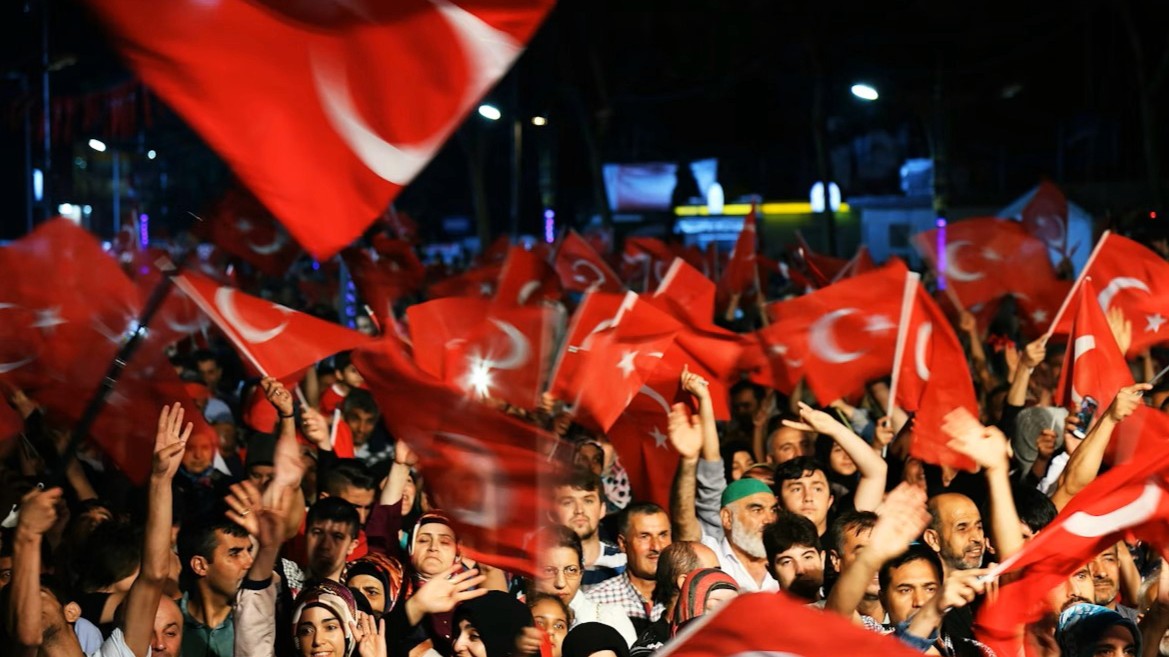
Second, the CHP has started holding large rallies twice a week, mobilizing millions of supporters, even in regions with strong backing for the AKP. Despite increasing arrests of the main opposition and police actions during protests, opposition forces have continued to energize society under the cycle of demonstrations, focusing on both the economic crisis and autocratization. These regular protests helped the main opposition realize its collective strength and increase its popularity among voters who had been impacted by economic losses resulting from the erosion of the rule of law and market volatility. The CHP has re-engaged with lower-middle-class, marginalized communities and women voters, helping to restore public trust during the severe economic crisis. It has undertaken an agenda-setting role by declaring its comprehensive democratic roadmap as a work in progress.
Third, in response to judicial coercion, the main opposition has reorganized its legal strategies to dismiss claims of irregularities and boost the credibility of the main opposition in the public eye. Reorganizing the disputable internal elections at the local and central levels is the primary strategic response to invalidate the pending cases claiming irregularities. This strategy appears to have had some success, revealing an unexpected democratic resilience in the face of the recent decision by the Supreme Electoral Council. As the highest authority for election management and oversight, the Council declared on 24 September 2025 that the re-elections organized by the CHP are valid and cannot be challenged by any other court. In October, the annulment case filed against the CHP general convention was also dismissed by the civil judiciary. Following these legal victories for the CHP, the political struggle seems to have escalated. The Istanbul public prosecutor, involved in criminal cases against İmamoğlu and CHP officials, informed the chief prosecutor of the Court of Cassation of findings, including the unlawful collection of voters’ data via a mobile app by the Istanbul Municipality. This action has sparked legal debate over whether the alleged crimes of CHP-affiliated bureaucrats constitute unconstitutional conduct that could trigger the dissolution of the CHP. The party-dissolution cases can be brought before the Constitutional Court only by the chief prosecutor of the Court of Cassation.
Conclusion
The Turkish case exemplifies the strategic strengths of autocratic resilience and democratic opposition, particularly through hybrid tactics that incorporate legal-constitutional, communicative, identity-based, and mobilizing actions. Regarding institutional captures, resources, and judicial coercion, the government holds a competitive advantage over the opposition. Nonetheless, structural-institutional factors, such as voters' economic struggles and the robustness of Türkiye’s electoral institutions since 1950—highlighted by recent moves of the Supreme Electoral Council—support the democratic opposition. Conversely, a narrow margin in recent polls (1.1 percent) between the government (32.3 percent) and the main opposition (31.2 percent), which favors the former, indicates public support for the ruling AK Party. This suggests the need to explore further why the public does not easily lose trust in populist-autocratic governments, how public trust evolves in response to the democratic and autocratic strategies, and to what extent these strategies have an impact on political change. Therefore, studies on democratic restoration should carefully analyze and monitor developments related to the structural and institutional factors that contribute to the success of populist-autocratic regimes—conditions that are mutable and can be influenced by the adaptive capacities of democratic forces.
The main opposition party in Türkiye, the CHP, is currently under scrutiny, while Parliament has convened for its new legislative session on October 1, 2025. In the meantime, political tension remains high with the establishment of an ad hoc parliamentary committee to address the peace-building process for the Kurdish issue and a potential constitutional debate. The current legal and political situation necessitates an examination of strategies for maintaining autocratic resilience and developing democratic responses under pressure.
Autocratic repertoire: from judicial actions to civil constitution
The ongoing legal actions are rooted in allegations against the main opposition's leading politicians and some inter-party decisions, while also questioning the party’s institutional autonomy. The judicial strategy appears to be multi-layered and comprehensive, encompassing criminal law and laws governing political parties and elections. Initially, the criminal proceedings against Istanbul's popular mayor, Imamoğlu, were initiated on various charges of misconduct and corruption, sparking Türkiye's largest public protests in over a decade. Imamoğlu, who reconnected the CHP with broad segments of society, remains the presidential candidate for the main opposition in the upcoming elections. Yet, Imamoğlu’s eligibility to run in the presidential election was revoked when his university diploma was annulled, which is a constitutional requirement for candidacy (Article 101, paragraph 1 of the Turkish Constitution). Starting in March 2025, the wave of detentions has expanded to include other local officials from the Istanbul municipality, as well as additional CHP mayors in major cities.
Finally, the institutional autonomy of the CHP has come into question due to legal complaints mainly brought to the civil judiciary by disgruntled CHP members who are disappointed with inter-party elections. They have alleged irregularities in the general convention and local conventions of the CHP, which led to replacements in crucial positions, including the party leadership. As a drastic measure, the CHP’s Istanbul head was removed from office by a court verdict due to electoral fraud in the 2023 provincial convention. Additionally, a former CHP deputy chair, once influential but now resentful, was appointed by the court as interim provincial head.
The current challenge facing the CHP, as described above, is seen as the government's new effort to adapt and retain power against the landslide victory of the main opposition in the 2024 local elections. Accordingly, the autocratic endurance employs judicial coercion as a primary strategy through different modes of action and agencies. The legal framework and public statements are actively used to repress key figures of the main opposition through lengthy pre-trial detentions and to depict the public protests as vandalism and criminal incidents. The development of new autocratic partnerships accompanies the judicial coercion through co-optation strategies. In this respect, the disappointed figures of the opposition cooperate with autocratization, filing legal complaints against the main opposition party, the CHP. It creates a co-opted opposition, which is justified by inter-party irregularities and fully aligns with the judicial coercion of autocratization. This judicial taming strategy endorses the patronage of the autocratic elite for the new co-opted opposition within the main opposition. The intensity of judicial coercion has also motivated some opposition mayors to join the ruling party, viewed as a way to counter threats of criminal investigations. Furthermore, the conflicts between the current leadership supporting Imamoglu and representing the reformist faction, and the former party elite, pose a risk of the main opposition becoming preoccupied with inter-party rivalries.
Apart from judicial coercion, which strengthens autocratic alliances by co-opting opposition figures in various ways, autocratic endurance employs other strategies. These efforts aim to boost the government's credibility through legitimate initiatives, focusing on significant projects like legal and political reforms, such as creating a new constitution and advancing the Kurdish peace process, under the banner of “terror-free Türkiye.” The government intends to seize a timely opportunity by simultaneously establishing an ad hoc parliamentary commission on the Kurdish peace process and initiating a discussion on the civil constitution to achieve new milestones.
In recent years, government circles have frequently discussed the need for a new constitution in their public discourse as a means of communication. Disregarding the existing democratic regressions, they have underscored the significance of transitioning away from the constitutional preferences of the 1980 military regime. In their narrative, the authoritarian legacy of the past and the hegemony of bureaucratic elites against native people and traditional values are highlighted as leitmotifs. The process of constitution-making is appreciated on its own merits, regardless of its potential to promote liberal democracy in a true sense, mainly by using the concept of the “civil constitution”. The “civil constitution” represents a reinterpretation of the “will of the people” as the populist endeavor. Governmental circles have consistently referred to the “century of Türkiye” through the realization of a constitutional project. They refer to a constitutional project that citizens can feel truly theirs, and that eliminates outdated and ambiguous notions. Since the new civil constitution has been proposed, concerns have been raised that this expansive constitutionalism could erode or weaken the republican and secular characteristics of the Constitution. Notably, the constitutional process may provide an opportunity to extend the current presidential term limits through negotiations on cultural rights and potential autonomy for the Kurdish population. Furthermore, it can support coordination among autocratic coalition members in the Parliament and broaden their coalition with other right-wing parties by improving their ability to negotiate and collaborate.
The strategies outlined above demonstrate that the government is the primary and most potent force in the political sphere, targeting both the opposition and broader segments of society. They include coercive, co-optational, discursive, and policy-driven strategies, such as the civil constitution as a grand project. They put the main opposition in a defensive, reactive, and limited position.
Oppositional responses: from activist approaches to legal strategies
However, increasing pressure and diversification of governmental strategies also force a change in the main opposition in terms of the party’s re-institutionalization and its re-socialization. Despite repeated legal efforts to weaken its institutional autonomy by invalidating its conventions and internal elections, the main opposition has not lost its organizational capacity for democratic responses. It has developed a hybrid set of actions that go beyond mere reaction and self-defense. These include communicative, extra-institutional, and institutional-legal actions.
First, the main opposition has maintained an activist-like and inclusive approach, particularly in intergenerational communication, aimed at engaging the general public through social media and demonstrations. References to constitutional principles and active resistance have become notable in the CHP’s public statements.
Second, the CHP has started holding large rallies twice a week, mobilizing millions of supporters, even in regions with strong backing for the AKP. Despite increasing arrests of the main opposition and police actions during protests, opposition forces have continued to energize society under the cycle of demonstrations, focusing on both the economic crisis and autocratization. These regular protests helped the main opposition realize its collective strength and increase its popularity among voters who had been impacted by economic losses resulting from the erosion of the rule of law and market volatility. The CHP has re-engaged with lower-middle-class, marginalized communities and women voters, helping to restore public trust during the severe economic crisis. It has undertaken an agenda-setting role by declaring its comprehensive democratic roadmap as a work in progress.
Third, in response to judicial coercion, the main opposition has reorganized its legal strategies to dismiss claims of irregularities and boost the credibility of the main opposition in the public eye. Reorganizing the disputable internal elections at the local and central levels is the primary strategic response to invalidate the pending cases claiming irregularities. This strategy appears to have had some success, revealing an unexpected democratic resilience in the face of the recent decision by the Supreme Electoral Council. As the highest authority for election management and oversight, the Council declared on 24 September 2025 that the re-elections organized by the CHP are valid and cannot be challenged by any other court. In October, the annulment case filed against the CHP general convention was also dismissed by the civil judiciary. Following these legal victories for the CHP, the political struggle seems to have escalated. The Istanbul public prosecutor, involved in criminal cases against İmamoğlu and CHP officials, informed the chief prosecutor of the Court of Cassation of findings, including the unlawful collection of voters’ data via a mobile app by the Istanbul Municipality. This action has sparked legal debate over whether the alleged crimes of CHP-affiliated bureaucrats constitute unconstitutional conduct that could trigger the dissolution of the CHP. The party-dissolution cases can be brought before the Constitutional Court only by the chief prosecutor of the Court of Cassation.
Conclusion
The Turkish case exemplifies the strategic strengths of autocratic resilience and democratic opposition, particularly through hybrid tactics that incorporate legal-constitutional, communicative, identity-based, and mobilizing actions. Regarding institutional captures, resources, and judicial coercion, the government holds a competitive advantage over the opposition. Nonetheless, structural-institutional factors, such as voters' economic struggles and the robustness of Türkiye’s electoral institutions since 1950—highlighted by recent moves of the Supreme Electoral Council—support the democratic opposition. Conversely, a narrow margin in recent polls (1.1 percent) between the government (32.3 percent) and the main opposition (31.2 percent), which favors the former, indicates public support for the ruling AK Party. This suggests the need to explore further why the public does not easily lose trust in populist-autocratic governments, how public trust evolves in response to the democratic and autocratic strategies, and to what extent these strategies have an impact on political change. Therefore, studies on democratic restoration should carefully analyze and monitor developments related to the structural and institutional factors that contribute to the success of populist-autocratic regimes—conditions that are mutable and can be influenced by the adaptive capacities of democratic forces.
The main opposition party in Türkiye, the CHP, is currently under scrutiny, while Parliament has convened for its new legislative session on October 1, 2025. In the meantime, political tension remains high with the establishment of an ad hoc parliamentary committee to address the peace-building process for the Kurdish issue and a potential constitutional debate. The current legal and political situation necessitates an examination of strategies for maintaining autocratic resilience and developing democratic responses under pressure.
Autocratic repertoire: from judicial actions to civil constitution
The ongoing legal actions are rooted in allegations against the main opposition's leading politicians and some inter-party decisions, while also questioning the party’s institutional autonomy. The judicial strategy appears to be multi-layered and comprehensive, encompassing criminal law and laws governing political parties and elections. Initially, the criminal proceedings against Istanbul's popular mayor, Imamoğlu, were initiated on various charges of misconduct and corruption, sparking Türkiye's largest public protests in over a decade. Imamoğlu, who reconnected the CHP with broad segments of society, remains the presidential candidate for the main opposition in the upcoming elections. Yet, Imamoğlu’s eligibility to run in the presidential election was revoked when his university diploma was annulled, which is a constitutional requirement for candidacy (Article 101, paragraph 1 of the Turkish Constitution). Starting in March 2025, the wave of detentions has expanded to include other local officials from the Istanbul municipality, as well as additional CHP mayors in major cities.
Finally, the institutional autonomy of the CHP has come into question due to legal complaints mainly brought to the civil judiciary by disgruntled CHP members who are disappointed with inter-party elections. They have alleged irregularities in the general convention and local conventions of the CHP, which led to replacements in crucial positions, including the party leadership. As a drastic measure, the CHP’s Istanbul head was removed from office by a court verdict due to electoral fraud in the 2023 provincial convention. Additionally, a former CHP deputy chair, once influential but now resentful, was appointed by the court as interim provincial head.
The current challenge facing the CHP, as described above, is seen as the government's new effort to adapt and retain power against the landslide victory of the main opposition in the 2024 local elections. Accordingly, the autocratic endurance employs judicial coercion as a primary strategy through different modes of action and agencies. The legal framework and public statements are actively used to repress key figures of the main opposition through lengthy pre-trial detentions and to depict the public protests as vandalism and criminal incidents. The development of new autocratic partnerships accompanies the judicial coercion through co-optation strategies. In this respect, the disappointed figures of the opposition cooperate with autocratization, filing legal complaints against the main opposition party, the CHP. It creates a co-opted opposition, which is justified by inter-party irregularities and fully aligns with the judicial coercion of autocratization. This judicial taming strategy endorses the patronage of the autocratic elite for the new co-opted opposition within the main opposition. The intensity of judicial coercion has also motivated some opposition mayors to join the ruling party, viewed as a way to counter threats of criminal investigations. Furthermore, the conflicts between the current leadership supporting Imamoglu and representing the reformist faction, and the former party elite, pose a risk of the main opposition becoming preoccupied with inter-party rivalries.
Apart from judicial coercion, which strengthens autocratic alliances by co-opting opposition figures in various ways, autocratic endurance employs other strategies. These efforts aim to boost the government's credibility through legitimate initiatives, focusing on significant projects like legal and political reforms, such as creating a new constitution and advancing the Kurdish peace process, under the banner of “terror-free Türkiye.” The government intends to seize a timely opportunity by simultaneously establishing an ad hoc parliamentary commission on the Kurdish peace process and initiating a discussion on the civil constitution to achieve new milestones.
In recent years, government circles have frequently discussed the need for a new constitution in their public discourse as a means of communication. Disregarding the existing democratic regressions, they have underscored the significance of transitioning away from the constitutional preferences of the 1980 military regime. In their narrative, the authoritarian legacy of the past and the hegemony of bureaucratic elites against native people and traditional values are highlighted as leitmotifs. The process of constitution-making is appreciated on its own merits, regardless of its potential to promote liberal democracy in a true sense, mainly by using the concept of the “civil constitution”. The “civil constitution” represents a reinterpretation of the “will of the people” as the populist endeavor. Governmental circles have consistently referred to the “century of Türkiye” through the realization of a constitutional project. They refer to a constitutional project that citizens can feel truly theirs, and that eliminates outdated and ambiguous notions. Since the new civil constitution has been proposed, concerns have been raised that this expansive constitutionalism could erode or weaken the republican and secular characteristics of the Constitution. Notably, the constitutional process may provide an opportunity to extend the current presidential term limits through negotiations on cultural rights and potential autonomy for the Kurdish population. Furthermore, it can support coordination among autocratic coalition members in the Parliament and broaden their coalition with other right-wing parties by improving their ability to negotiate and collaborate.
The strategies outlined above demonstrate that the government is the primary and most potent force in the political sphere, targeting both the opposition and broader segments of society. They include coercive, co-optational, discursive, and policy-driven strategies, such as the civil constitution as a grand project. They put the main opposition in a defensive, reactive, and limited position.
Oppositional responses: from activist approaches to legal strategies
However, increasing pressure and diversification of governmental strategies also force a change in the main opposition in terms of the party’s re-institutionalization and its re-socialization. Despite repeated legal efforts to weaken its institutional autonomy by invalidating its conventions and internal elections, the main opposition has not lost its organizational capacity for democratic responses. It has developed a hybrid set of actions that go beyond mere reaction and self-defense. These include communicative, extra-institutional, and institutional-legal actions.
First, the main opposition has maintained an activist-like and inclusive approach, particularly in intergenerational communication, aimed at engaging the general public through social media and demonstrations. References to constitutional principles and active resistance have become notable in the CHP’s public statements.
Second, the CHP has started holding large rallies twice a week, mobilizing millions of supporters, even in regions with strong backing for the AKP. Despite increasing arrests of the main opposition and police actions during protests, opposition forces have continued to energize society under the cycle of demonstrations, focusing on both the economic crisis and autocratization. These regular protests helped the main opposition realize its collective strength and increase its popularity among voters who had been impacted by economic losses resulting from the erosion of the rule of law and market volatility. The CHP has re-engaged with lower-middle-class, marginalized communities and women voters, helping to restore public trust during the severe economic crisis. It has undertaken an agenda-setting role by declaring its comprehensive democratic roadmap as a work in progress.
Third, in response to judicial coercion, the main opposition has reorganized its legal strategies to dismiss claims of irregularities and boost the credibility of the main opposition in the public eye. Reorganizing the disputable internal elections at the local and central levels is the primary strategic response to invalidate the pending cases claiming irregularities. This strategy appears to have had some success, revealing an unexpected democratic resilience in the face of the recent decision by the Supreme Electoral Council. As the highest authority for election management and oversight, the Council declared on 24 September 2025 that the re-elections organized by the CHP are valid and cannot be challenged by any other court. In October, the annulment case filed against the CHP general convention was also dismissed by the civil judiciary. Following these legal victories for the CHP, the political struggle seems to have escalated. The Istanbul public prosecutor, involved in criminal cases against İmamoğlu and CHP officials, informed the chief prosecutor of the Court of Cassation of findings, including the unlawful collection of voters’ data via a mobile app by the Istanbul Municipality. This action has sparked legal debate over whether the alleged crimes of CHP-affiliated bureaucrats constitute unconstitutional conduct that could trigger the dissolution of the CHP. The party-dissolution cases can be brought before the Constitutional Court only by the chief prosecutor of the Court of Cassation.
Conclusion
The Turkish case exemplifies the strategic strengths of autocratic resilience and democratic opposition, particularly through hybrid tactics that incorporate legal-constitutional, communicative, identity-based, and mobilizing actions. Regarding institutional captures, resources, and judicial coercion, the government holds a competitive advantage over the opposition. Nonetheless, structural-institutional factors, such as voters' economic struggles and the robustness of Türkiye’s electoral institutions since 1950—highlighted by recent moves of the Supreme Electoral Council—support the democratic opposition. Conversely, a narrow margin in recent polls (1.1 percent) between the government (32.3 percent) and the main opposition (31.2 percent), which favors the former, indicates public support for the ruling AK Party. This suggests the need to explore further why the public does not easily lose trust in populist-autocratic governments, how public trust evolves in response to the democratic and autocratic strategies, and to what extent these strategies have an impact on political change. Therefore, studies on democratic restoration should carefully analyze and monitor developments related to the structural and institutional factors that contribute to the success of populist-autocratic regimes—conditions that are mutable and can be influenced by the adaptive capacities of democratic forces.
The main opposition party in Türkiye, the CHP, is currently under scrutiny, while Parliament has convened for its new legislative session on October 1, 2025. In the meantime, political tension remains high with the establishment of an ad hoc parliamentary committee to address the peace-building process for the Kurdish issue and a potential constitutional debate. The current legal and political situation necessitates an examination of strategies for maintaining autocratic resilience and developing democratic responses under pressure.
Autocratic repertoire: from judicial actions to civil constitution
The ongoing legal actions are rooted in allegations against the main opposition's leading politicians and some inter-party decisions, while also questioning the party’s institutional autonomy. The judicial strategy appears to be multi-layered and comprehensive, encompassing criminal law and laws governing political parties and elections. Initially, the criminal proceedings against Istanbul's popular mayor, Imamoğlu, were initiated on various charges of misconduct and corruption, sparking Türkiye's largest public protests in over a decade. Imamoğlu, who reconnected the CHP with broad segments of society, remains the presidential candidate for the main opposition in the upcoming elections. Yet, Imamoğlu’s eligibility to run in the presidential election was revoked when his university diploma was annulled, which is a constitutional requirement for candidacy (Article 101, paragraph 1 of the Turkish Constitution). Starting in March 2025, the wave of detentions has expanded to include other local officials from the Istanbul municipality, as well as additional CHP mayors in major cities.
Finally, the institutional autonomy of the CHP has come into question due to legal complaints mainly brought to the civil judiciary by disgruntled CHP members who are disappointed with inter-party elections. They have alleged irregularities in the general convention and local conventions of the CHP, which led to replacements in crucial positions, including the party leadership. As a drastic measure, the CHP’s Istanbul head was removed from office by a court verdict due to electoral fraud in the 2023 provincial convention. Additionally, a former CHP deputy chair, once influential but now resentful, was appointed by the court as interim provincial head.
The current challenge facing the CHP, as described above, is seen as the government's new effort to adapt and retain power against the landslide victory of the main opposition in the 2024 local elections. Accordingly, the autocratic endurance employs judicial coercion as a primary strategy through different modes of action and agencies. The legal framework and public statements are actively used to repress key figures of the main opposition through lengthy pre-trial detentions and to depict the public protests as vandalism and criminal incidents. The development of new autocratic partnerships accompanies the judicial coercion through co-optation strategies. In this respect, the disappointed figures of the opposition cooperate with autocratization, filing legal complaints against the main opposition party, the CHP. It creates a co-opted opposition, which is justified by inter-party irregularities and fully aligns with the judicial coercion of autocratization. This judicial taming strategy endorses the patronage of the autocratic elite for the new co-opted opposition within the main opposition. The intensity of judicial coercion has also motivated some opposition mayors to join the ruling party, viewed as a way to counter threats of criminal investigations. Furthermore, the conflicts between the current leadership supporting Imamoglu and representing the reformist faction, and the former party elite, pose a risk of the main opposition becoming preoccupied with inter-party rivalries.
Apart from judicial coercion, which strengthens autocratic alliances by co-opting opposition figures in various ways, autocratic endurance employs other strategies. These efforts aim to boost the government's credibility through legitimate initiatives, focusing on significant projects like legal and political reforms, such as creating a new constitution and advancing the Kurdish peace process, under the banner of “terror-free Türkiye.” The government intends to seize a timely opportunity by simultaneously establishing an ad hoc parliamentary commission on the Kurdish peace process and initiating a discussion on the civil constitution to achieve new milestones.
In recent years, government circles have frequently discussed the need for a new constitution in their public discourse as a means of communication. Disregarding the existing democratic regressions, they have underscored the significance of transitioning away from the constitutional preferences of the 1980 military regime. In their narrative, the authoritarian legacy of the past and the hegemony of bureaucratic elites against native people and traditional values are highlighted as leitmotifs. The process of constitution-making is appreciated on its own merits, regardless of its potential to promote liberal democracy in a true sense, mainly by using the concept of the “civil constitution”. The “civil constitution” represents a reinterpretation of the “will of the people” as the populist endeavor. Governmental circles have consistently referred to the “century of Türkiye” through the realization of a constitutional project. They refer to a constitutional project that citizens can feel truly theirs, and that eliminates outdated and ambiguous notions. Since the new civil constitution has been proposed, concerns have been raised that this expansive constitutionalism could erode or weaken the republican and secular characteristics of the Constitution. Notably, the constitutional process may provide an opportunity to extend the current presidential term limits through negotiations on cultural rights and potential autonomy for the Kurdish population. Furthermore, it can support coordination among autocratic coalition members in the Parliament and broaden their coalition with other right-wing parties by improving their ability to negotiate and collaborate.
The strategies outlined above demonstrate that the government is the primary and most potent force in the political sphere, targeting both the opposition and broader segments of society. They include coercive, co-optational, discursive, and policy-driven strategies, such as the civil constitution as a grand project. They put the main opposition in a defensive, reactive, and limited position.
Oppositional responses: from activist approaches to legal strategies
However, increasing pressure and diversification of governmental strategies also force a change in the main opposition in terms of the party’s re-institutionalization and its re-socialization. Despite repeated legal efforts to weaken its institutional autonomy by invalidating its conventions and internal elections, the main opposition has not lost its organizational capacity for democratic responses. It has developed a hybrid set of actions that go beyond mere reaction and self-defense. These include communicative, extra-institutional, and institutional-legal actions.
First, the main opposition has maintained an activist-like and inclusive approach, particularly in intergenerational communication, aimed at engaging the general public through social media and demonstrations. References to constitutional principles and active resistance have become notable in the CHP’s public statements.
Second, the CHP has started holding large rallies twice a week, mobilizing millions of supporters, even in regions with strong backing for the AKP. Despite increasing arrests of the main opposition and police actions during protests, opposition forces have continued to energize society under the cycle of demonstrations, focusing on both the economic crisis and autocratization. These regular protests helped the main opposition realize its collective strength and increase its popularity among voters who had been impacted by economic losses resulting from the erosion of the rule of law and market volatility. The CHP has re-engaged with lower-middle-class, marginalized communities and women voters, helping to restore public trust during the severe economic crisis. It has undertaken an agenda-setting role by declaring its comprehensive democratic roadmap as a work in progress.
Third, in response to judicial coercion, the main opposition has reorganized its legal strategies to dismiss claims of irregularities and boost the credibility of the main opposition in the public eye. Reorganizing the disputable internal elections at the local and central levels is the primary strategic response to invalidate the pending cases claiming irregularities. This strategy appears to have had some success, revealing an unexpected democratic resilience in the face of the recent decision by the Supreme Electoral Council. As the highest authority for election management and oversight, the Council declared on 24 September 2025 that the re-elections organized by the CHP are valid and cannot be challenged by any other court. In October, the annulment case filed against the CHP general convention was also dismissed by the civil judiciary. Following these legal victories for the CHP, the political struggle seems to have escalated. The Istanbul public prosecutor, involved in criminal cases against İmamoğlu and CHP officials, informed the chief prosecutor of the Court of Cassation of findings, including the unlawful collection of voters’ data via a mobile app by the Istanbul Municipality. This action has sparked legal debate over whether the alleged crimes of CHP-affiliated bureaucrats constitute unconstitutional conduct that could trigger the dissolution of the CHP. The party-dissolution cases can be brought before the Constitutional Court only by the chief prosecutor of the Court of Cassation.
Conclusion
The Turkish case exemplifies the strategic strengths of autocratic resilience and democratic opposition, particularly through hybrid tactics that incorporate legal-constitutional, communicative, identity-based, and mobilizing actions. Regarding institutional captures, resources, and judicial coercion, the government holds a competitive advantage over the opposition. Nonetheless, structural-institutional factors, such as voters' economic struggles and the robustness of Türkiye’s electoral institutions since 1950—highlighted by recent moves of the Supreme Electoral Council—support the democratic opposition. Conversely, a narrow margin in recent polls (1.1 percent) between the government (32.3 percent) and the main opposition (31.2 percent), which favors the former, indicates public support for the ruling AK Party. This suggests the need to explore further why the public does not easily lose trust in populist-autocratic governments, how public trust evolves in response to the democratic and autocratic strategies, and to what extent these strategies have an impact on political change. Therefore, studies on democratic restoration should carefully analyze and monitor developments related to the structural and institutional factors that contribute to the success of populist-autocratic regimes—conditions that are mutable and can be influenced by the adaptive capacities of democratic forces.
The main opposition party in Türkiye, the CHP, is currently under scrutiny, while Parliament has convened for its new legislative session on October 1, 2025. In the meantime, political tension remains high with the establishment of an ad hoc parliamentary committee to address the peace-building process for the Kurdish issue and a potential constitutional debate. The current legal and political situation necessitates an examination of strategies for maintaining autocratic resilience and developing democratic responses under pressure.
Autocratic repertoire: from judicial actions to civil constitution
The ongoing legal actions are rooted in allegations against the main opposition's leading politicians and some inter-party decisions, while also questioning the party’s institutional autonomy. The judicial strategy appears to be multi-layered and comprehensive, encompassing criminal law and laws governing political parties and elections. Initially, the criminal proceedings against Istanbul's popular mayor, Imamoğlu, were initiated on various charges of misconduct and corruption, sparking Türkiye's largest public protests in over a decade. Imamoğlu, who reconnected the CHP with broad segments of society, remains the presidential candidate for the main opposition in the upcoming elections. Yet, Imamoğlu’s eligibility to run in the presidential election was revoked when his university diploma was annulled, which is a constitutional requirement for candidacy (Article 101, paragraph 1 of the Turkish Constitution). Starting in March 2025, the wave of detentions has expanded to include other local officials from the Istanbul municipality, as well as additional CHP mayors in major cities.
Finally, the institutional autonomy of the CHP has come into question due to legal complaints mainly brought to the civil judiciary by disgruntled CHP members who are disappointed with inter-party elections. They have alleged irregularities in the general convention and local conventions of the CHP, which led to replacements in crucial positions, including the party leadership. As a drastic measure, the CHP’s Istanbul head was removed from office by a court verdict due to electoral fraud in the 2023 provincial convention. Additionally, a former CHP deputy chair, once influential but now resentful, was appointed by the court as interim provincial head.
The current challenge facing the CHP, as described above, is seen as the government's new effort to adapt and retain power against the landslide victory of the main opposition in the 2024 local elections. Accordingly, the autocratic endurance employs judicial coercion as a primary strategy through different modes of action and agencies. The legal framework and public statements are actively used to repress key figures of the main opposition through lengthy pre-trial detentions and to depict the public protests as vandalism and criminal incidents. The development of new autocratic partnerships accompanies the judicial coercion through co-optation strategies. In this respect, the disappointed figures of the opposition cooperate with autocratization, filing legal complaints against the main opposition party, the CHP. It creates a co-opted opposition, which is justified by inter-party irregularities and fully aligns with the judicial coercion of autocratization. This judicial taming strategy endorses the patronage of the autocratic elite for the new co-opted opposition within the main opposition. The intensity of judicial coercion has also motivated some opposition mayors to join the ruling party, viewed as a way to counter threats of criminal investigations. Furthermore, the conflicts between the current leadership supporting Imamoglu and representing the reformist faction, and the former party elite, pose a risk of the main opposition becoming preoccupied with inter-party rivalries.
Apart from judicial coercion, which strengthens autocratic alliances by co-opting opposition figures in various ways, autocratic endurance employs other strategies. These efforts aim to boost the government's credibility through legitimate initiatives, focusing on significant projects like legal and political reforms, such as creating a new constitution and advancing the Kurdish peace process, under the banner of “terror-free Türkiye.” The government intends to seize a timely opportunity by simultaneously establishing an ad hoc parliamentary commission on the Kurdish peace process and initiating a discussion on the civil constitution to achieve new milestones.
In recent years, government circles have frequently discussed the need for a new constitution in their public discourse as a means of communication. Disregarding the existing democratic regressions, they have underscored the significance of transitioning away from the constitutional preferences of the 1980 military regime. In their narrative, the authoritarian legacy of the past and the hegemony of bureaucratic elites against native people and traditional values are highlighted as leitmotifs. The process of constitution-making is appreciated on its own merits, regardless of its potential to promote liberal democracy in a true sense, mainly by using the concept of the “civil constitution”. The “civil constitution” represents a reinterpretation of the “will of the people” as the populist endeavor. Governmental circles have consistently referred to the “century of Türkiye” through the realization of a constitutional project. They refer to a constitutional project that citizens can feel truly theirs, and that eliminates outdated and ambiguous notions. Since the new civil constitution has been proposed, concerns have been raised that this expansive constitutionalism could erode or weaken the republican and secular characteristics of the Constitution. Notably, the constitutional process may provide an opportunity to extend the current presidential term limits through negotiations on cultural rights and potential autonomy for the Kurdish population. Furthermore, it can support coordination among autocratic coalition members in the Parliament and broaden their coalition with other right-wing parties by improving their ability to negotiate and collaborate.
The strategies outlined above demonstrate that the government is the primary and most potent force in the political sphere, targeting both the opposition and broader segments of society. They include coercive, co-optational, discursive, and policy-driven strategies, such as the civil constitution as a grand project. They put the main opposition in a defensive, reactive, and limited position.
Oppositional responses: from activist approaches to legal strategies
However, increasing pressure and diversification of governmental strategies also force a change in the main opposition in terms of the party’s re-institutionalization and its re-socialization. Despite repeated legal efforts to weaken its institutional autonomy by invalidating its conventions and internal elections, the main opposition has not lost its organizational capacity for democratic responses. It has developed a hybrid set of actions that go beyond mere reaction and self-defense. These include communicative, extra-institutional, and institutional-legal actions.
First, the main opposition has maintained an activist-like and inclusive approach, particularly in intergenerational communication, aimed at engaging the general public through social media and demonstrations. References to constitutional principles and active resistance have become notable in the CHP’s public statements.
Second, the CHP has started holding large rallies twice a week, mobilizing millions of supporters, even in regions with strong backing for the AKP. Despite increasing arrests of the main opposition and police actions during protests, opposition forces have continued to energize society under the cycle of demonstrations, focusing on both the economic crisis and autocratization. These regular protests helped the main opposition realize its collective strength and increase its popularity among voters who had been impacted by economic losses resulting from the erosion of the rule of law and market volatility. The CHP has re-engaged with lower-middle-class, marginalized communities and women voters, helping to restore public trust during the severe economic crisis. It has undertaken an agenda-setting role by declaring its comprehensive democratic roadmap as a work in progress.
Third, in response to judicial coercion, the main opposition has reorganized its legal strategies to dismiss claims of irregularities and boost the credibility of the main opposition in the public eye. Reorganizing the disputable internal elections at the local and central levels is the primary strategic response to invalidate the pending cases claiming irregularities. This strategy appears to have had some success, revealing an unexpected democratic resilience in the face of the recent decision by the Supreme Electoral Council. As the highest authority for election management and oversight, the Council declared on 24 September 2025 that the re-elections organized by the CHP are valid and cannot be challenged by any other court. In October, the annulment case filed against the CHP general convention was also dismissed by the civil judiciary. Following these legal victories for the CHP, the political struggle seems to have escalated. The Istanbul public prosecutor, involved in criminal cases against İmamoğlu and CHP officials, informed the chief prosecutor of the Court of Cassation of findings, including the unlawful collection of voters’ data via a mobile app by the Istanbul Municipality. This action has sparked legal debate over whether the alleged crimes of CHP-affiliated bureaucrats constitute unconstitutional conduct that could trigger the dissolution of the CHP. The party-dissolution cases can be brought before the Constitutional Court only by the chief prosecutor of the Court of Cassation.
Conclusion
The Turkish case exemplifies the strategic strengths of autocratic resilience and democratic opposition, particularly through hybrid tactics that incorporate legal-constitutional, communicative, identity-based, and mobilizing actions. Regarding institutional captures, resources, and judicial coercion, the government holds a competitive advantage over the opposition. Nonetheless, structural-institutional factors, such as voters' economic struggles and the robustness of Türkiye’s electoral institutions since 1950—highlighted by recent moves of the Supreme Electoral Council—support the democratic opposition. Conversely, a narrow margin in recent polls (1.1 percent) between the government (32.3 percent) and the main opposition (31.2 percent), which favors the former, indicates public support for the ruling AK Party. This suggests the need to explore further why the public does not easily lose trust in populist-autocratic governments, how public trust evolves in response to the democratic and autocratic strategies, and to what extent these strategies have an impact on political change. Therefore, studies on democratic restoration should carefully analyze and monitor developments related to the structural and institutional factors that contribute to the success of populist-autocratic regimes—conditions that are mutable and can be influenced by the adaptive capacities of democratic forces.
The main opposition party in Türkiye, the CHP, is currently under scrutiny, while Parliament has convened for its new legislative session on October 1, 2025. In the meantime, political tension remains high with the establishment of an ad hoc parliamentary committee to address the peace-building process for the Kurdish issue and a potential constitutional debate. The current legal and political situation necessitates an examination of strategies for maintaining autocratic resilience and developing democratic responses under pressure.
Autocratic repertoire: from judicial actions to civil constitution
The ongoing legal actions are rooted in allegations against the main opposition's leading politicians and some inter-party decisions, while also questioning the party’s institutional autonomy. The judicial strategy appears to be multi-layered and comprehensive, encompassing criminal law and laws governing political parties and elections. Initially, the criminal proceedings against Istanbul's popular mayor, Imamoğlu, were initiated on various charges of misconduct and corruption, sparking Türkiye's largest public protests in over a decade. Imamoğlu, who reconnected the CHP with broad segments of society, remains the presidential candidate for the main opposition in the upcoming elections. Yet, Imamoğlu’s eligibility to run in the presidential election was revoked when his university diploma was annulled, which is a constitutional requirement for candidacy (Article 101, paragraph 1 of the Turkish Constitution). Starting in March 2025, the wave of detentions has expanded to include other local officials from the Istanbul municipality, as well as additional CHP mayors in major cities.
Finally, the institutional autonomy of the CHP has come into question due to legal complaints mainly brought to the civil judiciary by disgruntled CHP members who are disappointed with inter-party elections. They have alleged irregularities in the general convention and local conventions of the CHP, which led to replacements in crucial positions, including the party leadership. As a drastic measure, the CHP’s Istanbul head was removed from office by a court verdict due to electoral fraud in the 2023 provincial convention. Additionally, a former CHP deputy chair, once influential but now resentful, was appointed by the court as interim provincial head.
The current challenge facing the CHP, as described above, is seen as the government's new effort to adapt and retain power against the landslide victory of the main opposition in the 2024 local elections. Accordingly, the autocratic endurance employs judicial coercion as a primary strategy through different modes of action and agencies. The legal framework and public statements are actively used to repress key figures of the main opposition through lengthy pre-trial detentions and to depict the public protests as vandalism and criminal incidents. The development of new autocratic partnerships accompanies the judicial coercion through co-optation strategies. In this respect, the disappointed figures of the opposition cooperate with autocratization, filing legal complaints against the main opposition party, the CHP. It creates a co-opted opposition, which is justified by inter-party irregularities and fully aligns with the judicial coercion of autocratization. This judicial taming strategy endorses the patronage of the autocratic elite for the new co-opted opposition within the main opposition. The intensity of judicial coercion has also motivated some opposition mayors to join the ruling party, viewed as a way to counter threats of criminal investigations. Furthermore, the conflicts between the current leadership supporting Imamoglu and representing the reformist faction, and the former party elite, pose a risk of the main opposition becoming preoccupied with inter-party rivalries.
Apart from judicial coercion, which strengthens autocratic alliances by co-opting opposition figures in various ways, autocratic endurance employs other strategies. These efforts aim to boost the government's credibility through legitimate initiatives, focusing on significant projects like legal and political reforms, such as creating a new constitution and advancing the Kurdish peace process, under the banner of “terror-free Türkiye.” The government intends to seize a timely opportunity by simultaneously establishing an ad hoc parliamentary commission on the Kurdish peace process and initiating a discussion on the civil constitution to achieve new milestones.
In recent years, government circles have frequently discussed the need for a new constitution in their public discourse as a means of communication. Disregarding the existing democratic regressions, they have underscored the significance of transitioning away from the constitutional preferences of the 1980 military regime. In their narrative, the authoritarian legacy of the past and the hegemony of bureaucratic elites against native people and traditional values are highlighted as leitmotifs. The process of constitution-making is appreciated on its own merits, regardless of its potential to promote liberal democracy in a true sense, mainly by using the concept of the “civil constitution”. The “civil constitution” represents a reinterpretation of the “will of the people” as the populist endeavor. Governmental circles have consistently referred to the “century of Türkiye” through the realization of a constitutional project. They refer to a constitutional project that citizens can feel truly theirs, and that eliminates outdated and ambiguous notions. Since the new civil constitution has been proposed, concerns have been raised that this expansive constitutionalism could erode or weaken the republican and secular characteristics of the Constitution. Notably, the constitutional process may provide an opportunity to extend the current presidential term limits through negotiations on cultural rights and potential autonomy for the Kurdish population. Furthermore, it can support coordination among autocratic coalition members in the Parliament and broaden their coalition with other right-wing parties by improving their ability to negotiate and collaborate.
The strategies outlined above demonstrate that the government is the primary and most potent force in the political sphere, targeting both the opposition and broader segments of society. They include coercive, co-optational, discursive, and policy-driven strategies, such as the civil constitution as a grand project. They put the main opposition in a defensive, reactive, and limited position.
Oppositional responses: from activist approaches to legal strategies
However, increasing pressure and diversification of governmental strategies also force a change in the main opposition in terms of the party’s re-institutionalization and its re-socialization. Despite repeated legal efforts to weaken its institutional autonomy by invalidating its conventions and internal elections, the main opposition has not lost its organizational capacity for democratic responses. It has developed a hybrid set of actions that go beyond mere reaction and self-defense. These include communicative, extra-institutional, and institutional-legal actions.
First, the main opposition has maintained an activist-like and inclusive approach, particularly in intergenerational communication, aimed at engaging the general public through social media and demonstrations. References to constitutional principles and active resistance have become notable in the CHP’s public statements.
Second, the CHP has started holding large rallies twice a week, mobilizing millions of supporters, even in regions with strong backing for the AKP. Despite increasing arrests of the main opposition and police actions during protests, opposition forces have continued to energize society under the cycle of demonstrations, focusing on both the economic crisis and autocratization. These regular protests helped the main opposition realize its collective strength and increase its popularity among voters who had been impacted by economic losses resulting from the erosion of the rule of law and market volatility. The CHP has re-engaged with lower-middle-class, marginalized communities and women voters, helping to restore public trust during the severe economic crisis. It has undertaken an agenda-setting role by declaring its comprehensive democratic roadmap as a work in progress.
Third, in response to judicial coercion, the main opposition has reorganized its legal strategies to dismiss claims of irregularities and boost the credibility of the main opposition in the public eye. Reorganizing the disputable internal elections at the local and central levels is the primary strategic response to invalidate the pending cases claiming irregularities. This strategy appears to have had some success, revealing an unexpected democratic resilience in the face of the recent decision by the Supreme Electoral Council. As the highest authority for election management and oversight, the Council declared on 24 September 2025 that the re-elections organized by the CHP are valid and cannot be challenged by any other court. In October, the annulment case filed against the CHP general convention was also dismissed by the civil judiciary. Following these legal victories for the CHP, the political struggle seems to have escalated. The Istanbul public prosecutor, involved in criminal cases against İmamoğlu and CHP officials, informed the chief prosecutor of the Court of Cassation of findings, including the unlawful collection of voters’ data via a mobile app by the Istanbul Municipality. This action has sparked legal debate over whether the alleged crimes of CHP-affiliated bureaucrats constitute unconstitutional conduct that could trigger the dissolution of the CHP. The party-dissolution cases can be brought before the Constitutional Court only by the chief prosecutor of the Court of Cassation.
Conclusion
The Turkish case exemplifies the strategic strengths of autocratic resilience and democratic opposition, particularly through hybrid tactics that incorporate legal-constitutional, communicative, identity-based, and mobilizing actions. Regarding institutional captures, resources, and judicial coercion, the government holds a competitive advantage over the opposition. Nonetheless, structural-institutional factors, such as voters' economic struggles and the robustness of Türkiye’s electoral institutions since 1950—highlighted by recent moves of the Supreme Electoral Council—support the democratic opposition. Conversely, a narrow margin in recent polls (1.1 percent) between the government (32.3 percent) and the main opposition (31.2 percent), which favors the former, indicates public support for the ruling AK Party. This suggests the need to explore further why the public does not easily lose trust in populist-autocratic governments, how public trust evolves in response to the democratic and autocratic strategies, and to what extent these strategies have an impact on political change. Therefore, studies on democratic restoration should carefully analyze and monitor developments related to the structural and institutional factors that contribute to the success of populist-autocratic regimes—conditions that are mutable and can be influenced by the adaptive capacities of democratic forces.
About the Author
Bertil Oder
Bertil Oder is a professor of constitutional law at Koç University Law School. She served as the principal investigator for various projects on constitutional review, social movements, and civic-institution relationships, and as an international consultant to UN Women and the Inter-Parliamentary Union. Her recent publications include: “Democratic Resistance under Populist Autocratization: Hurdles, Civil Society and Strategies”, 26 THEORETICAL INQUIRIES L. (forthcoming 2025); "Turkish Constitutional Court and Judicial Resistance: Instances of Defiance Under Pressure", 2025 (2) Global Jurist; “The Turkish Constitutional Court and Turkey’s Democratic Breakdown: Judicial Politics Under Pressure" ICL Journal, vol. 18, no. 1, 2024, pp. 127-163.
About the Author
Bertil Oder
Bertil Oder is a professor of constitutional law at Koç University Law School. She served as the principal investigator for various projects on constitutional review, social movements, and civic-institution relationships, and as an international consultant to UN Women and the Inter-Parliamentary Union. Her recent publications include: “Democratic Resistance under Populist Autocratization: Hurdles, Civil Society and Strategies”, 26 THEORETICAL INQUIRIES L. (forthcoming 2025); "Turkish Constitutional Court and Judicial Resistance: Instances of Defiance Under Pressure", 2025 (2) Global Jurist; “The Turkish Constitutional Court and Turkey’s Democratic Breakdown: Judicial Politics Under Pressure" ICL Journal, vol. 18, no. 1, 2024, pp. 127-163.
About the Author
Bertil Oder
Bertil Oder is a professor of constitutional law at Koç University Law School. She served as the principal investigator for various projects on constitutional review, social movements, and civic-institution relationships, and as an international consultant to UN Women and the Inter-Parliamentary Union. Her recent publications include: “Democratic Resistance under Populist Autocratization: Hurdles, Civil Society and Strategies”, 26 THEORETICAL INQUIRIES L. (forthcoming 2025); "Turkish Constitutional Court and Judicial Resistance: Instances of Defiance Under Pressure", 2025 (2) Global Jurist; “The Turkish Constitutional Court and Turkey’s Democratic Breakdown: Judicial Politics Under Pressure" ICL Journal, vol. 18, no. 1, 2024, pp. 127-163.
More viewpoints in
Congress, The President & The Courts

Sep 3, 2026
The Case for Factions
James Wallner
,
Soren Dayton
Congress, The President & The Courts
Sep 3, 2026
The Case for Factions
James Wallner
,
Soren Dayton
Congress, The President & The Courts
Sep 3, 2026
The Case for Factions
James Wallner
,
Soren Dayton
Congress, The President & The Courts

Sep 1, 2026
How to Get Justice, and Judges, Closer to the People
Julio Ríos-Figueroa
Congress, The President & The Courts
Sep 1, 2026
How to Get Justice, and Judges, Closer to the People
Julio Ríos-Figueroa
Congress, The President & The Courts
Sep 1, 2026
How to Get Justice, and Judges, Closer to the People
Julio Ríos-Figueroa
Congress, The President & The Courts

Jul 29, 2026
The Decline of the Legislative Branch and the Crisis of Statecraft
Robert Greally
Congress, The President & The Courts
Jul 29, 2026
The Decline of the Legislative Branch and the Crisis of Statecraft
Robert Greally
Congress, The President & The Courts
Jul 29, 2026
The Decline of the Legislative Branch and the Crisis of Statecraft
Robert Greally
Congress, The President & The Courts
More viewpoints in
Congress, The President & The Courts
Sep 3, 2026
The Case for Factions
James Wallner
,
Soren Dayton
Congress, The President & The Courts
Sep 1, 2026
How to Get Justice, and Judges, Closer to the People
Julio Ríos-Figueroa
Congress, The President & The Courts
Jul 29, 2026
The Decline of the Legislative Branch and the Crisis of Statecraft
Robert Greally
Congress, The President & The Courts
More viewpoints in
Congress, The President & The Courts
Sep 3, 2026
The Case for Factions
James Wallner
,
Soren Dayton
Congress, The President & The Courts
Sep 1, 2026
How to Get Justice, and Judges, Closer to the People
Julio Ríos-Figueroa
Congress, The President & The Courts
Jul 29, 2026
The Decline of the Legislative Branch and the Crisis of Statecraft
Robert Greally
Congress, The President & The Courts
More viewpoints in
Congress, The President & The Courts
Sep 3, 2026
The Case for Factions
James Wallner
,
Soren Dayton
Congress, The President & The Courts
Sep 1, 2026
How to Get Justice, and Judges, Closer to the People
Julio Ríos-Figueroa
Congress, The President & The Courts
Jul 29, 2026
The Decline of the Legislative Branch and the Crisis of Statecraft
Robert Greally
Congress, The President & The Courts