Apr 22, 2026
A Solution to Many Election Administration Challenges
Stephen Richer
Apr 22, 2026
A Solution to Many Election Administration Challenges
Stephen Richer
Apr 22, 2026
A Solution to Many Election Administration Challenges
Stephen Richer
Apr 22, 2026
A Solution to Many Election Administration Challenges
Stephen Richer
Apr 22, 2026
A Solution to Many Election Administration Challenges
Stephen Richer
Apr 22, 2026
A Solution to Many Election Administration Challenges
Stephen Richer
In October 2025, The Atlantic published a doomsday story about how President Trump might corrupt the 2026 midterm elections: ICE agents and National Guardsmen deployed to the streets, litigation to stop ballot tallying after Election Day, the Department of Homeland Security seizing ballot tabulation equipment, and the United States Marines take over the ballots.
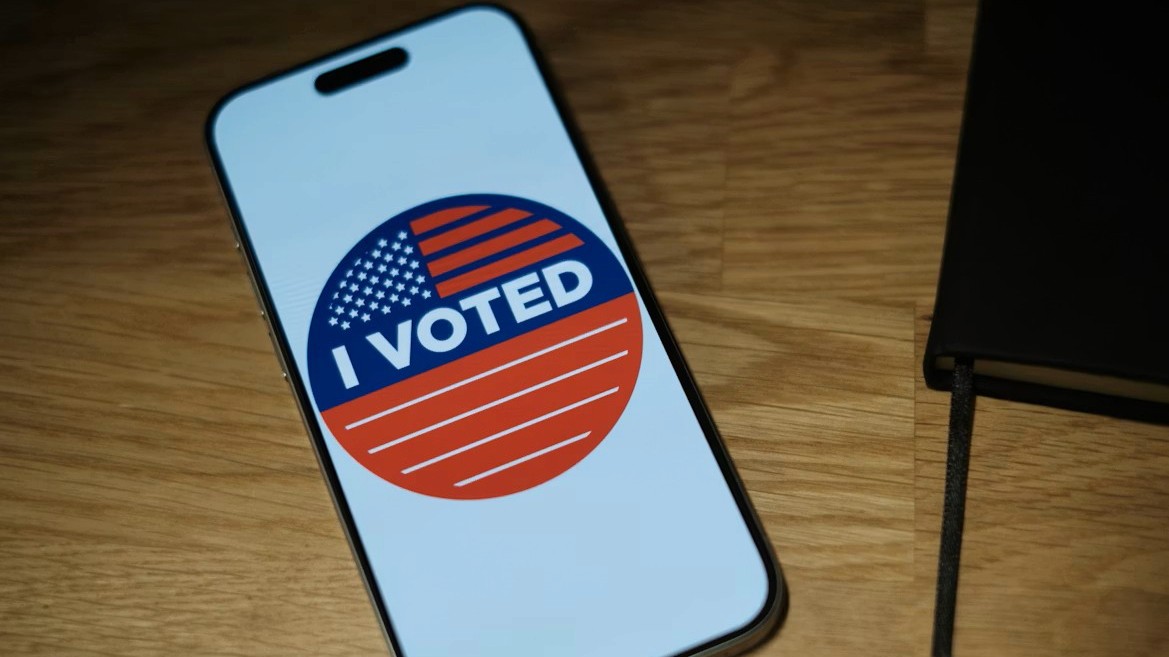
Amazingly, we already have a solution to each threat: cellphone voting.
Now, before you dismiss me as a naive worshipper of technology with no understanding of elections, please know that I previously oversaw elections in Maricopa County, Arizona. I very much appreciate the benefits of hand-marked paper ballots that are unhackable, digitally immutable, and auditable. Few people have spent more time than I have answering questions about allegedly “rigged” tabulation equipment (we used Dominion Voting Systems in Maricopa County – the target of Trump, Rudy Giuliani, Sidney Powell, Fox News, and others).
I also understand the legitimate security concerns with cell phone voting. And I admit that I won’t be the one to solve those concerns. I won’t even be the one to know when they’re solved (I didn’t get my first iPhone until 2011).
But I’m in a unique position to tell you about the many challenges of the current American electoral system and its corresponding fragility. During my time in office, zero skeptics of Maricopa County’s election system had religious awakenings when I told them we used paper ballots and conducted a post-election hand-count audit. And at the same time, we faced scores of new challenges, like men in tactical gear with guns “monitoring” our ballot drop boxes. Now, in 2026, only 60% of Americans have confidence that the midterm elections will be accurate and lawful.
I’m not telling anyone that we should switch to cellphone voting for the 2028 presidential election. I’m not even saying that it should happen by 2032.
But I do think it’s worth itemizing the many election challenges that cellphone voting could solve. That way we’ll have a more accurate cost-benefit analysis than if we only focus, as we have to date, on the liabilities of cellphone voting. And I hope that in doing so, I’ll persuade you to no longer dismiss cellphone voting as a ridiculous idea that shouldn’t be studied. And instead, you’ll join me in celebrating the efforts of cellphone voting innovators – even if cellphone voting is not yet ready for adoption.
The Benefits of Cellphone Voting – Voters
The most obvious beneficiaries of cellphone voting are the voters themselves. No more standing in line. No more worrying about the weather (Arizona has its primary in the summer when it’s 110+ degrees; Illinois has its primary in March, when it’s still snowing; I’ve participated in both). No more worrying about hurricanes (North Carolina in 2024) or communicable diseases (the whole country in 2020). No more worrying about showing up at the wrong polling location (leading to thousands of provisional ballots). No more forgetting your identification in your wallet that you left in your other car.
About 7.2 million Americans have visual impairments. These Americans use a special assistive device at voting locations, or, if voting by mail, they request a braille ballot or large-print ballot. According to the U.S. Election Assistance Commission (EAC), “6.1% of voters with disabilities experienced difficulties reading, receiving, returning, or understanding their mail ballot.” These obstacles diminish with cellphone voting.
Mobility impairments pose an even larger challenge to voting. Lisa Schur and Douglas Kruse of Rutgers University estimate that 22.1 million eligible voters have mobility impairments, and 20% of those voters reported difficulties with voting in person in 2022. According to the EAC, if voters with disabilities were to vote at the same rate as the general population, we’d have about 2 million more votes every presidential election.
Americans speak over 350 languages. Most jurisdictions are only required to print ballots in one or two languages. But with cellphone voting, there would be no limit to the number of languages accommodated, removing yet another potential obstacle, at no cost to American voters.
Then there’s easily-preventable voter error that causes millions of lost votes every presidential election. People pay attention to the presidential contest, sure, but for down-ballot races, overvoting (voting for more options than allowed) and undervoting (accidentally skipping a race) are commonplace. Cellphone voting can remind voters, e.g., that they can only vote for two (but sometimes three) candidates in the Arizona Corporation Commission race or that they skipped the Madison Elementary School District race.
Or consider tribal lands – where it’s often hard to get a mail ballot. Or members of the military deployed to a combat zone in November. Or, but perhaps less sympathetic, a foreign traveler away for the year.
American elections are more accessible than ever. That should be celebrated. But there are still obstacles and inconveniences for many American voters, almost all of which would be solved by cellphone voting.
The Benefits of Cellphone Voting – Election Administrators
Many of the above scenarios also pose challenges to election administrators: running an election during COVID was insanely challenging, and I’d imagine the same could be said for administering an election during a hurricane.
But the benefits to election administrators don’t stop there. And what a wonderful thought! We election workers desperately need relief. Over the past six years we’ve faced death threats, bomb threats, and avalanches of public records requests. Add these to the industry’s long hours and low pay, and it’s no surprise that only 22% of election workers “would encourage my own child to pursue a career in local election administration.” That’s down from 41% in 2020.
Consider voting locations (polls) in the present day: for each general election, my home county, Maricopa County, has to secure approximately 250 voting locations. Those locations have to be ADA-compliant. They have to have bathrooms. They have to be big enough to accommodate lots of voting equipment and voters. They have to be open for at least one day, but ideally also all 26 days of early voting. They should be near where people want to vote – close to public transit and major roads. But they shouldn’t skew (even if unintentionally) according to any rubric: racial, partisan, or otherwise. There have to be enough locations (otherwise you’ll have lines). But not too many (otherwise too few staff at each). Oh, and except under special circumstances, those voting locations need to be free to the county (THANK YOU if you’ve ever donated a voting location!).
Now add to that the increasingly toxic environment of politics. In 2024, Kentucky Secretary of State Michael Adams said churches that had normally served as polling places “got fed up and quit” because of the toxicity of today’s politics.
With cellphone voting, the need for voting locations would go way, way down. The limited number of voting locations would likely serve the few voters who don’t have a cellphone or prefer to vote in person.
So too with recruiting temporary election workers. Every general election, Maricopa County has to hire approximately 3,000 temporary workers to staff voting locations, verify signatures, process ballots, load trucks, count inventory, and tabulate ballots. In some ways, these people represent the best part of elections – humans from all walks of life, coming together to work an election.
But they’re also a major challenge. Background checks to make sure no felons. Hours logged and paychecks distributed. No, you can’t have a bunch of friends who are all of the same political party working at the same voting location. That guy who said he would show up tomorrow at 6:00 AM? He didn’t.
The vast majority of these lightly-trained temporary workers are great. But they’re also where a lot of problems happen. And now – brave new world that we live in – they’re sources of potential insider threats.
Then there’s the permanent employees. My former colleagues. They’re a wonderful lot, but they’re quitting in large numbers. And that’s only going to get worse as a large percentage of election workers (it’s an over-50 field) nears retirement.
The exit of one class of expertise might correspond with needed new experts in cellphone voting. You’d likely need far fewer of these workers, especially fewer temporary workers. Maybe this will allow for healthier salaries and more sustainable hours.
Such a future election job will (I hope) be far better than the present: no more adjudicating stray pen marks from voters, no more handling ballots stained with pasta sauce (at least you hope it's pasta sauce), no more worrying about overstuffed ballot boxes or late-arriving truck drivers, no more laboring through the night only to have people screaming at you “why don’t we have final results?!” If the state legislature wants to change the instructions last-minute, no big deal. And it’s no problem if there are 15 different ballot propositions – you don’t have to insert another ballot card in every mail ballot when it's cellphone voting.
What a wonderful world this would be.
The Benefits of Cellphone Voting – Society
Then there are general societal benefits. I’m no environmentalist (drill, baby, drill!), but even I felt guilty that we killed a rainforest every time we ran an election in Maricopa County. According to Runbeck Election Services, one of the largest ballot printers in the country, they use approximately 6,000 miles of paper for presidential elections. And that’s just one printer, for one election.
Those paper ballots also cost a lot. So too do the thousands of temporary workers. The United States spends billions of dollars administering elections in even-numbered years. And if you ask any election administrator, it should be at least a billion dollars more than what is currently spent. Election administration money typically comes from county budgets, which usually also funds public schools – a funding priority for most Americans. Cellphone voting probably eliminates 75% of the cost of an election.
Cellphone voting would also mean instantaneous results. Anyone who knows elections can already tell you that on November 4, 2026 – one day after Election Day this year – none of the following states will have even 90% of their ballots tabulated: California, Oregon, Washington, Arizona, Utah, Hawaii, Colorado (because they’re all 75%+ vote-by-mail states). And this isn’t just a nuisance, it’s a threat to democracy. Many Americans will reasonably lose confidence when they hear that elections in Florida are done, but that the Governor’s race in Arizona is still in question 48-hours after Election Day. This has been studied (“longer-than-expected vote counting time induces a large, significant decrease in trust in the election”). And we know that bad actors will use this time period to sow doubt and cause chaos.
The Benefits of Cellphone Voting – Trump proof?
I’ll end where I began: cellphone voting would fix the parade of horribles that many fear from the Trump administration this fall. ICE at polling places doesn’t matter if people vote on their phones. If there are no mail ballots to disrupt, then it hardly matters that Trump might test the independence of the United States Post Office. It no longer matters if Tulsi Gabbard seizes ballot tabulators in Puerto Rico, the FBI takes election materials in Georgia, or Sheriff Chad Bianco seizes ballots in Riverside, California.
Conclusion: At least embrace the possibility
Again, I’m not saying we use cellphone voting in 2026, 2028, or even 2030. But the potential benefits of cellphone voting are so significant that we should at least be excited about experimentation within the field. Maybe smart innovators will solve every single security concern. Who knows?
All I know is that I don’t want to be voting by pen and paper in 2050.
In October 2025, The Atlantic published a doomsday story about how President Trump might corrupt the 2026 midterm elections: ICE agents and National Guardsmen deployed to the streets, litigation to stop ballot tallying after Election Day, the Department of Homeland Security seizing ballot tabulation equipment, and the United States Marines take over the ballots.
Amazingly, we already have a solution to each threat: cellphone voting.
Now, before you dismiss me as a naive worshipper of technology with no understanding of elections, please know that I previously oversaw elections in Maricopa County, Arizona. I very much appreciate the benefits of hand-marked paper ballots that are unhackable, digitally immutable, and auditable. Few people have spent more time than I have answering questions about allegedly “rigged” tabulation equipment (we used Dominion Voting Systems in Maricopa County – the target of Trump, Rudy Giuliani, Sidney Powell, Fox News, and others).
I also understand the legitimate security concerns with cell phone voting. And I admit that I won’t be the one to solve those concerns. I won’t even be the one to know when they’re solved (I didn’t get my first iPhone until 2011).
But I’m in a unique position to tell you about the many challenges of the current American electoral system and its corresponding fragility. During my time in office, zero skeptics of Maricopa County’s election system had religious awakenings when I told them we used paper ballots and conducted a post-election hand-count audit. And at the same time, we faced scores of new challenges, like men in tactical gear with guns “monitoring” our ballot drop boxes. Now, in 2026, only 60% of Americans have confidence that the midterm elections will be accurate and lawful.
I’m not telling anyone that we should switch to cellphone voting for the 2028 presidential election. I’m not even saying that it should happen by 2032.
But I do think it’s worth itemizing the many election challenges that cellphone voting could solve. That way we’ll have a more accurate cost-benefit analysis than if we only focus, as we have to date, on the liabilities of cellphone voting. And I hope that in doing so, I’ll persuade you to no longer dismiss cellphone voting as a ridiculous idea that shouldn’t be studied. And instead, you’ll join me in celebrating the efforts of cellphone voting innovators – even if cellphone voting is not yet ready for adoption.
The Benefits of Cellphone Voting – Voters
The most obvious beneficiaries of cellphone voting are the voters themselves. No more standing in line. No more worrying about the weather (Arizona has its primary in the summer when it’s 110+ degrees; Illinois has its primary in March, when it’s still snowing; I’ve participated in both). No more worrying about hurricanes (North Carolina in 2024) or communicable diseases (the whole country in 2020). No more worrying about showing up at the wrong polling location (leading to thousands of provisional ballots). No more forgetting your identification in your wallet that you left in your other car.
About 7.2 million Americans have visual impairments. These Americans use a special assistive device at voting locations, or, if voting by mail, they request a braille ballot or large-print ballot. According to the U.S. Election Assistance Commission (EAC), “6.1% of voters with disabilities experienced difficulties reading, receiving, returning, or understanding their mail ballot.” These obstacles diminish with cellphone voting.
Mobility impairments pose an even larger challenge to voting. Lisa Schur and Douglas Kruse of Rutgers University estimate that 22.1 million eligible voters have mobility impairments, and 20% of those voters reported difficulties with voting in person in 2022. According to the EAC, if voters with disabilities were to vote at the same rate as the general population, we’d have about 2 million more votes every presidential election.
Americans speak over 350 languages. Most jurisdictions are only required to print ballots in one or two languages. But with cellphone voting, there would be no limit to the number of languages accommodated, removing yet another potential obstacle, at no cost to American voters.
Then there’s easily-preventable voter error that causes millions of lost votes every presidential election. People pay attention to the presidential contest, sure, but for down-ballot races, overvoting (voting for more options than allowed) and undervoting (accidentally skipping a race) are commonplace. Cellphone voting can remind voters, e.g., that they can only vote for two (but sometimes three) candidates in the Arizona Corporation Commission race or that they skipped the Madison Elementary School District race.
Or consider tribal lands – where it’s often hard to get a mail ballot. Or members of the military deployed to a combat zone in November. Or, but perhaps less sympathetic, a foreign traveler away for the year.
American elections are more accessible than ever. That should be celebrated. But there are still obstacles and inconveniences for many American voters, almost all of which would be solved by cellphone voting.
The Benefits of Cellphone Voting – Election Administrators
Many of the above scenarios also pose challenges to election administrators: running an election during COVID was insanely challenging, and I’d imagine the same could be said for administering an election during a hurricane.
But the benefits to election administrators don’t stop there. And what a wonderful thought! We election workers desperately need relief. Over the past six years we’ve faced death threats, bomb threats, and avalanches of public records requests. Add these to the industry’s long hours and low pay, and it’s no surprise that only 22% of election workers “would encourage my own child to pursue a career in local election administration.” That’s down from 41% in 2020.
Consider voting locations (polls) in the present day: for each general election, my home county, Maricopa County, has to secure approximately 250 voting locations. Those locations have to be ADA-compliant. They have to have bathrooms. They have to be big enough to accommodate lots of voting equipment and voters. They have to be open for at least one day, but ideally also all 26 days of early voting. They should be near where people want to vote – close to public transit and major roads. But they shouldn’t skew (even if unintentionally) according to any rubric: racial, partisan, or otherwise. There have to be enough locations (otherwise you’ll have lines). But not too many (otherwise too few staff at each). Oh, and except under special circumstances, those voting locations need to be free to the county (THANK YOU if you’ve ever donated a voting location!).
Now add to that the increasingly toxic environment of politics. In 2024, Kentucky Secretary of State Michael Adams said churches that had normally served as polling places “got fed up and quit” because of the toxicity of today’s politics.
With cellphone voting, the need for voting locations would go way, way down. The limited number of voting locations would likely serve the few voters who don’t have a cellphone or prefer to vote in person.
So too with recruiting temporary election workers. Every general election, Maricopa County has to hire approximately 3,000 temporary workers to staff voting locations, verify signatures, process ballots, load trucks, count inventory, and tabulate ballots. In some ways, these people represent the best part of elections – humans from all walks of life, coming together to work an election.
But they’re also a major challenge. Background checks to make sure no felons. Hours logged and paychecks distributed. No, you can’t have a bunch of friends who are all of the same political party working at the same voting location. That guy who said he would show up tomorrow at 6:00 AM? He didn’t.
The vast majority of these lightly-trained temporary workers are great. But they’re also where a lot of problems happen. And now – brave new world that we live in – they’re sources of potential insider threats.
Then there’s the permanent employees. My former colleagues. They’re a wonderful lot, but they’re quitting in large numbers. And that’s only going to get worse as a large percentage of election workers (it’s an over-50 field) nears retirement.
The exit of one class of expertise might correspond with needed new experts in cellphone voting. You’d likely need far fewer of these workers, especially fewer temporary workers. Maybe this will allow for healthier salaries and more sustainable hours.
Such a future election job will (I hope) be far better than the present: no more adjudicating stray pen marks from voters, no more handling ballots stained with pasta sauce (at least you hope it's pasta sauce), no more worrying about overstuffed ballot boxes or late-arriving truck drivers, no more laboring through the night only to have people screaming at you “why don’t we have final results?!” If the state legislature wants to change the instructions last-minute, no big deal. And it’s no problem if there are 15 different ballot propositions – you don’t have to insert another ballot card in every mail ballot when it's cellphone voting.
What a wonderful world this would be.
The Benefits of Cellphone Voting – Society
Then there are general societal benefits. I’m no environmentalist (drill, baby, drill!), but even I felt guilty that we killed a rainforest every time we ran an election in Maricopa County. According to Runbeck Election Services, one of the largest ballot printers in the country, they use approximately 6,000 miles of paper for presidential elections. And that’s just one printer, for one election.
Those paper ballots also cost a lot. So too do the thousands of temporary workers. The United States spends billions of dollars administering elections in even-numbered years. And if you ask any election administrator, it should be at least a billion dollars more than what is currently spent. Election administration money typically comes from county budgets, which usually also funds public schools – a funding priority for most Americans. Cellphone voting probably eliminates 75% of the cost of an election.
Cellphone voting would also mean instantaneous results. Anyone who knows elections can already tell you that on November 4, 2026 – one day after Election Day this year – none of the following states will have even 90% of their ballots tabulated: California, Oregon, Washington, Arizona, Utah, Hawaii, Colorado (because they’re all 75%+ vote-by-mail states). And this isn’t just a nuisance, it’s a threat to democracy. Many Americans will reasonably lose confidence when they hear that elections in Florida are done, but that the Governor’s race in Arizona is still in question 48-hours after Election Day. This has been studied (“longer-than-expected vote counting time induces a large, significant decrease in trust in the election”). And we know that bad actors will use this time period to sow doubt and cause chaos.
The Benefits of Cellphone Voting – Trump proof?
I’ll end where I began: cellphone voting would fix the parade of horribles that many fear from the Trump administration this fall. ICE at polling places doesn’t matter if people vote on their phones. If there are no mail ballots to disrupt, then it hardly matters that Trump might test the independence of the United States Post Office. It no longer matters if Tulsi Gabbard seizes ballot tabulators in Puerto Rico, the FBI takes election materials in Georgia, or Sheriff Chad Bianco seizes ballots in Riverside, California.
Conclusion: At least embrace the possibility
Again, I’m not saying we use cellphone voting in 2026, 2028, or even 2030. But the potential benefits of cellphone voting are so significant that we should at least be excited about experimentation within the field. Maybe smart innovators will solve every single security concern. Who knows?
All I know is that I don’t want to be voting by pen and paper in 2050.
In October 2025, The Atlantic published a doomsday story about how President Trump might corrupt the 2026 midterm elections: ICE agents and National Guardsmen deployed to the streets, litigation to stop ballot tallying after Election Day, the Department of Homeland Security seizing ballot tabulation equipment, and the United States Marines take over the ballots.
Amazingly, we already have a solution to each threat: cellphone voting.
Now, before you dismiss me as a naive worshipper of technology with no understanding of elections, please know that I previously oversaw elections in Maricopa County, Arizona. I very much appreciate the benefits of hand-marked paper ballots that are unhackable, digitally immutable, and auditable. Few people have spent more time than I have answering questions about allegedly “rigged” tabulation equipment (we used Dominion Voting Systems in Maricopa County – the target of Trump, Rudy Giuliani, Sidney Powell, Fox News, and others).
I also understand the legitimate security concerns with cell phone voting. And I admit that I won’t be the one to solve those concerns. I won’t even be the one to know when they’re solved (I didn’t get my first iPhone until 2011).
But I’m in a unique position to tell you about the many challenges of the current American electoral system and its corresponding fragility. During my time in office, zero skeptics of Maricopa County’s election system had religious awakenings when I told them we used paper ballots and conducted a post-election hand-count audit. And at the same time, we faced scores of new challenges, like men in tactical gear with guns “monitoring” our ballot drop boxes. Now, in 2026, only 60% of Americans have confidence that the midterm elections will be accurate and lawful.
I’m not telling anyone that we should switch to cellphone voting for the 2028 presidential election. I’m not even saying that it should happen by 2032.
But I do think it’s worth itemizing the many election challenges that cellphone voting could solve. That way we’ll have a more accurate cost-benefit analysis than if we only focus, as we have to date, on the liabilities of cellphone voting. And I hope that in doing so, I’ll persuade you to no longer dismiss cellphone voting as a ridiculous idea that shouldn’t be studied. And instead, you’ll join me in celebrating the efforts of cellphone voting innovators – even if cellphone voting is not yet ready for adoption.
The Benefits of Cellphone Voting – Voters
The most obvious beneficiaries of cellphone voting are the voters themselves. No more standing in line. No more worrying about the weather (Arizona has its primary in the summer when it’s 110+ degrees; Illinois has its primary in March, when it’s still snowing; I’ve participated in both). No more worrying about hurricanes (North Carolina in 2024) or communicable diseases (the whole country in 2020). No more worrying about showing up at the wrong polling location (leading to thousands of provisional ballots). No more forgetting your identification in your wallet that you left in your other car.
About 7.2 million Americans have visual impairments. These Americans use a special assistive device at voting locations, or, if voting by mail, they request a braille ballot or large-print ballot. According to the U.S. Election Assistance Commission (EAC), “6.1% of voters with disabilities experienced difficulties reading, receiving, returning, or understanding their mail ballot.” These obstacles diminish with cellphone voting.
Mobility impairments pose an even larger challenge to voting. Lisa Schur and Douglas Kruse of Rutgers University estimate that 22.1 million eligible voters have mobility impairments, and 20% of those voters reported difficulties with voting in person in 2022. According to the EAC, if voters with disabilities were to vote at the same rate as the general population, we’d have about 2 million more votes every presidential election.
Americans speak over 350 languages. Most jurisdictions are only required to print ballots in one or two languages. But with cellphone voting, there would be no limit to the number of languages accommodated, removing yet another potential obstacle, at no cost to American voters.
Then there’s easily-preventable voter error that causes millions of lost votes every presidential election. People pay attention to the presidential contest, sure, but for down-ballot races, overvoting (voting for more options than allowed) and undervoting (accidentally skipping a race) are commonplace. Cellphone voting can remind voters, e.g., that they can only vote for two (but sometimes three) candidates in the Arizona Corporation Commission race or that they skipped the Madison Elementary School District race.
Or consider tribal lands – where it’s often hard to get a mail ballot. Or members of the military deployed to a combat zone in November. Or, but perhaps less sympathetic, a foreign traveler away for the year.
American elections are more accessible than ever. That should be celebrated. But there are still obstacles and inconveniences for many American voters, almost all of which would be solved by cellphone voting.
The Benefits of Cellphone Voting – Election Administrators
Many of the above scenarios also pose challenges to election administrators: running an election during COVID was insanely challenging, and I’d imagine the same could be said for administering an election during a hurricane.
But the benefits to election administrators don’t stop there. And what a wonderful thought! We election workers desperately need relief. Over the past six years we’ve faced death threats, bomb threats, and avalanches of public records requests. Add these to the industry’s long hours and low pay, and it’s no surprise that only 22% of election workers “would encourage my own child to pursue a career in local election administration.” That’s down from 41% in 2020.
Consider voting locations (polls) in the present day: for each general election, my home county, Maricopa County, has to secure approximately 250 voting locations. Those locations have to be ADA-compliant. They have to have bathrooms. They have to be big enough to accommodate lots of voting equipment and voters. They have to be open for at least one day, but ideally also all 26 days of early voting. They should be near where people want to vote – close to public transit and major roads. But they shouldn’t skew (even if unintentionally) according to any rubric: racial, partisan, or otherwise. There have to be enough locations (otherwise you’ll have lines). But not too many (otherwise too few staff at each). Oh, and except under special circumstances, those voting locations need to be free to the county (THANK YOU if you’ve ever donated a voting location!).
Now add to that the increasingly toxic environment of politics. In 2024, Kentucky Secretary of State Michael Adams said churches that had normally served as polling places “got fed up and quit” because of the toxicity of today’s politics.
With cellphone voting, the need for voting locations would go way, way down. The limited number of voting locations would likely serve the few voters who don’t have a cellphone or prefer to vote in person.
So too with recruiting temporary election workers. Every general election, Maricopa County has to hire approximately 3,000 temporary workers to staff voting locations, verify signatures, process ballots, load trucks, count inventory, and tabulate ballots. In some ways, these people represent the best part of elections – humans from all walks of life, coming together to work an election.
But they’re also a major challenge. Background checks to make sure no felons. Hours logged and paychecks distributed. No, you can’t have a bunch of friends who are all of the same political party working at the same voting location. That guy who said he would show up tomorrow at 6:00 AM? He didn’t.
The vast majority of these lightly-trained temporary workers are great. But they’re also where a lot of problems happen. And now – brave new world that we live in – they’re sources of potential insider threats.
Then there’s the permanent employees. My former colleagues. They’re a wonderful lot, but they’re quitting in large numbers. And that’s only going to get worse as a large percentage of election workers (it’s an over-50 field) nears retirement.
The exit of one class of expertise might correspond with needed new experts in cellphone voting. You’d likely need far fewer of these workers, especially fewer temporary workers. Maybe this will allow for healthier salaries and more sustainable hours.
Such a future election job will (I hope) be far better than the present: no more adjudicating stray pen marks from voters, no more handling ballots stained with pasta sauce (at least you hope it's pasta sauce), no more worrying about overstuffed ballot boxes or late-arriving truck drivers, no more laboring through the night only to have people screaming at you “why don’t we have final results?!” If the state legislature wants to change the instructions last-minute, no big deal. And it’s no problem if there are 15 different ballot propositions – you don’t have to insert another ballot card in every mail ballot when it's cellphone voting.
What a wonderful world this would be.
The Benefits of Cellphone Voting – Society
Then there are general societal benefits. I’m no environmentalist (drill, baby, drill!), but even I felt guilty that we killed a rainforest every time we ran an election in Maricopa County. According to Runbeck Election Services, one of the largest ballot printers in the country, they use approximately 6,000 miles of paper for presidential elections. And that’s just one printer, for one election.
Those paper ballots also cost a lot. So too do the thousands of temporary workers. The United States spends billions of dollars administering elections in even-numbered years. And if you ask any election administrator, it should be at least a billion dollars more than what is currently spent. Election administration money typically comes from county budgets, which usually also funds public schools – a funding priority for most Americans. Cellphone voting probably eliminates 75% of the cost of an election.
Cellphone voting would also mean instantaneous results. Anyone who knows elections can already tell you that on November 4, 2026 – one day after Election Day this year – none of the following states will have even 90% of their ballots tabulated: California, Oregon, Washington, Arizona, Utah, Hawaii, Colorado (because they’re all 75%+ vote-by-mail states). And this isn’t just a nuisance, it’s a threat to democracy. Many Americans will reasonably lose confidence when they hear that elections in Florida are done, but that the Governor’s race in Arizona is still in question 48-hours after Election Day. This has been studied (“longer-than-expected vote counting time induces a large, significant decrease in trust in the election”). And we know that bad actors will use this time period to sow doubt and cause chaos.
The Benefits of Cellphone Voting – Trump proof?
I’ll end where I began: cellphone voting would fix the parade of horribles that many fear from the Trump administration this fall. ICE at polling places doesn’t matter if people vote on their phones. If there are no mail ballots to disrupt, then it hardly matters that Trump might test the independence of the United States Post Office. It no longer matters if Tulsi Gabbard seizes ballot tabulators in Puerto Rico, the FBI takes election materials in Georgia, or Sheriff Chad Bianco seizes ballots in Riverside, California.
Conclusion: At least embrace the possibility
Again, I’m not saying we use cellphone voting in 2026, 2028, or even 2030. But the potential benefits of cellphone voting are so significant that we should at least be excited about experimentation within the field. Maybe smart innovators will solve every single security concern. Who knows?
All I know is that I don’t want to be voting by pen and paper in 2050.
In October 2025, The Atlantic published a doomsday story about how President Trump might corrupt the 2026 midterm elections: ICE agents and National Guardsmen deployed to the streets, litigation to stop ballot tallying after Election Day, the Department of Homeland Security seizing ballot tabulation equipment, and the United States Marines take over the ballots.
Amazingly, we already have a solution to each threat: cellphone voting.
Now, before you dismiss me as a naive worshipper of technology with no understanding of elections, please know that I previously oversaw elections in Maricopa County, Arizona. I very much appreciate the benefits of hand-marked paper ballots that are unhackable, digitally immutable, and auditable. Few people have spent more time than I have answering questions about allegedly “rigged” tabulation equipment (we used Dominion Voting Systems in Maricopa County – the target of Trump, Rudy Giuliani, Sidney Powell, Fox News, and others).
I also understand the legitimate security concerns with cell phone voting. And I admit that I won’t be the one to solve those concerns. I won’t even be the one to know when they’re solved (I didn’t get my first iPhone until 2011).
But I’m in a unique position to tell you about the many challenges of the current American electoral system and its corresponding fragility. During my time in office, zero skeptics of Maricopa County’s election system had religious awakenings when I told them we used paper ballots and conducted a post-election hand-count audit. And at the same time, we faced scores of new challenges, like men in tactical gear with guns “monitoring” our ballot drop boxes. Now, in 2026, only 60% of Americans have confidence that the midterm elections will be accurate and lawful.
I’m not telling anyone that we should switch to cellphone voting for the 2028 presidential election. I’m not even saying that it should happen by 2032.
But I do think it’s worth itemizing the many election challenges that cellphone voting could solve. That way we’ll have a more accurate cost-benefit analysis than if we only focus, as we have to date, on the liabilities of cellphone voting. And I hope that in doing so, I’ll persuade you to no longer dismiss cellphone voting as a ridiculous idea that shouldn’t be studied. And instead, you’ll join me in celebrating the efforts of cellphone voting innovators – even if cellphone voting is not yet ready for adoption.
The Benefits of Cellphone Voting – Voters
The most obvious beneficiaries of cellphone voting are the voters themselves. No more standing in line. No more worrying about the weather (Arizona has its primary in the summer when it’s 110+ degrees; Illinois has its primary in March, when it’s still snowing; I’ve participated in both). No more worrying about hurricanes (North Carolina in 2024) or communicable diseases (the whole country in 2020). No more worrying about showing up at the wrong polling location (leading to thousands of provisional ballots). No more forgetting your identification in your wallet that you left in your other car.
About 7.2 million Americans have visual impairments. These Americans use a special assistive device at voting locations, or, if voting by mail, they request a braille ballot or large-print ballot. According to the U.S. Election Assistance Commission (EAC), “6.1% of voters with disabilities experienced difficulties reading, receiving, returning, or understanding their mail ballot.” These obstacles diminish with cellphone voting.
Mobility impairments pose an even larger challenge to voting. Lisa Schur and Douglas Kruse of Rutgers University estimate that 22.1 million eligible voters have mobility impairments, and 20% of those voters reported difficulties with voting in person in 2022. According to the EAC, if voters with disabilities were to vote at the same rate as the general population, we’d have about 2 million more votes every presidential election.
Americans speak over 350 languages. Most jurisdictions are only required to print ballots in one or two languages. But with cellphone voting, there would be no limit to the number of languages accommodated, removing yet another potential obstacle, at no cost to American voters.
Then there’s easily-preventable voter error that causes millions of lost votes every presidential election. People pay attention to the presidential contest, sure, but for down-ballot races, overvoting (voting for more options than allowed) and undervoting (accidentally skipping a race) are commonplace. Cellphone voting can remind voters, e.g., that they can only vote for two (but sometimes three) candidates in the Arizona Corporation Commission race or that they skipped the Madison Elementary School District race.
Or consider tribal lands – where it’s often hard to get a mail ballot. Or members of the military deployed to a combat zone in November. Or, but perhaps less sympathetic, a foreign traveler away for the year.
American elections are more accessible than ever. That should be celebrated. But there are still obstacles and inconveniences for many American voters, almost all of which would be solved by cellphone voting.
The Benefits of Cellphone Voting – Election Administrators
Many of the above scenarios also pose challenges to election administrators: running an election during COVID was insanely challenging, and I’d imagine the same could be said for administering an election during a hurricane.
But the benefits to election administrators don’t stop there. And what a wonderful thought! We election workers desperately need relief. Over the past six years we’ve faced death threats, bomb threats, and avalanches of public records requests. Add these to the industry’s long hours and low pay, and it’s no surprise that only 22% of election workers “would encourage my own child to pursue a career in local election administration.” That’s down from 41% in 2020.
Consider voting locations (polls) in the present day: for each general election, my home county, Maricopa County, has to secure approximately 250 voting locations. Those locations have to be ADA-compliant. They have to have bathrooms. They have to be big enough to accommodate lots of voting equipment and voters. They have to be open for at least one day, but ideally also all 26 days of early voting. They should be near where people want to vote – close to public transit and major roads. But they shouldn’t skew (even if unintentionally) according to any rubric: racial, partisan, or otherwise. There have to be enough locations (otherwise you’ll have lines). But not too many (otherwise too few staff at each). Oh, and except under special circumstances, those voting locations need to be free to the county (THANK YOU if you’ve ever donated a voting location!).
Now add to that the increasingly toxic environment of politics. In 2024, Kentucky Secretary of State Michael Adams said churches that had normally served as polling places “got fed up and quit” because of the toxicity of today’s politics.
With cellphone voting, the need for voting locations would go way, way down. The limited number of voting locations would likely serve the few voters who don’t have a cellphone or prefer to vote in person.
So too with recruiting temporary election workers. Every general election, Maricopa County has to hire approximately 3,000 temporary workers to staff voting locations, verify signatures, process ballots, load trucks, count inventory, and tabulate ballots. In some ways, these people represent the best part of elections – humans from all walks of life, coming together to work an election.
But they’re also a major challenge. Background checks to make sure no felons. Hours logged and paychecks distributed. No, you can’t have a bunch of friends who are all of the same political party working at the same voting location. That guy who said he would show up tomorrow at 6:00 AM? He didn’t.
The vast majority of these lightly-trained temporary workers are great. But they’re also where a lot of problems happen. And now – brave new world that we live in – they’re sources of potential insider threats.
Then there’s the permanent employees. My former colleagues. They’re a wonderful lot, but they’re quitting in large numbers. And that’s only going to get worse as a large percentage of election workers (it’s an over-50 field) nears retirement.
The exit of one class of expertise might correspond with needed new experts in cellphone voting. You’d likely need far fewer of these workers, especially fewer temporary workers. Maybe this will allow for healthier salaries and more sustainable hours.
Such a future election job will (I hope) be far better than the present: no more adjudicating stray pen marks from voters, no more handling ballots stained with pasta sauce (at least you hope it's pasta sauce), no more worrying about overstuffed ballot boxes or late-arriving truck drivers, no more laboring through the night only to have people screaming at you “why don’t we have final results?!” If the state legislature wants to change the instructions last-minute, no big deal. And it’s no problem if there are 15 different ballot propositions – you don’t have to insert another ballot card in every mail ballot when it's cellphone voting.
What a wonderful world this would be.
The Benefits of Cellphone Voting – Society
Then there are general societal benefits. I’m no environmentalist (drill, baby, drill!), but even I felt guilty that we killed a rainforest every time we ran an election in Maricopa County. According to Runbeck Election Services, one of the largest ballot printers in the country, they use approximately 6,000 miles of paper for presidential elections. And that’s just one printer, for one election.
Those paper ballots also cost a lot. So too do the thousands of temporary workers. The United States spends billions of dollars administering elections in even-numbered years. And if you ask any election administrator, it should be at least a billion dollars more than what is currently spent. Election administration money typically comes from county budgets, which usually also funds public schools – a funding priority for most Americans. Cellphone voting probably eliminates 75% of the cost of an election.
Cellphone voting would also mean instantaneous results. Anyone who knows elections can already tell you that on November 4, 2026 – one day after Election Day this year – none of the following states will have even 90% of their ballots tabulated: California, Oregon, Washington, Arizona, Utah, Hawaii, Colorado (because they’re all 75%+ vote-by-mail states). And this isn’t just a nuisance, it’s a threat to democracy. Many Americans will reasonably lose confidence when they hear that elections in Florida are done, but that the Governor’s race in Arizona is still in question 48-hours after Election Day. This has been studied (“longer-than-expected vote counting time induces a large, significant decrease in trust in the election”). And we know that bad actors will use this time period to sow doubt and cause chaos.
The Benefits of Cellphone Voting – Trump proof?
I’ll end where I began: cellphone voting would fix the parade of horribles that many fear from the Trump administration this fall. ICE at polling places doesn’t matter if people vote on their phones. If there are no mail ballots to disrupt, then it hardly matters that Trump might test the independence of the United States Post Office. It no longer matters if Tulsi Gabbard seizes ballot tabulators in Puerto Rico, the FBI takes election materials in Georgia, or Sheriff Chad Bianco seizes ballots in Riverside, California.
Conclusion: At least embrace the possibility
Again, I’m not saying we use cellphone voting in 2026, 2028, or even 2030. But the potential benefits of cellphone voting are so significant that we should at least be excited about experimentation within the field. Maybe smart innovators will solve every single security concern. Who knows?
All I know is that I don’t want to be voting by pen and paper in 2050.
In October 2025, The Atlantic published a doomsday story about how President Trump might corrupt the 2026 midterm elections: ICE agents and National Guardsmen deployed to the streets, litigation to stop ballot tallying after Election Day, the Department of Homeland Security seizing ballot tabulation equipment, and the United States Marines take over the ballots.
Amazingly, we already have a solution to each threat: cellphone voting.
Now, before you dismiss me as a naive worshipper of technology with no understanding of elections, please know that I previously oversaw elections in Maricopa County, Arizona. I very much appreciate the benefits of hand-marked paper ballots that are unhackable, digitally immutable, and auditable. Few people have spent more time than I have answering questions about allegedly “rigged” tabulation equipment (we used Dominion Voting Systems in Maricopa County – the target of Trump, Rudy Giuliani, Sidney Powell, Fox News, and others).
I also understand the legitimate security concerns with cell phone voting. And I admit that I won’t be the one to solve those concerns. I won’t even be the one to know when they’re solved (I didn’t get my first iPhone until 2011).
But I’m in a unique position to tell you about the many challenges of the current American electoral system and its corresponding fragility. During my time in office, zero skeptics of Maricopa County’s election system had religious awakenings when I told them we used paper ballots and conducted a post-election hand-count audit. And at the same time, we faced scores of new challenges, like men in tactical gear with guns “monitoring” our ballot drop boxes. Now, in 2026, only 60% of Americans have confidence that the midterm elections will be accurate and lawful.
I’m not telling anyone that we should switch to cellphone voting for the 2028 presidential election. I’m not even saying that it should happen by 2032.
But I do think it’s worth itemizing the many election challenges that cellphone voting could solve. That way we’ll have a more accurate cost-benefit analysis than if we only focus, as we have to date, on the liabilities of cellphone voting. And I hope that in doing so, I’ll persuade you to no longer dismiss cellphone voting as a ridiculous idea that shouldn’t be studied. And instead, you’ll join me in celebrating the efforts of cellphone voting innovators – even if cellphone voting is not yet ready for adoption.
The Benefits of Cellphone Voting – Voters
The most obvious beneficiaries of cellphone voting are the voters themselves. No more standing in line. No more worrying about the weather (Arizona has its primary in the summer when it’s 110+ degrees; Illinois has its primary in March, when it’s still snowing; I’ve participated in both). No more worrying about hurricanes (North Carolina in 2024) or communicable diseases (the whole country in 2020). No more worrying about showing up at the wrong polling location (leading to thousands of provisional ballots). No more forgetting your identification in your wallet that you left in your other car.
About 7.2 million Americans have visual impairments. These Americans use a special assistive device at voting locations, or, if voting by mail, they request a braille ballot or large-print ballot. According to the U.S. Election Assistance Commission (EAC), “6.1% of voters with disabilities experienced difficulties reading, receiving, returning, or understanding their mail ballot.” These obstacles diminish with cellphone voting.
Mobility impairments pose an even larger challenge to voting. Lisa Schur and Douglas Kruse of Rutgers University estimate that 22.1 million eligible voters have mobility impairments, and 20% of those voters reported difficulties with voting in person in 2022. According to the EAC, if voters with disabilities were to vote at the same rate as the general population, we’d have about 2 million more votes every presidential election.
Americans speak over 350 languages. Most jurisdictions are only required to print ballots in one or two languages. But with cellphone voting, there would be no limit to the number of languages accommodated, removing yet another potential obstacle, at no cost to American voters.
Then there’s easily-preventable voter error that causes millions of lost votes every presidential election. People pay attention to the presidential contest, sure, but for down-ballot races, overvoting (voting for more options than allowed) and undervoting (accidentally skipping a race) are commonplace. Cellphone voting can remind voters, e.g., that they can only vote for two (but sometimes three) candidates in the Arizona Corporation Commission race or that they skipped the Madison Elementary School District race.
Or consider tribal lands – where it’s often hard to get a mail ballot. Or members of the military deployed to a combat zone in November. Or, but perhaps less sympathetic, a foreign traveler away for the year.
American elections are more accessible than ever. That should be celebrated. But there are still obstacles and inconveniences for many American voters, almost all of which would be solved by cellphone voting.
The Benefits of Cellphone Voting – Election Administrators
Many of the above scenarios also pose challenges to election administrators: running an election during COVID was insanely challenging, and I’d imagine the same could be said for administering an election during a hurricane.
But the benefits to election administrators don’t stop there. And what a wonderful thought! We election workers desperately need relief. Over the past six years we’ve faced death threats, bomb threats, and avalanches of public records requests. Add these to the industry’s long hours and low pay, and it’s no surprise that only 22% of election workers “would encourage my own child to pursue a career in local election administration.” That’s down from 41% in 2020.
Consider voting locations (polls) in the present day: for each general election, my home county, Maricopa County, has to secure approximately 250 voting locations. Those locations have to be ADA-compliant. They have to have bathrooms. They have to be big enough to accommodate lots of voting equipment and voters. They have to be open for at least one day, but ideally also all 26 days of early voting. They should be near where people want to vote – close to public transit and major roads. But they shouldn’t skew (even if unintentionally) according to any rubric: racial, partisan, or otherwise. There have to be enough locations (otherwise you’ll have lines). But not too many (otherwise too few staff at each). Oh, and except under special circumstances, those voting locations need to be free to the county (THANK YOU if you’ve ever donated a voting location!).
Now add to that the increasingly toxic environment of politics. In 2024, Kentucky Secretary of State Michael Adams said churches that had normally served as polling places “got fed up and quit” because of the toxicity of today’s politics.
With cellphone voting, the need for voting locations would go way, way down. The limited number of voting locations would likely serve the few voters who don’t have a cellphone or prefer to vote in person.
So too with recruiting temporary election workers. Every general election, Maricopa County has to hire approximately 3,000 temporary workers to staff voting locations, verify signatures, process ballots, load trucks, count inventory, and tabulate ballots. In some ways, these people represent the best part of elections – humans from all walks of life, coming together to work an election.
But they’re also a major challenge. Background checks to make sure no felons. Hours logged and paychecks distributed. No, you can’t have a bunch of friends who are all of the same political party working at the same voting location. That guy who said he would show up tomorrow at 6:00 AM? He didn’t.
The vast majority of these lightly-trained temporary workers are great. But they’re also where a lot of problems happen. And now – brave new world that we live in – they’re sources of potential insider threats.
Then there’s the permanent employees. My former colleagues. They’re a wonderful lot, but they’re quitting in large numbers. And that’s only going to get worse as a large percentage of election workers (it’s an over-50 field) nears retirement.
The exit of one class of expertise might correspond with needed new experts in cellphone voting. You’d likely need far fewer of these workers, especially fewer temporary workers. Maybe this will allow for healthier salaries and more sustainable hours.
Such a future election job will (I hope) be far better than the present: no more adjudicating stray pen marks from voters, no more handling ballots stained with pasta sauce (at least you hope it's pasta sauce), no more worrying about overstuffed ballot boxes or late-arriving truck drivers, no more laboring through the night only to have people screaming at you “why don’t we have final results?!” If the state legislature wants to change the instructions last-minute, no big deal. And it’s no problem if there are 15 different ballot propositions – you don’t have to insert another ballot card in every mail ballot when it's cellphone voting.
What a wonderful world this would be.
The Benefits of Cellphone Voting – Society
Then there are general societal benefits. I’m no environmentalist (drill, baby, drill!), but even I felt guilty that we killed a rainforest every time we ran an election in Maricopa County. According to Runbeck Election Services, one of the largest ballot printers in the country, they use approximately 6,000 miles of paper for presidential elections. And that’s just one printer, for one election.
Those paper ballots also cost a lot. So too do the thousands of temporary workers. The United States spends billions of dollars administering elections in even-numbered years. And if you ask any election administrator, it should be at least a billion dollars more than what is currently spent. Election administration money typically comes from county budgets, which usually also funds public schools – a funding priority for most Americans. Cellphone voting probably eliminates 75% of the cost of an election.
Cellphone voting would also mean instantaneous results. Anyone who knows elections can already tell you that on November 4, 2026 – one day after Election Day this year – none of the following states will have even 90% of their ballots tabulated: California, Oregon, Washington, Arizona, Utah, Hawaii, Colorado (because they’re all 75%+ vote-by-mail states). And this isn’t just a nuisance, it’s a threat to democracy. Many Americans will reasonably lose confidence when they hear that elections in Florida are done, but that the Governor’s race in Arizona is still in question 48-hours after Election Day. This has been studied (“longer-than-expected vote counting time induces a large, significant decrease in trust in the election”). And we know that bad actors will use this time period to sow doubt and cause chaos.
The Benefits of Cellphone Voting – Trump proof?
I’ll end where I began: cellphone voting would fix the parade of horribles that many fear from the Trump administration this fall. ICE at polling places doesn’t matter if people vote on their phones. If there are no mail ballots to disrupt, then it hardly matters that Trump might test the independence of the United States Post Office. It no longer matters if Tulsi Gabbard seizes ballot tabulators in Puerto Rico, the FBI takes election materials in Georgia, or Sheriff Chad Bianco seizes ballots in Riverside, California.
Conclusion: At least embrace the possibility
Again, I’m not saying we use cellphone voting in 2026, 2028, or even 2030. But the potential benefits of cellphone voting are so significant that we should at least be excited about experimentation within the field. Maybe smart innovators will solve every single security concern. Who knows?
All I know is that I don’t want to be voting by pen and paper in 2050.
In October 2025, The Atlantic published a doomsday story about how President Trump might corrupt the 2026 midterm elections: ICE agents and National Guardsmen deployed to the streets, litigation to stop ballot tallying after Election Day, the Department of Homeland Security seizing ballot tabulation equipment, and the United States Marines take over the ballots.
Amazingly, we already have a solution to each threat: cellphone voting.
Now, before you dismiss me as a naive worshipper of technology with no understanding of elections, please know that I previously oversaw elections in Maricopa County, Arizona. I very much appreciate the benefits of hand-marked paper ballots that are unhackable, digitally immutable, and auditable. Few people have spent more time than I have answering questions about allegedly “rigged” tabulation equipment (we used Dominion Voting Systems in Maricopa County – the target of Trump, Rudy Giuliani, Sidney Powell, Fox News, and others).
I also understand the legitimate security concerns with cell phone voting. And I admit that I won’t be the one to solve those concerns. I won’t even be the one to know when they’re solved (I didn’t get my first iPhone until 2011).
But I’m in a unique position to tell you about the many challenges of the current American electoral system and its corresponding fragility. During my time in office, zero skeptics of Maricopa County’s election system had religious awakenings when I told them we used paper ballots and conducted a post-election hand-count audit. And at the same time, we faced scores of new challenges, like men in tactical gear with guns “monitoring” our ballot drop boxes. Now, in 2026, only 60% of Americans have confidence that the midterm elections will be accurate and lawful.
I’m not telling anyone that we should switch to cellphone voting for the 2028 presidential election. I’m not even saying that it should happen by 2032.
But I do think it’s worth itemizing the many election challenges that cellphone voting could solve. That way we’ll have a more accurate cost-benefit analysis than if we only focus, as we have to date, on the liabilities of cellphone voting. And I hope that in doing so, I’ll persuade you to no longer dismiss cellphone voting as a ridiculous idea that shouldn’t be studied. And instead, you’ll join me in celebrating the efforts of cellphone voting innovators – even if cellphone voting is not yet ready for adoption.
The Benefits of Cellphone Voting – Voters
The most obvious beneficiaries of cellphone voting are the voters themselves. No more standing in line. No more worrying about the weather (Arizona has its primary in the summer when it’s 110+ degrees; Illinois has its primary in March, when it’s still snowing; I’ve participated in both). No more worrying about hurricanes (North Carolina in 2024) or communicable diseases (the whole country in 2020). No more worrying about showing up at the wrong polling location (leading to thousands of provisional ballots). No more forgetting your identification in your wallet that you left in your other car.
About 7.2 million Americans have visual impairments. These Americans use a special assistive device at voting locations, or, if voting by mail, they request a braille ballot or large-print ballot. According to the U.S. Election Assistance Commission (EAC), “6.1% of voters with disabilities experienced difficulties reading, receiving, returning, or understanding their mail ballot.” These obstacles diminish with cellphone voting.
Mobility impairments pose an even larger challenge to voting. Lisa Schur and Douglas Kruse of Rutgers University estimate that 22.1 million eligible voters have mobility impairments, and 20% of those voters reported difficulties with voting in person in 2022. According to the EAC, if voters with disabilities were to vote at the same rate as the general population, we’d have about 2 million more votes every presidential election.
Americans speak over 350 languages. Most jurisdictions are only required to print ballots in one or two languages. But with cellphone voting, there would be no limit to the number of languages accommodated, removing yet another potential obstacle, at no cost to American voters.
Then there’s easily-preventable voter error that causes millions of lost votes every presidential election. People pay attention to the presidential contest, sure, but for down-ballot races, overvoting (voting for more options than allowed) and undervoting (accidentally skipping a race) are commonplace. Cellphone voting can remind voters, e.g., that they can only vote for two (but sometimes three) candidates in the Arizona Corporation Commission race or that they skipped the Madison Elementary School District race.
Or consider tribal lands – where it’s often hard to get a mail ballot. Or members of the military deployed to a combat zone in November. Or, but perhaps less sympathetic, a foreign traveler away for the year.
American elections are more accessible than ever. That should be celebrated. But there are still obstacles and inconveniences for many American voters, almost all of which would be solved by cellphone voting.
The Benefits of Cellphone Voting – Election Administrators
Many of the above scenarios also pose challenges to election administrators: running an election during COVID was insanely challenging, and I’d imagine the same could be said for administering an election during a hurricane.
But the benefits to election administrators don’t stop there. And what a wonderful thought! We election workers desperately need relief. Over the past six years we’ve faced death threats, bomb threats, and avalanches of public records requests. Add these to the industry’s long hours and low pay, and it’s no surprise that only 22% of election workers “would encourage my own child to pursue a career in local election administration.” That’s down from 41% in 2020.
Consider voting locations (polls) in the present day: for each general election, my home county, Maricopa County, has to secure approximately 250 voting locations. Those locations have to be ADA-compliant. They have to have bathrooms. They have to be big enough to accommodate lots of voting equipment and voters. They have to be open for at least one day, but ideally also all 26 days of early voting. They should be near where people want to vote – close to public transit and major roads. But they shouldn’t skew (even if unintentionally) according to any rubric: racial, partisan, or otherwise. There have to be enough locations (otherwise you’ll have lines). But not too many (otherwise too few staff at each). Oh, and except under special circumstances, those voting locations need to be free to the county (THANK YOU if you’ve ever donated a voting location!).
Now add to that the increasingly toxic environment of politics. In 2024, Kentucky Secretary of State Michael Adams said churches that had normally served as polling places “got fed up and quit” because of the toxicity of today’s politics.
With cellphone voting, the need for voting locations would go way, way down. The limited number of voting locations would likely serve the few voters who don’t have a cellphone or prefer to vote in person.
So too with recruiting temporary election workers. Every general election, Maricopa County has to hire approximately 3,000 temporary workers to staff voting locations, verify signatures, process ballots, load trucks, count inventory, and tabulate ballots. In some ways, these people represent the best part of elections – humans from all walks of life, coming together to work an election.
But they’re also a major challenge. Background checks to make sure no felons. Hours logged and paychecks distributed. No, you can’t have a bunch of friends who are all of the same political party working at the same voting location. That guy who said he would show up tomorrow at 6:00 AM? He didn’t.
The vast majority of these lightly-trained temporary workers are great. But they’re also where a lot of problems happen. And now – brave new world that we live in – they’re sources of potential insider threats.
Then there’s the permanent employees. My former colleagues. They’re a wonderful lot, but they’re quitting in large numbers. And that’s only going to get worse as a large percentage of election workers (it’s an over-50 field) nears retirement.
The exit of one class of expertise might correspond with needed new experts in cellphone voting. You’d likely need far fewer of these workers, especially fewer temporary workers. Maybe this will allow for healthier salaries and more sustainable hours.
Such a future election job will (I hope) be far better than the present: no more adjudicating stray pen marks from voters, no more handling ballots stained with pasta sauce (at least you hope it's pasta sauce), no more worrying about overstuffed ballot boxes or late-arriving truck drivers, no more laboring through the night only to have people screaming at you “why don’t we have final results?!” If the state legislature wants to change the instructions last-minute, no big deal. And it’s no problem if there are 15 different ballot propositions – you don’t have to insert another ballot card in every mail ballot when it's cellphone voting.
What a wonderful world this would be.
The Benefits of Cellphone Voting – Society
Then there are general societal benefits. I’m no environmentalist (drill, baby, drill!), but even I felt guilty that we killed a rainforest every time we ran an election in Maricopa County. According to Runbeck Election Services, one of the largest ballot printers in the country, they use approximately 6,000 miles of paper for presidential elections. And that’s just one printer, for one election.
Those paper ballots also cost a lot. So too do the thousands of temporary workers. The United States spends billions of dollars administering elections in even-numbered years. And if you ask any election administrator, it should be at least a billion dollars more than what is currently spent. Election administration money typically comes from county budgets, which usually also funds public schools – a funding priority for most Americans. Cellphone voting probably eliminates 75% of the cost of an election.
Cellphone voting would also mean instantaneous results. Anyone who knows elections can already tell you that on November 4, 2026 – one day after Election Day this year – none of the following states will have even 90% of their ballots tabulated: California, Oregon, Washington, Arizona, Utah, Hawaii, Colorado (because they’re all 75%+ vote-by-mail states). And this isn’t just a nuisance, it’s a threat to democracy. Many Americans will reasonably lose confidence when they hear that elections in Florida are done, but that the Governor’s race in Arizona is still in question 48-hours after Election Day. This has been studied (“longer-than-expected vote counting time induces a large, significant decrease in trust in the election”). And we know that bad actors will use this time period to sow doubt and cause chaos.
The Benefits of Cellphone Voting – Trump proof?
I’ll end where I began: cellphone voting would fix the parade of horribles that many fear from the Trump administration this fall. ICE at polling places doesn’t matter if people vote on their phones. If there are no mail ballots to disrupt, then it hardly matters that Trump might test the independence of the United States Post Office. It no longer matters if Tulsi Gabbard seizes ballot tabulators in Puerto Rico, the FBI takes election materials in Georgia, or Sheriff Chad Bianco seizes ballots in Riverside, California.
Conclusion: At least embrace the possibility
Again, I’m not saying we use cellphone voting in 2026, 2028, or even 2030. But the potential benefits of cellphone voting are so significant that we should at least be excited about experimentation within the field. Maybe smart innovators will solve every single security concern. Who knows?
All I know is that I don’t want to be voting by pen and paper in 2050.
About the Author
Stephen Richer
Stephen Richer is a lecturer and fellow at the Harvard Kennedy School, a legal scholar at the Cato Institute, and the CEO of consulting firm Republic Affairs. He is also a weekly columnist at The Arizona Republic and a contributor at NBC News and The Dispatch. Previously, Stephen was the elected Recorder of Maricopa County, Arizona, the fourth largest county in the United States, where he was responsible for voter registration, early voting administration, and public recordings.
About the Author
Stephen Richer
Stephen Richer is a lecturer and fellow at the Harvard Kennedy School, a legal scholar at the Cato Institute, and the CEO of consulting firm Republic Affairs. He is also a weekly columnist at The Arizona Republic and a contributor at NBC News and The Dispatch. Previously, Stephen was the elected Recorder of Maricopa County, Arizona, the fourth largest county in the United States, where he was responsible for voter registration, early voting administration, and public recordings.
About the Author
Stephen Richer
Stephen Richer is a lecturer and fellow at the Harvard Kennedy School, a legal scholar at the Cato Institute, and the CEO of consulting firm Republic Affairs. He is also a weekly columnist at The Arizona Republic and a contributor at NBC News and The Dispatch. Previously, Stephen was the elected Recorder of Maricopa County, Arizona, the fourth largest county in the United States, where he was responsible for voter registration, early voting administration, and public recordings.
More viewpoints in
Elections & Political Parties
Oct 19, 2026
Shaping the Party’s Program in the Primaries
Hans Noel
Elections & Political Parties
Oct 19, 2026
Shaping the Party’s Program in the Primaries
Hans Noel
Elections & Political Parties
Oct 19, 2026
Shaping the Party’s Program in the Primaries
Hans Noel
Elections & Political Parties

Oct 15, 2026
Courts, Elections, and Good Faith
Rebecca Green
Elections & Political Parties
Oct 15, 2026
Courts, Elections, and Good Faith
Rebecca Green
Elections & Political Parties
Oct 15, 2026
Courts, Elections, and Good Faith
Rebecca Green
Elections & Political Parties

Oct 14, 2026
It’s Time to Stop Partisan Damage to U.S. Elections
Kevin Johnson
Elections & Political Parties
Oct 14, 2026
It’s Time to Stop Partisan Damage to U.S. Elections
Kevin Johnson
Elections & Political Parties
Oct 14, 2026
It’s Time to Stop Partisan Damage to U.S. Elections
Kevin Johnson
Elections & Political Parties