Nov 4, 2026
PODCAST: Reflections on the 2026 Elections — What We Learned
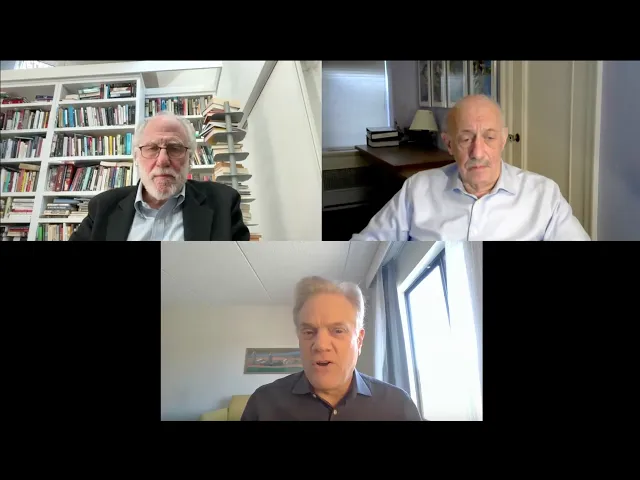
A post-Election Day conversation between Faculty Directors Bob Bauer, Sam Issacharoff, and Rick Pildes
Nov 4, 2026
PODCAST: Reflections on the 2026 Elections — What We Learned
A post-Election Day conversation between Faculty Directors Bob Bauer, Sam Issacharoff, and Rick Pildes
Nov 4, 2026
PODCAST: Reflections on the 2026 Elections — What We Learned
A post-Election Day conversation between Faculty Directors Bob Bauer, Sam Issacharoff, and Rick Pildes
Nov 4, 2026
PODCAST: Reflections on the 2026 Elections — What We Learned
A post-Election Day conversation between Faculty Directors Bob Bauer, Sam Issacharoff, and Rick Pildes
Nov 4, 2026
PODCAST: Reflections on the 2026 Elections — What We Learned
A post-Election Day conversation between Faculty Directors Bob Bauer, Sam Issacharoff, and Rick Pildes
Nov 4, 2026
PODCAST: Reflections on the 2026 Elections — What We Learned
A post-Election Day conversation between Faculty Directors Bob Bauer, Sam Issacharoff, and Rick Pildes
Editor's Note: This is an edited transcript of the Democracy Project Podcast.
Rick Pildes: Welcome to the post-Election Day recording of this Democracy Project podcast. I'm Rick Pildes, joined by my fellow co-directors of the NYU Law Democracy Project, Sam Issacharoff and Bob Bauer. We started the Democracy Project, about a year ago in order to engage issues about law and democracy in an age of polarization and extremism.
And today’s episode is going to involve our discussion about how we view yesterday's election, the legal issues, the election administration process, and future issues. So, Bob, if I could start with you – with your reflections on the election process yesterday and what we learned.
Bob Bauer: As I think people observed around the country, the election ran really quite smoothly. Political conditions in the country may be abnormal, and the outcome of the election was in many respects, quite striking, even historic. But on election day throughout the country, people cast their ballots. They cast their ballots, and with confidence that those ballots would be accounted for accurately; that if difficulties developed in the system, those difficulties would be acknowledged by election officials transparently and fixed. That in the end, people would have confidence in the results. And that's, in fact, what happened.
So in that sense, in these extraordinary circumstances, there was a very reassuringly ordinary quality to the way the election unfolded, and this, I think, is a tribute to the way our very decentralized system actually operates from election cycle to election cycle. If you go beyond a lot of the hard rhetoric that we've heard in recent years, obviously most associated with President Trump, that the system is fraudulent, and it's fragile and unreliable.
The truth is, and the polls show it, most Americans have justified confidence in the electoral process. Again, mistakes will be made, but there's an ever-continuous effort to improve the system. And it proved yesterday that it could operate under conditions of stress very successfully, and it's a tribute to the committee of election officials who did that.
Pildes: Sam, what are your reflections about the process yesterday.
Sam Issacharoff: My reflections are heavily on what didn't happen. And if you had looked at the coverage – and especially the social media renditions of what was anticipated – it was doom and gloom. It was massive vote suppression, ICE and federal troops in the polling places, things of that sort. And on the other side, it was massive fraud, non-citizens voting all over the place. And so we live in an era in which the attacks on the electoral system have become standard and easy to manipulate through intensive social media pressure. We've seen that in Brazil, we saw it in Hungary, we see it happening in India right now, and even in Serbia, where the regime lost and controlled everything. The claims of fraud and so forth, accompanied the process.
So we have the contrast between what the activist wings of the political party want to do, and actually the relatively smooth administration of it. And I think that one of the takeaways is that it behooves the people who are responsible commentators to say not just the risks of the system, but the strengths of the system. The crazy decentralization that we have is actually a guarantee against a single individual pulling one lever that can capture the political process.
So I come away with a great deal more admiration, even than I had before, for the professionalism and competence of the administration of the system, and at the same time, a little bit of dismay about how readily fundraising and social media movementism tries to stoke popular, dissatisfaction or a lack of confidence in the system.
Pildes: Yeah, I think it's worth maybe reminding people of a range of the concerns that have been raised that didn't materialize.
For example, there were no presidential declarations of emergency about the election process. You mentioned there was no ICE at the polls anywhere, as far as we know. There was a lot of concern about 1,000 election monitors that the Department of Justice had sent into jurisdictions – that was a record number of election monitors. There were essentially no problems with those monitors, there were complaints in one or two places, but they stayed within their legal bounds, and it's a good thing to have the monitors there, as long as they stay within their bounds. It helps support the integrity of the process, the transparency of the process. There were no major disruptions at the polling places, which was one of the things that was worried about. And of course, the courts blocked virtually all the efforts of the administration to assert federal control over the process in one way or another, because as we knew going in, you know, the federal government really has very little role it can play in the process, at least without substantial basis for thinking there's race discrimination going on at the polls, or, things like that.
So I think it's a little bit of a vindication for those of us who had said a lot of these concerns were a little bit over-exaggerated in the media. David Becker did a podcast for us at the Democracy Project, I did with him a week or so in advance of the election, in which both of us thought the process would be fairly smooth. I do think that my views have changed a bit on the structure of election administration. I had thought it really was unfortunate that we didn't have more of a national process for the administration of national elections.
I think, in a way, there's a vindication of the old view from the very beginning in which the system was set up, that there's too great a risk of capture if you have too centralized an election process. I think there is something of a vindication for our hyper-decentralized election process, which is not something I would have thought I would have said 15 years ago. So I think that's an interesting point of convergence. I think Bob had mentioned that also.
Bauer: Can I register a mild, cautionary, not a dissenting note, but a cautionary note? We obviously can be very grateful that things turned out the way they did, and I think pay tribute where tribute is absolutely deserved. But the reasons why people were concerned, I think, were justified. I mean, let's date it all the way back to January 6, 2021, and then the ceaseless attacks on the system from President Trump, including a national television address in which he said the system was disgracefully unreliable – shot through with fraud and failure. And the numerous efforts from executive orders to litigation to attempt to destabilize the system with very militant rhetoric about fraud, and his responsibilities he sought as president, quote-unquote, for the good of the country, to deal with fraud. So yes, I think, as I think Sam correctly pointed out, there's always a tendency for various reasons for maybe risks to be overstated, but the identification of the risk in these extraordinary circumstances was, I don't think unreasonable, and an enormous amount of effort was made to erect defenses against these efforts. And I think those deserve tribute too.
Issacharoff: I think that, Bob, I think you're basically right, but I think that there's two takeaways from this. One is that the system held up remarkably well, and in fact has been getting better and better at processing election results, despite the polarization, despite the rhetoric that goes on.
The second part, however, is where I have more agreement with you is that this wasn't really a stress test, because whatever we say today can't be removed entirely from the massive electoral repudiation of the administration. So a stress test would have been if you had just the Alaska Senate election turning the balance of power, and several weeks before those results are known, or something of that sort. That would have invited a different kind of attack.
Pildes: Yeah, but I don't disagree with that. I had always worried that an incredibly close election that would turn on one or two seats would be a different world, but a lot of these things that didn't happen, didn't happen before it was clear the results would be that way. So I think that is also true. Look, we should just celebrate this. I think we're all very pleased that we aren't facing a world in which law becomes more relevant.
We may have litigation over close elections still, I think that's perfectly fine. Those issues will be settled in the court. The fact that there's contested outcomes in a few places and people turn to the courts. There's nothing wrong or disturbing about that and certainly to be expected in our world. I think some of the concerns about the process were also very closely related to how high the stakes people feel existed in this election on both sides, so that also generates a lot of this anxiety about the election process. Other observations?
Issacharoff: Can I say something about a continued source of anxiety for me? It was one of the things that we saw was that as a formal constitutional matter, the federal government, and particularly the executive, has little to say about the conduct of local elections, including for federal office.
At the same time, I've come away from this realizing how easy it is for the president to create a sense of emergency, which would potentially trigger a lot of legal uncertainties. And I am surprised, and I don't know that we will know the answer for quite some time, as to why there was no provocation from the White House. I would have thought, to keep their options open, they would have staged a provocation, you know, sent some agents into a polling place in LA. It may have no consequence electorally at all, but it's the narrative that I thought was important for them, and that possibility of using federal power, and particularly executive power, as a provocation against the system in a close election is something that I still am concerned about.
Bauer: I think you're justified in being concerned about it. One thing that always troubles me is that we have these brushes, or maybe it was something less than a brush as it turned out, but a brush is with a really bad outcome. And there's a lot of excitement up to the point that we discover that we survive it, and then we put it to a side and not worry about it until the next election rolls along.
So, for example, we've known, as we knew for years about the Electoral Count Act – now the Electoral Count Reform Act, that it was a very problematic statute, that it led itself to misinterpretation and abuse. Nothing was done for years and years and years because there was reliance on the norms of conduct within the institution of the Congress to avoid, for example, the Vice President suddenly asserting authority to reject certifications that the administration didn't like. It took January 6th to lead to a 2022 reform.
Now, let's take a look at the Insurrection Act. The president in 2020 showed some significant interest in calling troops up under the Insurrection Act to support his intervention in the electoral process. That didn't happen then. There were still sort of little slivers of threat in this particular election system or election cycle. The statute needs to be amended. Let's amend the statute. It doesn't provide for any congressional consultation. It has antiquated terms that permit the president to basically allege a whole host of narrowly judicially reviewable bases for calling up the troops. That should happen before we actually have to face this same question again some years from now.
Pildes: Well, it'll be really interesting, this gets a little bit beyond the scope of elections, but it'll be really interesting to see what the Congress does in putting forward legislation to rein in executive power in a variety of areas. I don't know what President Trump would or wouldn't sign. I mean he'll be a lame duck if this comes up late in his last couple of years. You know, will he be amenable to signing legislation like that? The Democrats did have a chance, you know, to pass legislation during the first couple of years of President Biden's administration on reining in executive power, and they didn't do it then. But that's a good topic. That's a big topic for another conversation.
Let me mention one thing. This is more a little bit in the political realm, but one of the really interesting things to me about the election results yesterday that I'm not sure has gotten a lot of attention yet is that we saw five black governors elected. This is the largest number of Black governors we've had in our history. This includes governors elected from states like Wisconsin, with the Black population of about 5%. Florida elected a Black governor, with I think about 13% of the state being black. Georgia, of all places, elected a black governor. In Mississippi, we're seeing a black Democrat right on the edge of being elected. We don't know who's going to win that race, ultimately, but the very fact that a Black Democrat is close to winning a Senate seat in Mississippi is a really extraordinary development. So I think we're seeing something very, very significant happening here that is getting a little bit lost in the overall partisan results, but I think these are really significant and interesting developments in thinking about the whole topic of race and politics, voting rights and the like. I'm curious if either of you have any reflections on that.
Issacharoff: I think that's one of the most amazing results of yesterday. I think that we are in a moment of political realignment on a legal front, the Voting Rights Act clearly is not as strong or compelling as it has been in shaping the political outcomes, but it's interesting that all the races you identified were statewide races, so that they are not the subject to either gerrymandering for political reasons or for the creation of carved-out minority districts, which means that candidates who are running for statewide office have to hew toward the median voter. Because otherwise, you're going to lose. And it's interesting that that's where we see the tremendous Black breakthrough now.
One of the candidates you mentioned in Florida is a Black Republican, you know, winning statewide for the gubernatorial seat. So, I think that this is an indication that we are reorganizing our politics now. Our parties are weaker than they have been. Unfortunately, this makes the Congress a little less functional, but what it does is it allows for a reorganization of politics in a way that reflects different legal and political pressures.
Bauer: Let me mention one other thing that's striking about the results yesterday, and that is the money and politics question. An enormous amount of money was spent to improve Republican prospects. Apparently again, by the accounts that I've seen, the Democratic side was heavily outspent, particularly in the independent super PAC, unregulated sphere. I believe, by last count, Elon Musk alone spent over $400 million to influence the outcome of the election. And here we are. Where do you think that takes the money in politics debate?
My own view – having been somewhat of a skeptic for a long time about the viability of the 1970s campaign finance regulatory structure and my view that it needs to be sort of reevaluated critically – is that money and politics is still a significant issue, a significant issue for the country and for confidence on the part of the public in the political system. But I'd be curious to know whether you think that just disappears now into the background, or whether there will be some recognition that this was, in some respects, an extraordinary spending landscape.
Issacharoff: My view is, and I've written on this, I think that we have to find a way to channel money back into the parties and away from these outside influences. I think that what we saw, Bob, is the limits of what money can do in the hands of outsiders to the system, because they will spend huge amounts to topple Cornyn in Texas and end up with a despised candidate on the Republican side. They will double down on what has to be one of the most offensive and idiotic ads in American electoral history in Ohio, and so, when the money is in the hands of people who are not political professionals, and who are strongly on the ideological wings of the party, I think it's a.) less effective in terms of getting electoral results. And also, at the same time, much more corrosive to our politics.
Pildes: Well, I would say there's two different issues here. One is how much the money affects electoral outcomes, which is what you raised, Bob. But I think the other issue here is whether a lot of people are going to continue to believe that both parties are so captured by big donors that Congress is not able to deliver legislation, you know, on issues that working class and ordinary Americans kind of care about. So I think the verdict is going to be out on that second question until we see what kind of legislation Congress does or doesn't come up with.
Because that's a major part of the concern about money and politics today. It's not just it's affecting election outcomes, it's that it's affecting actual governance and policy. And so I think until there's an answer to that question, I think the verdict is still going to be out on that issue for a lot of people.
Let's shift to another subject, which is political reform going forward and what we learned from some of the ballot measures on political reform that were out there this time. By my count, there were 39 ballot measures on election reform-related issues this year, which was a record, as far as I know. I certainly don't have a comprehensive perspective yet on what's happened with all of that, but a couple of the important ones involve, first of all, efforts to shift to the all-candidate primaries, it's called. Sometimes I call that the Alaska model, which is what Alaska's been using since voters adopted it in 2020.
There was an effort in Massachusetts to get Massachusetts voters to adopt it. It was on the ballot; it lost. On the other hand, there's been a really major push to try to repeal it in Alaska, particularly coming from the Republican Party. And last we looked at the numbers, it looks like that voters in Alaska are going to vote to keep that unified primary structure. It's a little early, we don't have the final result yet, but I wanted to flag that. So that's sort of a mixed record, I guess I would say, on the unified primary.
There was also redistricting stuff on the ballot. In Missouri, voters rejected the Republican effort to engage in the mid-decade redistricting process they tried to undertake. On the other hand, in Maryland, voters approved a measure that was designed to allow the Democrats of the legislature to engage in mid-decade redistricting before 2028 to squeeze out an additional Democratic seat there, so I guess again, a little bit of a mixed record on redistricting efforts from voters. What do either of you think about political reform going forward, and what these ballot measures do or don't tell us about that? Bob, let me go to you first.
Bauer: I have not had a chance overnight to draw some unified conclusion about what these disparate measures and the outcome of the public approval or disapproval might mean. I just haven't.
I do have a question about where political reform goes from here if we talk about political process reform, and we've touched on some of these, gerrymandering, campaign finance, voting rules. Democratic reform, of course, is a broader topic, and goes to points that you were making, Sam, earlier about executive power, executive overreach, destabilization of the separation of powers in our system of government – the general view that Congress is unable to function effectively in its role.
And of course, there's a very active debate taking place, primarily in the Democratic Party, about potential reforms that need to be directed towards the Supreme Court, both the appointments process and also the way the Court operates. And I don't know at the moment, which reforms in which categories are going to come together and maybe resemble some kind of a program around which reformers will gather. It seems to me that there's a lot of energy on Supreme Court reform. I see lots of peril in that, so I have some reservations about that being the leading edge of a reform program, but I'd be interested in your views as well.
Issacharoff: So I think that gerrymandering is an interesting window on American politics right now. One of the things that happened when you have this gerrymandering, especially the mid-cycle gerrymandering, is that there's a public debate and antagonism among the party leaders, the elites of the political system, in which the voters are taken for granted – to the voters, “oh, we know how to manipulate you,” and so on and so forth.
And it has two effects. One is it demoralizes the population relative to political elites, and it contributes to this sense of it's an insider's game, and they're taking advantage of us, and they don't listen to ordinary people. And I thought you saw some of that in the election results yesterday. Not so much on the gerrymandering, per se, but just the general overall tone of the elections. We're tired of the people who are playing the insider's game.
The second thing about gerrymandering, and many of these political reforms, is that some of the critiques turn out to be, ends-oriented. That is, my people are winning, my people are losing, you know, that's why the Democrats are in favor of it in Maryland, but not elsewhere. But I think we're learning a lesson that you can't create political majorities where they're not there. And Orban learned that in Hungary, where he tried to maintain power by gerrymandering to thinner and thinner margins. We saw some of that yesterday, and it takes me back to a comment that O'Connor made at the beginning of the litigation over the constitutionality of partisan gerrymandering, and she said – maybe this is all self-regulating. And we spent a long time saying it's not self-regulating, but certainly when you have this much political ferment, as you had yesterday, to a large extent, it is self-regulating.
Pildes: Well, it's my observation, I can't prove this, so it’s my sense I should say – and this is consistent with what Sam just said – that the launching of this mid-decade redistricting by President Trump and it really was launched by President Trump pushing Texas to engage in the mid-decade redistricting and that set off this whole downward spiral of mid-decade redistricting – and the other efforts to try to manipulate the structure of the election process, I had the sense there was a significant backlash against that. I think it played a role in the election. I mean I can't prove that. But that's my sense.
I saw that Nikki Haley said that in South Carolina, she interpreted the results there, which were just really stunning – a Democrat, elected to the Senate in South Carolina and even deep, ruby-red areas of South Carolina voting for a Democrat – and I saw her say, she felt that voters felt they were having candidates imposed on them with again, President Trump, really pushing for Lindsey Graham's sister to be the Senate nominee. And that's her interpretation, who knows if she's right? She knows South Carolina, I assume. But I had the sense that voters were really disgusted by this mid-decade redistricting dynamic and blamed President Trump, I think, to a large extent for setting it off. And so, I don't know if we'll ever know if that played a role, but my sense was it did contribute to what happened yesterday.
Bauer: That's really interesting. Let me advance what I call a working hypothesis. I don't know if it's accurate or not, but I think that these sorts of concerns, like having candidates imposed upon voters or mid-decade redistricting have salience for voters when they resonate with broader concerns about the way they feel they're being portrayed by the political process. In the abstract, I don't think voters care much about process issues. I've never known of many candidates who you know, seriously won or lost on, for example, campaign finance regulation or gerrymandering reform. But if in the background these manipulations are taking place when they believe that they're otherwise being, if you will, ignored, mistreated, manipulated on matters that they do care about, really care about, cost of living, educational system, those sorts of things, then I think that it plays into a larger objection they have to the way they're being served in the democratic process.
Pildes: That's really interesting, because that's very similar to the way I think the corruption issue also works. I think it's hard to get voters interested in corruption per se, partly because they become very cynical about corruption in politicians. But when you can actually tie it to things like, this is why healthcare is so expensive for you, or make it concrete. This is very much part of what Péter Magyar success in Hungary was about in going after the Orban administration on corruption. He constantly tied it to – this is why your lines in the hospital are so long. And I think that the corruption issue began to sink in, and voters identified it as one of the major issues in this election here. I think it began to sink in when candidates were effective at tying it to the concrete circumstances of voters' lives, as opposed to this abstract Washington, D.C. kind of corruption concern.
Issacharoff: I think there's always a risk in our political system that people who are insiders to the system will develop a jargon and a set of talking points that have very little to do with the lived experiences of the citizenry, and one of the things about this election was that so many things hit home for ordinary people, the price of gas, the diminution in Medicare assistance, all these kinds of things were hitting home at the same time. And there was a sense of – what are you people talking about, with these more abstract or issues that are of more concern to high-minded political commentators?
Bauer: I think that’s right. Just one last comment. Speaking of the difference between political process reform and democratic process reform, that's why I think a leading reform initiative ought to be on corruption. This is the time, because this is when voters understand this is about the political class disciplining itself, so they will focus on them and not on themselves.
Pildes: Well, we'll see what happens once the new Congress actually takes office in January, and what issues actually get priority in the new Congress, and how Democrats are going to use this tremendous power they've been given, at least in the legislative process. They obviously have the presidential veto to deal with, but just in terms of what they focus on, what they put forward, what image they present to the country of what their priorities are, will of course, be the most interesting thing to see about how politics goes going forward.
Issacharoff: Yeah, I think that that's the key issue in our society. It's hard to govern, it's easy to condemn. And the election, if it showed anything, showed a disenchantment by the voters with how we're being governed. And the challenge for a party taking Congress right now is – show you have a program for governance. And they can hold a lot of hearings, you know, and there's a lot of dirt to be unearthed from this administration. But if they don't show that they can govern, they may find themselves already discounted by the voters in two years.
Pildes: Well, you know, one thing I'll add to that is what we've been seeing in elections across Western democracies over the last 10 to 15 years is constant dissatisfaction, constant throwing out of those in power, and then when new parties or new coalitions come into power – voters turning on them fairly quickly and being dissatisfied yet again. The Labour Party example in the UK is one of the most prominent. They win a landslide majority in the Parliament and within a year, their party leader is thrown out, people are very unhappy with Labour. So how much of what we've seen is about rejecting incumbents, how the new political coalition in government will deal with this, that remains to be seen.
But I think we need to bring this to a close for now, at least. So remember, those of you who are interested in the podcast, to follow the Democracy Project at NYU, and the content we’re going to continue to push out, and hope you enjoy this brief post-Election Day conversation. Thanks.
More viewpoints in
Elections & Political Parties

Nov 4, 2026
PODCAST: Reflections on the 2026 Elections — What We Learned
Faculty Directors
Elections & Political Parties
Nov 4, 2026
PODCAST: Reflections on the 2026 Elections — What We Learned
Faculty Directors
Elections & Political Parties
Nov 4, 2026
PODCAST: Reflections on the 2026 Elections — What We Learned
Faculty Directors
Elections & Political Parties

Oct 28, 2026
Elections 2026
Elections & Political Parties
Oct 28, 2026
Elections 2026
Elections & Political Parties
Oct 28, 2026
Elections 2026
Elections & Political Parties

Oct 28, 2026
The Role of State Prohibitions on Election Interference in Constraining Federal Actors
Danielle Friedman
Elections & Political Parties
Oct 28, 2026
The Role of State Prohibitions on Election Interference in Constraining Federal Actors
Danielle Friedman
Elections & Political Parties
Oct 28, 2026
The Role of State Prohibitions on Election Interference in Constraining Federal Actors
Danielle Friedman
Elections & Political Parties
More viewpoints in
Elections & Political Parties
Nov 4, 2026
PODCAST: Reflections on the 2026 Elections — What We Learned
Faculty Directors
Elections & Political Parties
Oct 28, 2026
Elections 2026
Elections & Political Parties
Oct 28, 2026
The Role of State Prohibitions on Election Interference in Constraining Federal Actors
Danielle Friedman
Elections & Political Parties