Dec 22, 2025
Read Original Article
Chicago Sun-Times: Inexperienced, poorly trained ICE and border patrol agents could face legal trouble (By Sam Issacharoff)
A Chicago Sun-Times Opinion Editorial: "Inexperienced, poorly trained ICE and border patrol agents could face legal trouble" by Samuel Issacharoff
Chicago Sun-Times
Samuel Issacharoff
Dec 22, 2025
Read Original Article
Chicago Sun-Times: Inexperienced, poorly trained ICE and border patrol agents could face legal trouble (By Sam Issacharoff)
A Chicago Sun-Times Opinion Editorial: "Inexperienced, poorly trained ICE and border patrol agents could face legal trouble" by Samuel Issacharoff
Chicago Sun-Times
Samuel Issacharoff
Dec 22, 2025
Read Original Article
Chicago Sun-Times: Inexperienced, poorly trained ICE and border patrol agents could face legal trouble (By Sam Issacharoff)
A Chicago Sun-Times Opinion Editorial: "Inexperienced, poorly trained ICE and border patrol agents could face legal trouble" by Samuel Issacharoff
Chicago Sun-Times
Samuel Issacharoff
Dec 22, 2025
Read Original Article
Chicago Sun-Times: Inexperienced, poorly trained ICE and border patrol agents could face legal trouble (By Sam Issacharoff)
A Chicago Sun-Times Opinion Editorial: "Inexperienced, poorly trained ICE and border patrol agents could face legal trouble" by Samuel Issacharoff
Chicago Sun-Times
Samuel Issacharoff
Dec 22, 2025
Read Original Article
Chicago Sun-Times: Inexperienced, poorly trained ICE and border patrol agents could face legal trouble (By Sam Issacharoff)
A Chicago Sun-Times Opinion Editorial: "Inexperienced, poorly trained ICE and border patrol agents could face legal trouble" by Samuel Issacharoff
Chicago Sun-Times
Samuel Issacharoff
Dec 22, 2025
Read Original Article
Chicago Sun-Times: Inexperienced, poorly trained ICE and border patrol agents could face legal trouble (By Sam Issacharoff)
A Chicago Sun-Times Opinion Editorial: "Inexperienced, poorly trained ICE and border patrol agents could face legal trouble" by Samuel Issacharoff
Chicago Sun-Times
Samuel Issacharoff
Editor's note: This excerpt is from a Chicago Sun-Times Op-Ed.
Evanston, Illinois, would hardly be the predicted setting for a constitutional confrontation over border authority. A leafy northern suburb of Chicago, more at home hosting Big Ten football games than social disruption, the town nonetheless has witnessed federal agents brandishing weapons at unarmed protesters and clashing, unnecessarily, with opponents of the Trump administration at anti-deportation rallies.
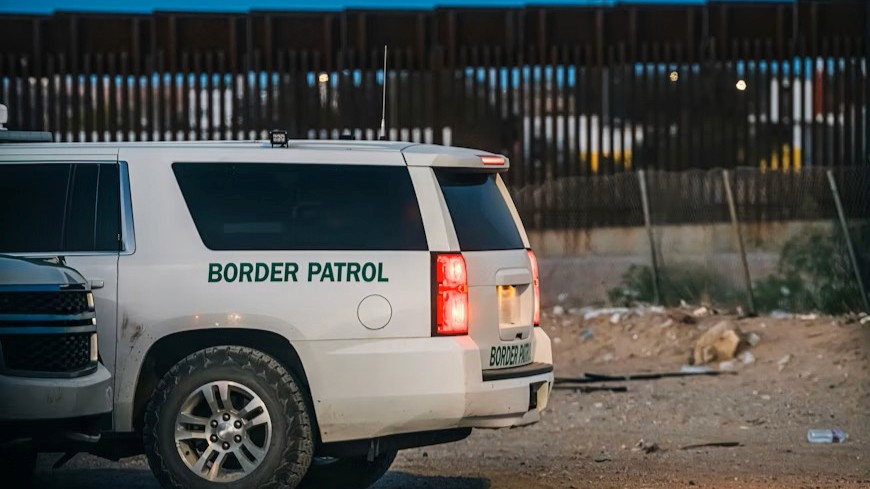
What might seem like a descent into lawlessness is actually not so much the absence of law but the application of the wrong law. The federal agents are neither part of any police force nor the military. Instead, they are U.S. Border Patrol and Immigration and Customs Enforcement agents, hastily recruited and trained, and sent to patrol American cities.
Even when fully trained, these officers answer to the “law of the border,” a distinct constitutional regime that offsets customary legal protections against the foreign policy and national security concerns of the federal government. This is the domain of the “border search exception,” where the generalized rules of probable cause under the Fourth Amendment are relaxed to accommodate border integrity.
Everyone who has traveled into the U.S. understands they may be asked questions about their affairs abroad and at home, may have their possessions opened and inspected, and may even be asked to unlock their phones for inspection of contacts.
No police officer at a traffic stop or showing up at one’s home could demand the same compliance absent probable cause and a warrant. Congress has authorized border agents to operate with this same intrusive authority up to 100 miles from the border, again recognizing the precarious legal status of these intrusions into our normal expectations of privacy and other rights.
However, there is a constitutional trade-off. The actions required to maintain border integrity are a recognized exception to what American citizens and other residents may expect as the normal operations of law. Presumably, what happens at the border stays at the border, or pretty close nearby.
Read the full piece here.
Editor's note: This excerpt is from a Chicago Sun-Times Op-Ed.
Evanston, Illinois, would hardly be the predicted setting for a constitutional confrontation over border authority. A leafy northern suburb of Chicago, more at home hosting Big Ten football games than social disruption, the town nonetheless has witnessed federal agents brandishing weapons at unarmed protesters and clashing, unnecessarily, with opponents of the Trump administration at anti-deportation rallies.
What might seem like a descent into lawlessness is actually not so much the absence of law but the application of the wrong law. The federal agents are neither part of any police force nor the military. Instead, they are U.S. Border Patrol and Immigration and Customs Enforcement agents, hastily recruited and trained, and sent to patrol American cities.
Even when fully trained, these officers answer to the “law of the border,” a distinct constitutional regime that offsets customary legal protections against the foreign policy and national security concerns of the federal government. This is the domain of the “border search exception,” where the generalized rules of probable cause under the Fourth Amendment are relaxed to accommodate border integrity.
Everyone who has traveled into the U.S. understands they may be asked questions about their affairs abroad and at home, may have their possessions opened and inspected, and may even be asked to unlock their phones for inspection of contacts.
No police officer at a traffic stop or showing up at one’s home could demand the same compliance absent probable cause and a warrant. Congress has authorized border agents to operate with this same intrusive authority up to 100 miles from the border, again recognizing the precarious legal status of these intrusions into our normal expectations of privacy and other rights.
However, there is a constitutional trade-off. The actions required to maintain border integrity are a recognized exception to what American citizens and other residents may expect as the normal operations of law. Presumably, what happens at the border stays at the border, or pretty close nearby.
Read the full piece here.
Editor's note: This excerpt is from a Chicago Sun-Times Op-Ed.
Evanston, Illinois, would hardly be the predicted setting for a constitutional confrontation over border authority. A leafy northern suburb of Chicago, more at home hosting Big Ten football games than social disruption, the town nonetheless has witnessed federal agents brandishing weapons at unarmed protesters and clashing, unnecessarily, with opponents of the Trump administration at anti-deportation rallies.
What might seem like a descent into lawlessness is actually not so much the absence of law but the application of the wrong law. The federal agents are neither part of any police force nor the military. Instead, they are U.S. Border Patrol and Immigration and Customs Enforcement agents, hastily recruited and trained, and sent to patrol American cities.
Even when fully trained, these officers answer to the “law of the border,” a distinct constitutional regime that offsets customary legal protections against the foreign policy and national security concerns of the federal government. This is the domain of the “border search exception,” where the generalized rules of probable cause under the Fourth Amendment are relaxed to accommodate border integrity.
Everyone who has traveled into the U.S. understands they may be asked questions about their affairs abroad and at home, may have their possessions opened and inspected, and may even be asked to unlock their phones for inspection of contacts.
No police officer at a traffic stop or showing up at one’s home could demand the same compliance absent probable cause and a warrant. Congress has authorized border agents to operate with this same intrusive authority up to 100 miles from the border, again recognizing the precarious legal status of these intrusions into our normal expectations of privacy and other rights.
However, there is a constitutional trade-off. The actions required to maintain border integrity are a recognized exception to what American citizens and other residents may expect as the normal operations of law. Presumably, what happens at the border stays at the border, or pretty close nearby.
Read the full piece here.
Editor's note: This excerpt is from a Chicago Sun-Times Op-Ed.
Evanston, Illinois, would hardly be the predicted setting for a constitutional confrontation over border authority. A leafy northern suburb of Chicago, more at home hosting Big Ten football games than social disruption, the town nonetheless has witnessed federal agents brandishing weapons at unarmed protesters and clashing, unnecessarily, with opponents of the Trump administration at anti-deportation rallies.
What might seem like a descent into lawlessness is actually not so much the absence of law but the application of the wrong law. The federal agents are neither part of any police force nor the military. Instead, they are U.S. Border Patrol and Immigration and Customs Enforcement agents, hastily recruited and trained, and sent to patrol American cities.
Even when fully trained, these officers answer to the “law of the border,” a distinct constitutional regime that offsets customary legal protections against the foreign policy and national security concerns of the federal government. This is the domain of the “border search exception,” where the generalized rules of probable cause under the Fourth Amendment are relaxed to accommodate border integrity.
Everyone who has traveled into the U.S. understands they may be asked questions about their affairs abroad and at home, may have their possessions opened and inspected, and may even be asked to unlock their phones for inspection of contacts.
No police officer at a traffic stop or showing up at one’s home could demand the same compliance absent probable cause and a warrant. Congress has authorized border agents to operate with this same intrusive authority up to 100 miles from the border, again recognizing the precarious legal status of these intrusions into our normal expectations of privacy and other rights.
However, there is a constitutional trade-off. The actions required to maintain border integrity are a recognized exception to what American citizens and other residents may expect as the normal operations of law. Presumably, what happens at the border stays at the border, or pretty close nearby.
Read the full piece here.
Editor's note: This excerpt is from a Chicago Sun-Times Op-Ed.
Evanston, Illinois, would hardly be the predicted setting for a constitutional confrontation over border authority. A leafy northern suburb of Chicago, more at home hosting Big Ten football games than social disruption, the town nonetheless has witnessed federal agents brandishing weapons at unarmed protesters and clashing, unnecessarily, with opponents of the Trump administration at anti-deportation rallies.
What might seem like a descent into lawlessness is actually not so much the absence of law but the application of the wrong law. The federal agents are neither part of any police force nor the military. Instead, they are U.S. Border Patrol and Immigration and Customs Enforcement agents, hastily recruited and trained, and sent to patrol American cities.
Even when fully trained, these officers answer to the “law of the border,” a distinct constitutional regime that offsets customary legal protections against the foreign policy and national security concerns of the federal government. This is the domain of the “border search exception,” where the generalized rules of probable cause under the Fourth Amendment are relaxed to accommodate border integrity.
Everyone who has traveled into the U.S. understands they may be asked questions about their affairs abroad and at home, may have their possessions opened and inspected, and may even be asked to unlock their phones for inspection of contacts.
No police officer at a traffic stop or showing up at one’s home could demand the same compliance absent probable cause and a warrant. Congress has authorized border agents to operate with this same intrusive authority up to 100 miles from the border, again recognizing the precarious legal status of these intrusions into our normal expectations of privacy and other rights.
However, there is a constitutional trade-off. The actions required to maintain border integrity are a recognized exception to what American citizens and other residents may expect as the normal operations of law. Presumably, what happens at the border stays at the border, or pretty close nearby.
Read the full piece here.
Editor's note: This excerpt is from a Chicago Sun-Times Op-Ed.
Evanston, Illinois, would hardly be the predicted setting for a constitutional confrontation over border authority. A leafy northern suburb of Chicago, more at home hosting Big Ten football games than social disruption, the town nonetheless has witnessed federal agents brandishing weapons at unarmed protesters and clashing, unnecessarily, with opponents of the Trump administration at anti-deportation rallies.
What might seem like a descent into lawlessness is actually not so much the absence of law but the application of the wrong law. The federal agents are neither part of any police force nor the military. Instead, they are U.S. Border Patrol and Immigration and Customs Enforcement agents, hastily recruited and trained, and sent to patrol American cities.
Even when fully trained, these officers answer to the “law of the border,” a distinct constitutional regime that offsets customary legal protections against the foreign policy and national security concerns of the federal government. This is the domain of the “border search exception,” where the generalized rules of probable cause under the Fourth Amendment are relaxed to accommodate border integrity.
Everyone who has traveled into the U.S. understands they may be asked questions about their affairs abroad and at home, may have their possessions opened and inspected, and may even be asked to unlock their phones for inspection of contacts.
No police officer at a traffic stop or showing up at one’s home could demand the same compliance absent probable cause and a warrant. Congress has authorized border agents to operate with this same intrusive authority up to 100 miles from the border, again recognizing the precarious legal status of these intrusions into our normal expectations of privacy and other rights.
However, there is a constitutional trade-off. The actions required to maintain border integrity are a recognized exception to what American citizens and other residents may expect as the normal operations of law. Presumably, what happens at the border stays at the border, or pretty close nearby.
Read the full piece here.